
Published: Jun 19, 2026, 12:00 AM · Last updated: Jun 29, 2026, 2:01 AM
A Good Deed On Harris Avenue
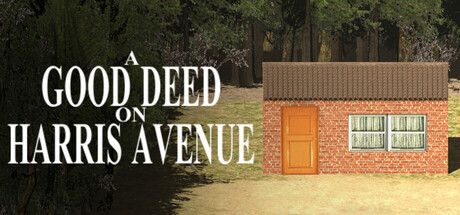
A one-hour puzzle box pretending to be a street
Daniel H. May's A Good Deed On Harris Avenue lands on Steam in June 2026 with a pitch that's almost defiantly unfashionable. Sixty minutes. PSX styling. One street, eleven houses, and a letter nobody wants to accept. No procedural anything, no roguelike loop, no skill tree. A kindly neighbour, a refused envelope, a chain of trades you untangle by actually listening to the people on the block.
That's the whole game.
And the focus is, honestly, the most interesting thing about it.
The aesthetic is doing real work
The PSX/Dreamcast revival has been chewed on for a few years, mostly as a horror crutch. Low res, vertex jitter, dithered fog, instant indie credibility. May's doing something stranger. The store page lays out the technical posture plainly: PSX-era resolution, aspect ratio, and colour depth, riding on a modern backend that hits high framerates and clean audio. He's quoting 90fps on Steam Deck OLED, 60 on the LCD. So not a museum tribute. A deliberate split. The look of 1998, the feel of 2026.
The fixation on summer is what I'm curious about. The pitch keeps hammering on "the hottest of hot summer days," a piercing heat, an avenue you're meant to get absorbed in. PSX visuals usually mean dread. Using them for haze and warmth and a kind of suburban torpor is a much less obvious move. If May pulls it off, that's the thing people will remember.
The puzzle structure, roughly
The trading-quest skeleton is ancient. Basically Link's Awakening's trade sequence stretched into a whole premise. What's different is scale. Eleven houses with explorable interiors, packed into a single street. Roughly an hour to finish, another thirty minutes if you're achievement-hunting.
Density is the bet. Most modern adventure games sprawl. This one compresses. You're not navigating a world, you're learning a block well enough that the wants of its residents click into place as a system. If the writing on those eleven doors holds up, the format works. If it doesn't, an hour will feel like three.
What's missing from the public picture
No dedicated site. No devlog trail. No public documentation of engine choices, no postmortem. The YouTube footprint is two trailers plus a pile of unrelated Roblox content the algorithm keeps coughing up when you search the title. For a game launching in mid-2026, the discovery surface right now is almost entirely the Steam page, which is a rough spot for a solo dev making a deliberately small, deliberately weird thing.
May also flags that the game was made "to say something of note," then refuses to say what. Fine. That's a defensible authorial choice for a one-hour piece where the payoff is the point. It's also a marketing nightmare, because "trust me, it means something" isn't a Steam tag.
Skepticism, owed
A few things worth raising before anyone gets carried away.
One hour is one hour. Even at indie pricing, the value conversation around short games on Steam is brutal, and the review distribution skews toward people who feel cheated by length over people who feel rewarded by density. Then there's the aesthetic. The PSX look isn't novel anymore. It's a genre, with its own clichés and audience expectations, and selling a non-horror entry into that space means the screenshots have to communicate something the horror entries don't. From the current store page, I can't tell yet whether that read lands at thumbnail size. And "meditative, at-your-own-pace" can mean elegant pacing, or it can mean nothing happens. The trailer doesn't fully resolve which.
None of that is a knock. It's the shape of the risk.
The launch math is brutal for something like this
A game this specific, a sixty-minute hand-crafted PSX-styled puzzle piece from a solo dev with no studio backing, cannot survive a generic Steam-launch broadcast. Throwing it at a million wishlists or buying impressions against a general indie audience would burn whatever budget exists and convert almost nothing, because the people who'd actually finish this game and tell their friends about it are a thin, identifiable slice. The PS1 demake and lo-fi 3D aficionados. The short-form narrative game commentators who cover stuff like Anodyne or Off-Peak. The puzzle-adventure streamers who play Strange Horticulture on cam. The video essayists who pull apart Yume Nikki-adjacent atmosphere games. The Steam Deck verification crowd that genuinely cares about a confirmed 90fps OLED target. That's the audience. Finding and reaching exactly those creators, with codes that don't get lost in a Gmail tab, is the realistic survival path, and from the outside, CreatorFetch is the kind of infrastructure built to execute that targeting rather than spray-and-pray it.
For now
A Good Deed On Harris Avenue is the kind of release that either becomes a small cult thing people press into each other's hands, or vanishes inside the June 2026 release-day pileup. The craft signals are there. The technical posture is unusually thoughtful for a solo project. The premise is small enough to actually finish well. Whether the deed itself is worth doing, nobody outside Daniel May's hard drive can answer that yet.