
Published: Jun 29, 2026, 2:02 PM · Last updated: Jul 16, 2026, 6:58 AM
Civilizations Rot From Within: The Internal Collapse Thesis of MADAC
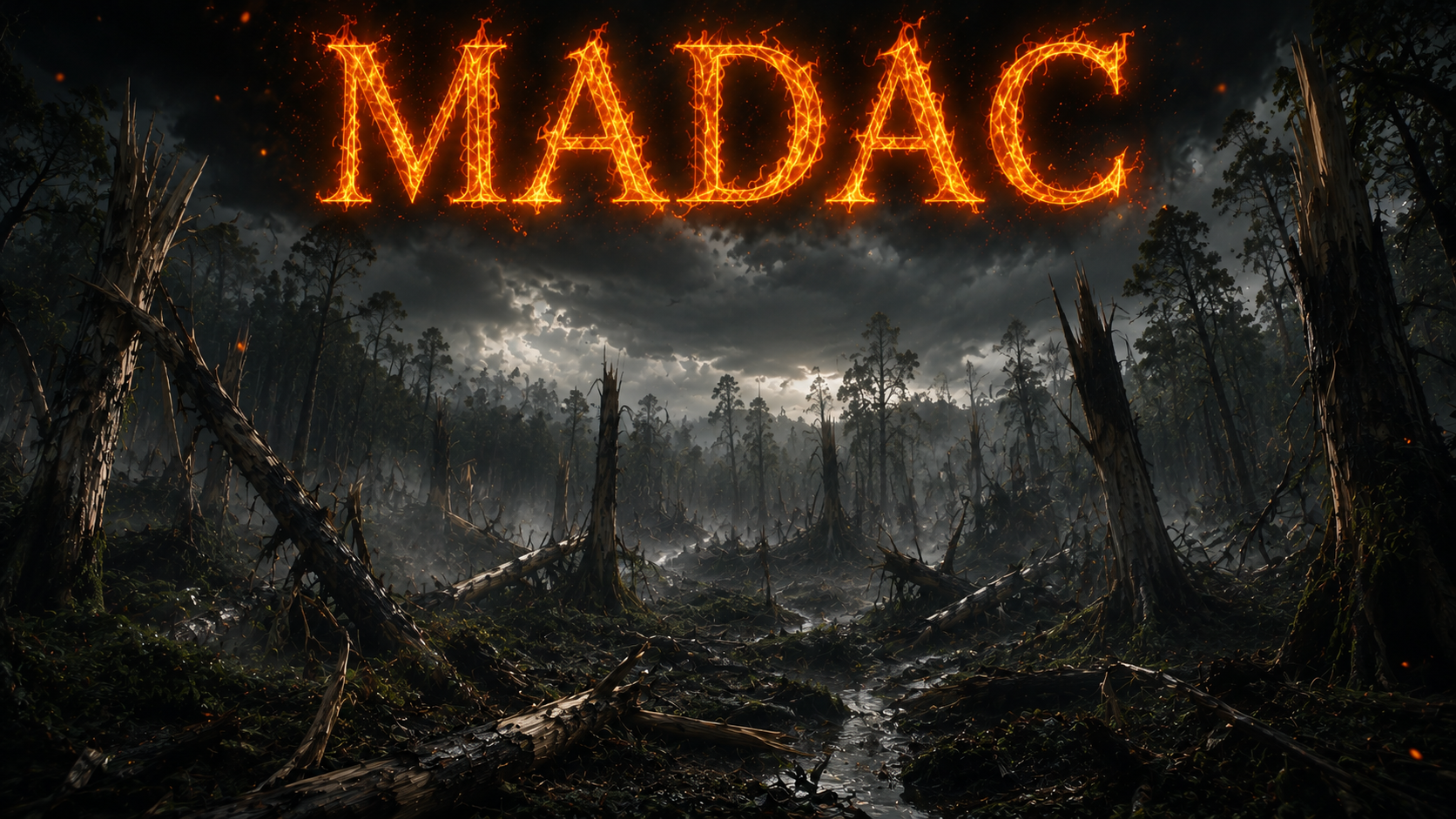
Civilizations Rot From Within: The Internal Collapse Thesis of MADAC
Empires don't usually fall because someone kicks down the gate. They fall because the people inside stopped guarding it, stopped agreeing on why it mattered, stopped telling each other the truth about what was happening in the back rooms. By the time the enemy actually shows up, there isn't much left to conquer. That's the bet at the heart of MADAC, Milan Jhon's apocalyptic political fable. The book makes that bet with a strange, quiet confidence.
The forest is called Vigard. The animals talk politics. And the apocalypse, when it comes, isn't an invasion. It's a confession.
The forest was already dying before the war showed up
Here's the thing most dystopian fiction gets wrong, or at least soft-pedals. The big external threat, the war, the plague, the asteroid, that gets the marquee. The actual rot is older and quieter. It's the deal-making in the dark. It's leaders who stopped listening. It's citizens who stopped wanting to know.
MADAC builds its whole moral architecture on that idea.
Vigard isn't doomed because something is coming for it. Vigard is doomed because of what's already inside it. The Pisa tree is the cleanest image of this in the book, a great tree at the center of the forest, roots drying up from below, hollowed out so gradually that nobody quite agrees on when it started. One of the warnings in the story puts it plainly: if the Pisa tree falls, evil spirits will pour into the forest. The tree is the civilization. The roots are the things civilizations actually run on, trust, shared truth, a sense that the rules apply to everyone. Pull those out and the canopy looks fine for a while. Then it doesn't.
Corruption wears a crown, and sometimes a halo
Jhon populates Vigard with a cast that reads like a political science seminar told as a bedtime story. Russell, the UTEK turtle. The lions, the hyenas, the elephants, the wolves. Each one carries a political archetype, and the book is patient enough to let them act it out instead of lecturing you about it.
The lions rule the way lions usually rule in fables, with a confidence that curdles into entitlement. The hyenas are the more interesting study, a group that has been wronged and uses that wrong as a license to wrong others in turn. The elephants carry something worse than greed, the seductive certainty of holiness. The wolves do what wolves do, which is whatever the moment rewards.
What makes this more than archetype theater is how the corruption layers. It isn't one villain. It's a system where every faction has its own internally consistent reason to do the wrong thing. The lions have legacy. The hyenas have grievance. The elephants have scripture. The wolves have appetite.
Nobody in Vigard thinks of themselves as the bad guy. That's exactly why the forest is finished.
Savarat, and the danger of a prophecy you can quote but not read
Then there's the holy book. Savarat sits at the center of the plot the way scripture sits at the center of most collapses, half-read, fully weaponized. The prophecy inside it is real to the characters, and the fight over what it means becomes its own war before any actual war begins.
This is where the book earns its bite. A prophecy in the wrong mouth isn't guidance, it's permission. Permission to purge. Permission to wait. Permission to do nothing while the roots dry up because the text says someone else will handle it. MADAC isn't arguing that faith is the problem. It's arguing that faith without honest reading is a weapon pointed at the believer.
Frankly, this is the thread that separates MADAC from the obvious comparisons. Orwell's Animal Farm is a story about a revolution that betrays itself, mostly through propaganda and pigs. Golding's Lord of the Flies strips civilization off children and watches what's underneath. Adams in Watership Down is more about survival and leadership than collapse. MADAC sits somewhere different. It's interested in what happens when a society still has all its institutions, its leaders, its holy book, its rituals, and uses every single one of them to lie to itself.
The thesis, stated plainly
Boil the book down to a single argument and it's this: the apocalypse doesn't begin on a battlefield. It begins the day a civilization decides truth is optional. Every other failure follows from that one.
You can see the thesis working on at least three levels in Vigard:
- Leadership stops listening, and citizens stop expecting to be heard. The feedback loop that keeps a society honest just, quits.
- Victims become tyrants. Old wounds get translated into new cruelties, and everyone involved feels morally justified about it.
- Sacred language gets hijacked, because the most dangerous lie is the one that sounds holy, and nobody wants to be the person who questions it.
By the time the looming apocalypse war actually arrives, it's almost an afterthought. The forest has been losing for years. The war just makes it official.
Why this fable, and why now
I'll be honest, the fable form gets dismissed these days. People hear "talking animals" and think children's section. That's a mistake, and MADAC is a decent reminder of why. The distance the animal cast creates is exactly what lets the book talk about power, prophecy, and decay without curdling into a screed. You're watching turtles and lions argue, so your guard is down. The arguments land harder for it.
It also makes the moral architecture portable. Vigard isn't any one country. The Pisa tree isn't any one institution. Savarat isn't any one scripture. Readers will map their own anxieties onto the forest, which is what allegory has always been for. Worth noting, too, that the book's been picking up some attention through outside platforms like CreatorFetch, which tends to push the kind of slow-burn political fables that don't usually get airtime in the louder corners of book marketing.
Is the book perfect? No fable is. Some chapters move faster than others, and readers who want their dystopias delivered in tight thriller pacing may find the contemplative passages a slower burn. But if you're the kind of reader who liked sitting with the implications of Animal Farm long after finishing it, MADAC is built for you. It's on Amazon if you want to see how the forest ends.
The roots are drier than they look. That's pretty much the whole warning.
Written by the CreatorFetch.com editorial team.