
Published: Jun 28, 2026, 9:04 AM · Last updated: Jul 16, 2026, 6:58 AM
Compliance Frameworks for Tokenized Assets: Aligning Smart Contracts with MiCA, SEC, and FATF Guidelines
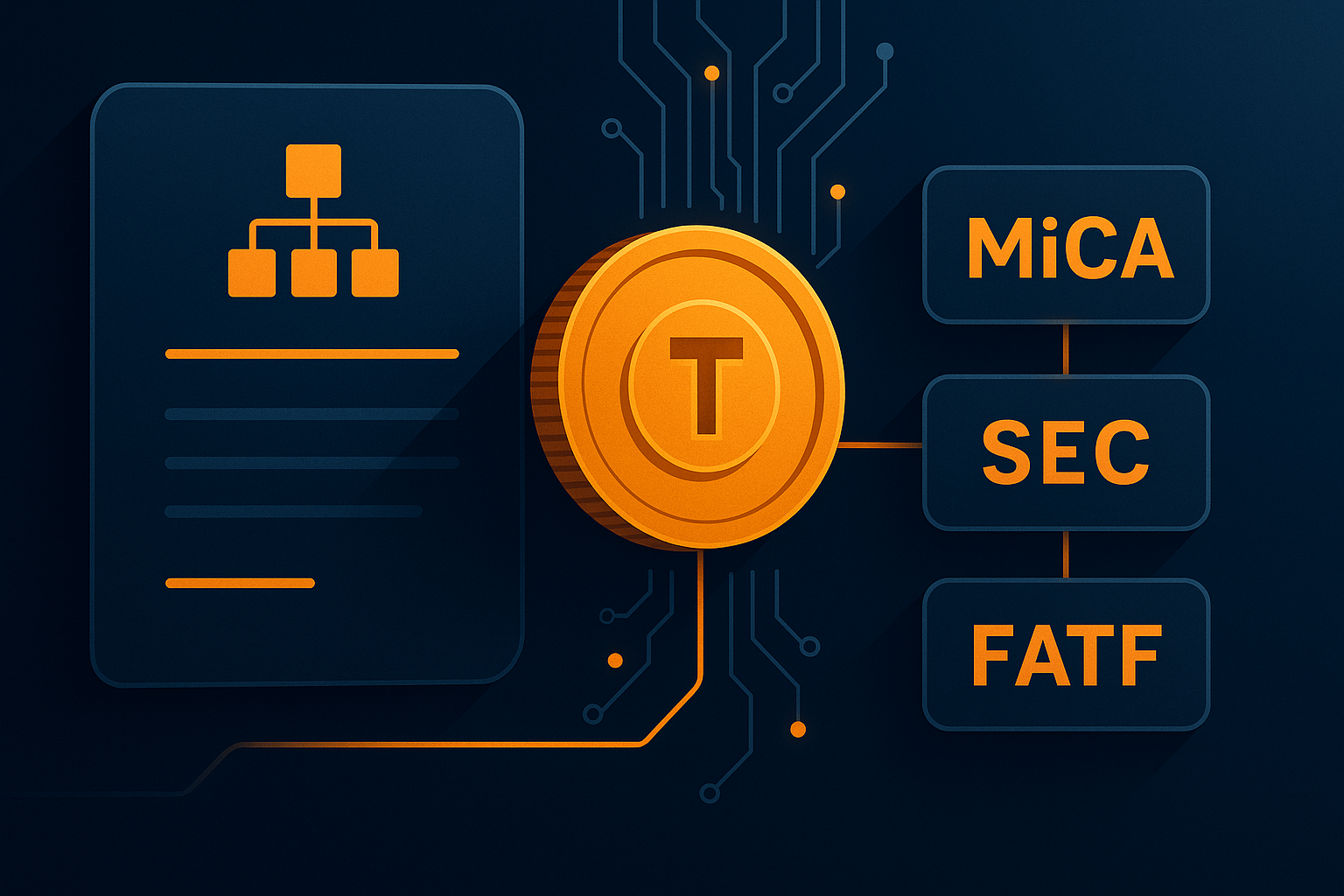
Compliance Frameworks for Tokenized Assets: Aligning Smart Contracts with MiCA, SEC, and FATF Guidelines
Tokenization moved from whitepaper theory to balance-sheet reality faster than most regulators expected, and now the bill is coming due. If you're issuing or auditing tokenized assets in 2025, you're working against three overlapping rulebooks at once: MiCA in the EU, an unsettled but increasingly assertive SEC posture in the US, and FATF's travel rule guidance that everyone keeps pretending is optional. They don't agree with each other. They don't even define the same words the same way. And your smart contract has to satisfy all of them simultaneously.
That's the actual problem. Not "is the contract secure," but "is the contract provably compliant across three jurisdictions that argue with each other."
What MiCA actually demands at the contract level
MiCA splits tokenized assets into three buckets: asset-referenced tokens (ARTs), e-money tokens (EMTs), and the catch-all "other" crypto-assets. Each has different reserve, disclosure, and authorization requirements. The interesting part for engineers is that MiCA doesn't just regulate the issuer, it implicitly regulates the contract logic itself. Reserve transparency, redemption rights at par, and whitepaper-aligned token behavior all have to be enforceable on-chain or auditable from on-chain state.
In practice that means a few things. Mint and burn functions need access controls that map to the licensed issuer entity, not a multisig of anonymous devs. Reserve attestations need to be machine-readable, ideally through an oracle that feeds verifiable proofs of reserves into the contract or a paired registry. Redemption logic has to actually work, not revert under load. I've seen audits where the redeem() function passed every unit test but silently failed when the queue hit a few hundred concurrent calls. That's a MiCA problem now, not just a UX problem.
And the whitepaper notification regime under Article 8 means any upgrade to contract behavior, even a "minor" parameter tweak, could trigger a refiling. Upgradeability patterns matter. A naive proxy with an admin key gives regulators heartburn. Transparent proxies with timelocked governance and on-chain event trails are closer to defensible.
The SEC's view, or rather, the lack of one
The SEC has not issued a clean tokenization framework. What it has done is bring enforcement actions that, taken together, paint a Howey-shaped picture. If your token represents a claim on profits, a pooled investment, or a managerial effort by a third party, you're probably looking at a security. Tokenized treasuries, tokenized equities, tokenized real estate, tokenized funds, most of these land squarely in scope.
That changes the contract design conversation. Transfer restrictions stop being a feature request and become a requirement. You need allowlists tied to KYC'd wallets, lockup logic that enforces Reg D or Reg S holding periods on-chain, and a way to freeze or claw back tokens in response to a court order without breaking the rest of the system. ERC-3643 (the old T-REX standard) and ERC-1400 exist precisely because pure ERC-20s can't carry this weight.
The technical tension is real. A permissioned-transfer ERC-20 is, by definition, less composable. It won't drop cleanly into most DeFi protocols. You either build a parallel permissioned liquidity layer or you accept that your tokenized security lives in a walled garden. Pretending you can have both is how projects end up in front of the SEC's enforcement division.
FATF, the travel rule, and the wallet problem
FATF Recommendation 16, the travel rule, requires that originator and beneficiary information travel with transfers above a threshold (USD/EUR 1,000 in most implementations). For VASPs this is largely an off-chain messaging problem solved by TRP, IVMS 101, and a handful of competing protocols. For smart contracts holding or routing tokenized assets, it's messier.
Self-hosted wallet transfers are the friction point. FATF guidance pushes jurisdictions toward verifying counterparty wallet ownership, which is why you're now seeing Satoshi tests, signed message verification, and address attestation services baked into compliant token contracts. A token that can move freely to any address, with no attestation hook, fails FATF-aligned VASP standards in most G20 jurisdictions. That's not a future problem. That's now.
Where smart-contract design meets compliance architecture
The pattern that's emerging, and that I think will dominate the next two years, looks roughly like this:
A core token contract that's deliberately boring. Standard transfer mechanics, but with a hook into an identity registry. The identity registry is a separate contract that maps wallet addresses to attested claims (KYC status, jurisdiction, accreditation, sanctions check freshness). A compliance contract sits between them and enforces the rules: who can hold, who can transfer, what amounts trigger what checks, when freezes apply.
Then a governance layer with timelocks, role-based access control, and event emission rich enough that a regulator can reconstruct the full history of every administrative action. Most projects skip the last part. Don't. The day you get a subpoena, the quality of your event logs is the difference between a two-week response and a two-month one.
A few things worth flagging that regularly go wrong:
- Oracle dependencies for reserve proofs. If your MiCA-compliant stablecoin relies on a single oracle for attestation, you've created a compliance single point of failure. One oracle outage and your reserve transparency claim is technically false.
- Upgradeability without published procedure. Regulators are getting better at reading proxy patterns. An unannounced upgrade path is treated as latent risk.
- Sanctions screening done only at onboarding. OFAC and EU sanctions lists change weekly. A wallet that was clean six months ago may not be clean now, and a token contract that doesn't periodically re-screen its holder base will eventually move tokens to a sanctioned address.
- "Compliance" features that aren't actually enforceable. I've reviewed contracts where the freeze function existed but was gated behind a multisig that hadn't met in eight months. On paper, compliant. In practice, not.
Audits aren't compliance, but compliance needs audits
Here's where the industry gets sloppy. A security audit tells you the contract does what the code says. A compliance review tells you what the code says is what the law requires. These are different exercises, and conflating them is how projects end up with a clean audit report and a regulatory enforcement letter in the same quarter.
A serious vetting process for a tokenized asset issuance covers both. The contract logic gets checked for the usual security issues (reentrancy, access control, arithmetic, oracle manipulation), and the same logic gets mapped against the specific obligations of whichever regimes apply. Does the transfer function enforce the allowlist the whitepaper promised? Does the redemption function actually pay out at par within the MiCA-mandated window? Can a regulator query holder distributions without privileged access?
This is where platforms like BlockVet fit into the workflow. The intelligence dashboard, the security scoring, the live monitoring across thousands of projects, that's the infrastructure layer for ongoing compliance posture, not just pre-launch sign-off. Tokenized assets aren't a fire-and-forget deployment. Reserve composition shifts, holder distributions skew, sanctions lists update, and the contract you audited in March may be operating in a meaningfully different risk environment by September.
Continuous monitoring matters because compliance is continuous. A watchlist of related projects, real-time alerts on contract interactions, and security intelligence on the broader ecosystem you're embedded in, these aren't nice-to-haves for a regulated tokenized asset. They're how you find out about a problem before your regulator does.
The honest take
Nobody has fully solved this. The standards are still moving, MiCA's technical standards (RTS and ITS) are still being finalized in pieces, the SEC will keep regulating by enforcement until Congress does something, and FATF will keep nudging member states toward stricter VASP rules. Designing a smart contract today that's bulletproof against all three regimes for the next five years isn't really possible.
What is possible: build with clean separation between token logic, identity, and compliance enforcement. Keep upgrade paths transparent and timelocked. Emit events generously. Treat sanctions and KYC as ongoing checks, not one-time gates. And run continuous security and compliance monitoring against your live contracts, because the threat surface and the regulatory surface both shift after launch.
If you're building or auditing in this space and you want a baseline of intelligence on how the rest of the ecosystem is approaching it, the project vetting data on BlockVet is a reasonable place to calibrate against. Look at what the live, monitored projects are doing, what's getting flagged, where the security scores cluster. It won't write your compliance memo, but it'll keep you honest about what "industry standard" actually means this quarter, not last year.
Written by the CreatorFetch.com editorial team.