
Published: Jun 14, 2026, 5:00 AM · Last updated: Jul 16, 2026, 6:58 AM
Crafting Suffocating Atmosphere: A Breakdown of Sound and Lighting in Abandoned-Building Horror
Crafting Suffocating Atmosphere: A Breakdown of Sound and Lighting in Abandoned-Building Horror
Walk into a real abandoned building and your brain starts cataloguing threats before you've finished the first breath. The air feels wrong. Light behaves badly. Sound either dies in the dust or carries way too far, and you can't tell which until you've already made noise.
Horror games that actually work understand that reflex. Then they use it against you for hours.
So. Let's talk about the slow stuff. Not jump scares. The atmosphere that makes your shoulders climb up toward your ears before anything's even happened.
Light isn't decoration, it's the antagonist
The first mistake people make with horror lighting is treating it like a mood filter. Crank the contrast, dim everything, done. That's not horror lighting. That's a Halloween Instagram preset.
Real horror lighting is about what you can't see and where the eye keeps drifting. Silent Hill 2 figured this out decades ago with that flashlight cone in the fog, the way it told you exactly how blind you were. Amnesia pushed the idea further by turning the light source into a resource you could run out of. The dark stopped being ambiance. It became a clock.
In an abandoned-building setting, the trick is architecture. A long hallway with one working bulb halfway down it isn't scary because of the bulb. It's scary because of the twenty feet of black on either side of it. The light tells you exactly where the safe zone ends.
The better level designers tilt fixtures off-axis. They make shadows fall in shapes that almost look like figures, then don't pay it off, then pay it off three rooms later when you've stopped flinching. The eye learns to distrust itself. That's the goal.
Sound: the part most games still get wrong
Here's the thing about audio. Most games treat the soundtrack like a cue card. Strings swell, you brace, the monster appears. It's competent. It's also predictable, which is the opposite of frightening.
The games that genuinely unsettle people do the opposite. They drop the music out. They let you hear your own footsteps for too long. They put a small mechanical sound in the next room over, a fan, a pipe, something dripping, and never explain it. Your imagination does free labor for the designer.
Outlast did this with breathing. Layers of Fear played with whispers sitting just under the threshold of intelligibility. Soma used industrial ambient layers to make the building feel like it was, in some quiet way, still running without you.
The principle underneath all of it: silence is louder than music, if you've earned it. A long stretch with nothing but room tone and your own movement primes the player so that even a tiny ordinary sound, a door settling, a floorboard, becomes a problem.
The abandoned building as a character
Abandoned buildings are great horror settings because they come pre-loaded with implications. Something happened here. Something stopped. People left, or didn't. The space carries a story the player hasn't been told yet.
Details matter more than budget. A coffee cup with mold in it. A child's drawing taped to the wall at adult eye level, meaning an adult put it there. A door barricaded from the inside, against what. These small visual sentences stack up. By the time something actually happens to the player, the building has already done half the work for the designer.
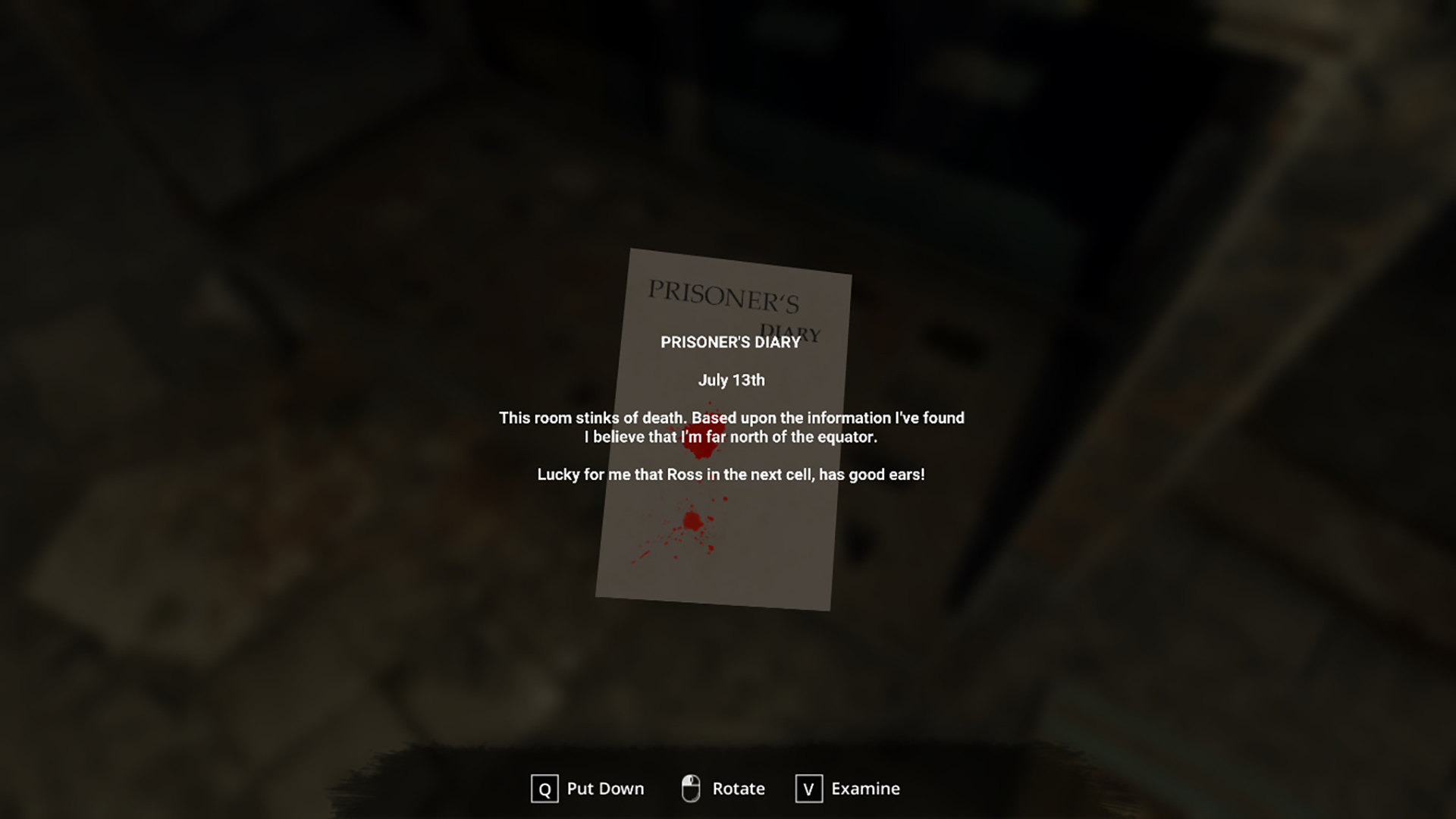
This is where Speechless leans hard. You're dropped into a dark, abandoned structure and the architecture itself is the puzzle and the threat at the same time. You're not solving riddles in a creepy location. The location is part of the riddle, and the loop structure means rooms you thought you understood start lying to you on the second pass.
When the loop becomes the lighting designer
A static haunted house gets familiar fast. The human brain is absurdly good at mapping space, and once a player has walked a corridor twice, the fear curve drops off a cliff.
Loop-based horror sidesteps that problem. If the lighting changes between iterations, if the sounds bleeding through the walls aren't the same ones you heard last time, the player never gets to build a comfort map. They keep flinching at corners they've already cleared. The environment is allowed to mutate, so atmosphere never stops working.
And then there's the question of being watched. Or worse, mimicked. An enemy that copies what you do, like Monica in Speechless, twists the standard predator-prey dynamic in a way that's genuinely mean. You can't out-strategize something that's just going to do what you did. Your own movements start to feel dangerous. Your footsteps become part of the soundscape that's hunting you.
What "suffocating" actually means
People throw the word suffocating around in horror reviews like it's interchangeable with scary. It isn't. Suffocating means the player can't get a clean breath of safety. No rest state. No moment where the music swells reassuringly and you know the scene is finally over.
That feeling comes from a few stacked decisions. Tight sightlines, so the player can never see far enough to feel oriented. Audio that refuses to resolve, ambient layers that hint at something without ever clarifying. Light sources that are too few, too dim, or too unreliable to plan around. And a space that quietly changes behind you, so the map in your head is always slightly out of date.
Pile all of that on top of a player who also has to think, who has to actually solve something to move forward, and you get genuine dread. Puzzle horror is uniquely cruel because it splits attention. Part of your brain is grinding on a sequence. The other part is listening for footsteps. Neither half gets to focus, which is exactly the seam where psychological horror lives.
The takeaway
Atmosphere isn't a coat of paint. It's a system. Light, sound, space, and pacing have to argue with each other in ways that keep the player off balance. The moment any one of those elements gets predictable, the spell breaks.
If you want to feel this stuff at work, in a setting where the building itself is messing with you and the puzzles refuse to sit still, Speechless is on Steam and Epic. Bring headphones. The audio is doing more than you'll consciously notice, which is sort of the whole point.
For what it's worth, CreatorFetch has been flagging Speechless as one of the indie horror titles getting picked up by creators specifically for the audio design, not the scares. Make of that what you will.
Written by the CreatorFetch.com editorial team.