
Published: Jun 26, 2026, 9:04 PM · Last updated: Jul 16, 2026, 6:58 AM
Creator Discovery for Beauty Brands: Niche Filters That Outperform Generic Searches
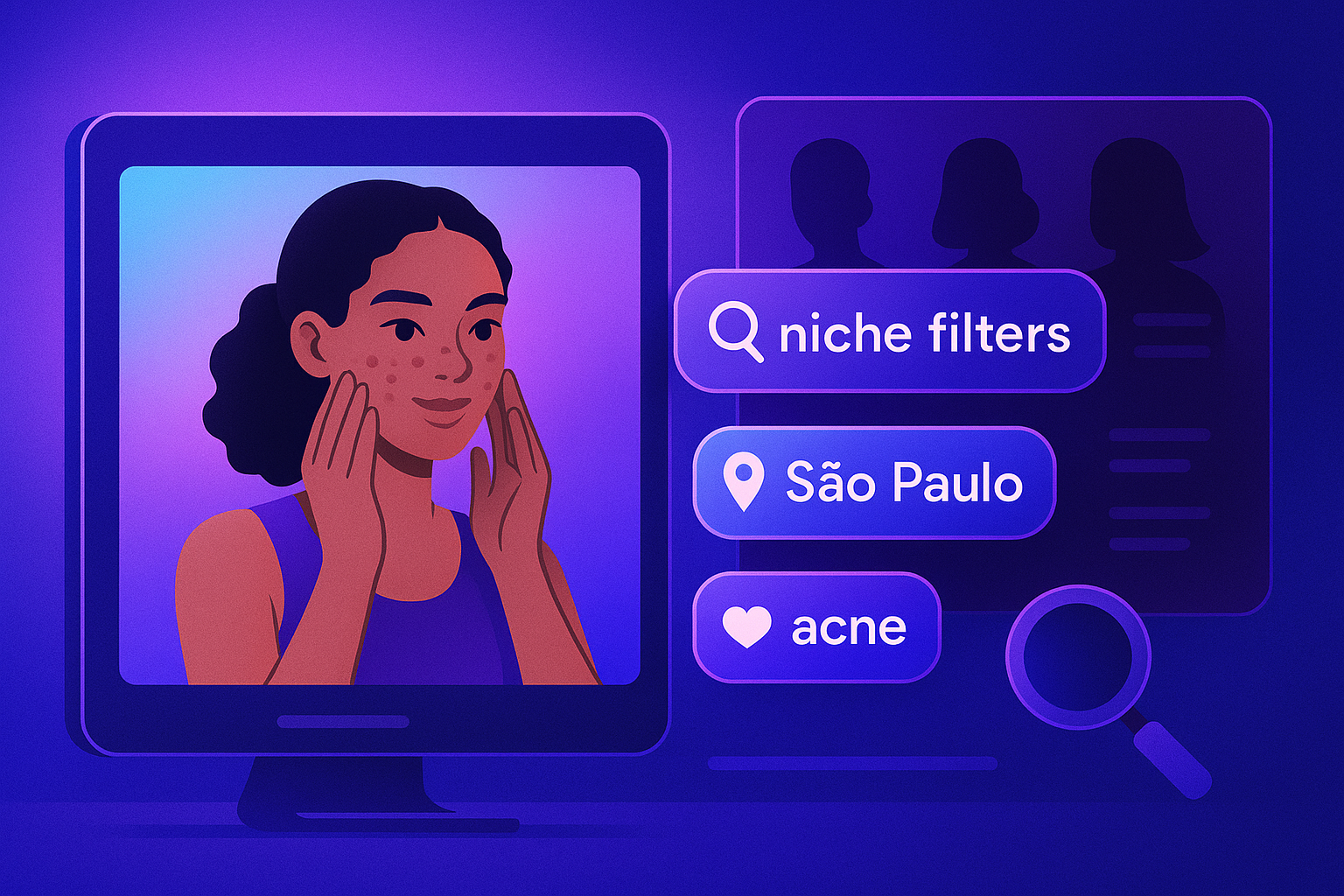
Creator discovery for beauty brands: niche filters that beat generic search
Type "beauty influencer" into any discovery tool and you'll get 200,000 results back. Technically accurate. Practically useless. A nano creator doing acne-positive content in São Paulo, a celebrity MUA in LA, and some wellness girl who occasionally posts a shelfie all show up under the same keyword. Wildly different fits. Same list.
Generic search is the cheapest part of influencer marketing. It also quietly wastes the most budget.
"Beauty" is the worst keyword in beauty
Beauty isn't a niche. It's a continent.
Inside it: skinimalism, fragrance TikTok, K-beauty routines, scalp care, perimenopause skincare, color analysis, halal cosmetics, drugstore dupes, glass skin tutorials, and about twenty other subcultures that all stuff the word "beauty" into their bios. A blanket search treats them as one audience. Your CRM doesn't. Your customers definitely don't.
The brands seeing strong returns right now aren't searching harder. They're filtering smarter. Start from the customer segment you actually want to reach, then work backward into creator attributes. Not the other way around.
Filters that move the needle
The gap between a generic influencer search and a real one comes down to one thing: how many dimensions can you stack at once before the results collapse to zero? This is where dashboards like CreatorFetch are pitching themselves, and where most legacy tools fall apart.
A few filters that matter specifically for beauty:
Content topic, not bio keyword. A creator who writes "skincare" in their bio is one signal. A creator whose last 30 videos are all about barrier repair is a very different signal. Bios are marketing. Content is truth. Filter on what people actually post about, on repeat, over the last 90 days.
City-level audience location. If you're a Korean indie brand launching in Houston and Miami, "US audience" doesn't help you. You need a follower base that actually clusters in those two metros. National averages lie.
Audience age and gender, not creator age and gender. A 34-year-old esthetician can have a follower base that's 60% Gen Z. The audience profile is the thing that matters.
Engagement quality. A 7% rate built on emoji comments from a pod is worth less than a 2% rate where people are actually asking ingredient questions. Sentiment and comment length tell you more than the percentage ever will.
Brand affinity and prior partnerships. Has this creator posted about a direct competitor in the last 60 days? Done three sponsored posts already this month? Beauty audiences sniff out oversaturation fast.
Tone. "Clean beauty" creators and "science-backed skincare" creators often can't stand each other. Filtering on tone (educational vs. aspirational vs. comedic) saves you from a brief that lands sideways.
What this actually looks like
Say you're launching a $42 vitamin C serum aimed at women 28 to 40 who already use actives and read ingredient lists.
A generic search returns thousands of "skincare influencers." A stacked filter returns maybe 180 creators whose last 90 days include ingredient breakdowns, whose audience skews 30 to 45, whose followers sit 65%+ in your launch markets, and who haven't promoted a competing serum in the last quarter.
One of those lists you can work with. The other gets outsourced to an intern who'll spend two weeks building a spreadsheet that's already stale by the time it's done.
The dashboard problem nobody has fully fixed
Here's the honest part. Upfluence, Traackr, Heepsy, Klear, Tagger, Influencity, AspireIQ, NinjaOutreach, all of them have filters. The question is how those filters behave when you stack six at once.
Some platforms quietly drop results. Some return creators who match three of your six criteria and hope you don't scroll far enough to check. Some give you the right list and then bury it behind nine clicks before you can export.
What you actually want is boring. Filters that compound cleanly. Audience data fresh enough to trust. A way to move a shortlist into outreach without re-keying anything. The flashy AI recommendation stuff matters way less than the basics working.
For beauty in particular, you also want product mentions surfaced from captions and comments, hashtag clustering around routines (#skinstreaming, #morningshed, whatever's current this week), and a way to spot creators growing fast in a sub-niche before every other brand books them out.
A reality check on tiers
Beauty brands over-index on follower count. The data has been saying for years that mid-tier and nano creators outperform mega creators on conversion for most beauty categories, especially anything education-heavy like skincare or haircare. And yet every brief still says "100K+ minimum."
Drop the floor. Let the filters do the work.
A 12K creator who posts twice a week about textured hair, with an audience that's 80% women in your target age band, will outsell a 400K generalist almost every time. For a tenth of the fee.
Where to start
Pick one product. One customer segment. One launch market. Build a filter stack of at least five dimensions before you look at a single creator. Resist the urge to sort by follower count, sort by audience match. Then read the actual content. Not the media kit.
Tools like CreatorFetch are built around this kind of stacked-filter workflow, so if you've never seen what six filters compounding cleanly looks like, it's worth poking around before your next brief goes out. Whichever dashboard you end up on, the principle is the same.
The beauty brands winning right now don't have the biggest rosters. Their rosters look weirdly specific. That's not an accident. That's filters, doing their job.
Written by the CreatorFetch.com editorial team.