
Published: Jul 16, 2026, 2:03 PM · Last updated: Jul 16, 2026, 2:05 PM
From Allegory to Action: What Apocalyptic Fables Teach About Civic Vigilance
Why we keep telling the end of the world through animals
There's a reason the scariest stories about power usually don't feature people at all. They feature pigs, rabbits, dogs, wolves. Animals give us just enough distance to look at the ugly stuff without flinching, and just enough recognition to feel the sting when we realize the story is about us.
That's the whole trick of the apocalyptic fable. It hands you a talking turtle or a scheming hyena and lets you lower your guard, and then, once you're comfortable, it shows you exactly how a society talks itself into ruin. MADAC, Milan Jhon's political fable set in the forest of Vigard, works squarely in that tradition. But the part I want to dig into isn't the plot. It's what these stories actually train us to do once we close the book.
The fable's oldest job: teaching you to watch
Civic vigilance is a dry phrase. Nobody wakes up excited to "stay vigilant about institutional decay." But that's precisely what fables have been smuggling into readers' heads for centuries.
Orwell's Animal Farm taught a generation how slogans get quietly rewritten overnight. Golding's Lord of the Flies showed how fast order dissolves when the adults, meaning the checks, disappear. Watership Down turned a warren of rabbits into a study of leadership styles, from paranoid strongmen to the ones worth following. Different animals, same lesson underneath: pay attention to who's in charge and what they're doing while everyone else is distracted.
MADAC picks up that thread and runs it toward the apocalypse.
Vigard, and the tree everyone ignored
The forest of Vigard is dying, and the clearest sign is the Pisa tree, whose roots have dried up to the point of collapse. In the world of the book, that tree is basically a warning light on the dashboard. One of the more haunting lines readers keep coming back to says it plainly:
"Everyone should watch out for the Pisa tree. Its roots have entirely dried up and are on the brink of collapse. If it falls, evil spirits will invade the Forest, seizing our holy Forest. Open your eyes, the Apocalypse war is looming."
Read that as literal fantasy and it's spooky. Read it as allegory and it's uncomfortable, because the whole point is that the warning is right there, visible, and the forest keeps not listening. The apocalypse doesn't arrive as a surprise attack. It arrives because a community stopped watching the root that was holding everything up.
The cast is the argument
Jhon builds Vigard out of political archetypes with fur. Russell the UTEK turtle. The lions. The hyenas. Elephants and wolves, each carrying a role you'll recognize from any real power struggle. And that's the smart move, because the characters aren't just characters. They're the debate itself, acted out.
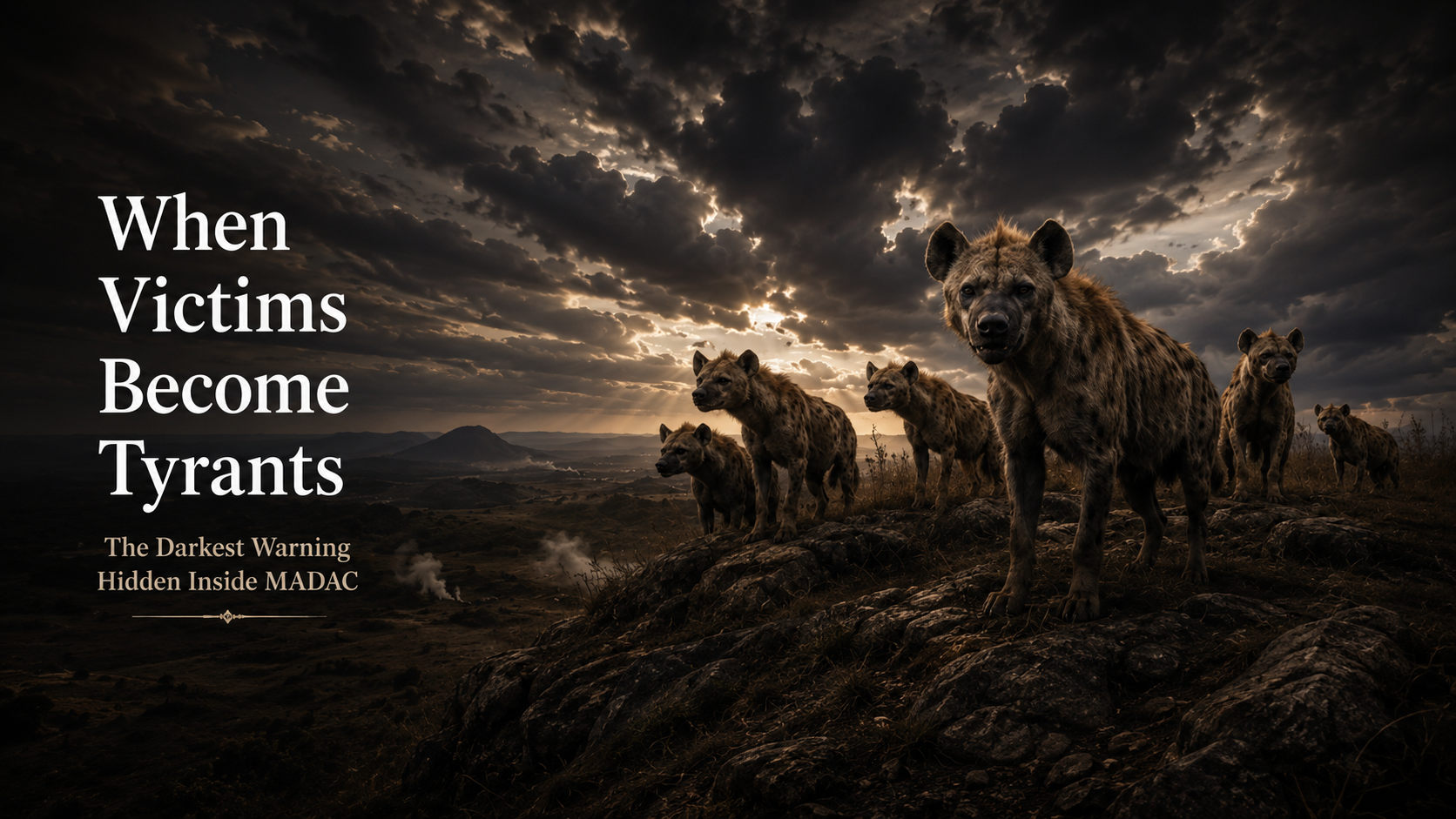
The hyenas are the ones that stick with me. There's a whole thread in this story about victims who, once they get a taste of control, turn into exactly the tyrants they once feared. It's one of the least comfortable truths about power, and a fable is honestly one of the few places you can say it out loud without starting a fight. You watch the hyenas do it, you nod, and only later do you catch yourself thinking about people you actually know.
Then there's Savarat, the mythical holy book at the center of the plot. A prophecy that everyone wants to claim, interpret, and weaponize. If you've ever watched a righteous-sounding cause get hijacked by someone who just wanted the throne, you already understand the danger MADAC is pointing at. The most dangerous lie, the book keeps suggesting, is the one that sounds holy.
From reading it to actually noticing things
So what does allegory-to-action really mean? Not that you finish MADAC and go start a movement. That's the cheesy version. The real version is quieter.
Good apocalyptic fiction rewires how you read the news, and how you read a room. Once you've watched a corrupt leader in Vigard rot the forest from the inside while distracting everyone with prophecy and enemies, you start spotting the pattern:
- Leaders who point at an external threat every time someone questions them at home.
- Sacred language used to shut down debate instead of open it (the Savarat problem).
- The slow, boring collapse, the dried root, that nobody wants to deal with because it isn't dramatic yet.
- Yesterday's victims setting up tomorrow's cruelty, and calling it justice.
That last one is the whole ballgame. The apocalypse in MADAC, and in most fables worth reading, begins within. It's not the invaders at the gate. It's the choices made by the ones already inside, while everyone else assumed someone else was keeping watch.
Where MADAC sits on the shelf
If you love Orwell and Adams, MADAC is going to feel familiar in the best way, though it leans harder into myth and prophecy than either of them did. Animal Farm is tight political satire. Watership Down is more of an epic survival story with leadership woven through it. MADAC blends the political intrigue with an actual apocalyptic clock ticking down, plus a holy-book mystery holding the plot together. It's fable, but it's also got the dread of dystopian fiction sitting underneath.
Is it perfect? It's dense, and the symbolism asks you to work a little. If you want a breezy animal adventure, this isn't quite that. But if you like a story that makes you argue with yourself afterward, that's kind of the point.
The book runs through a series of chapters, each opening up a different corner of Vigard's society and its politics, so you're not just handed one moral. You're handed a whole broken system to walk through and diagnose yourself.
MADAC is available on Amazon if you want to see how Vigard's story ends, and whether the forest opens its eyes in time. Worth reading before you next assume someone else is watching the root.
Written by the CreatorFetch.com editorial team.