
Published: Jul 16, 2026, 12:00 AM · Last updated: Jul 17, 2026, 2:26 AM
GROUND BRANCH
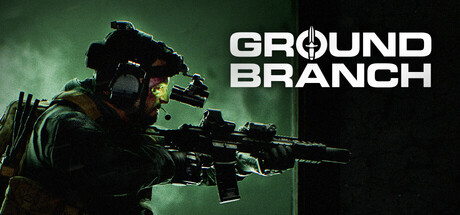
The tactical shooter that refuses to hurry
Some players will happily spend twenty minutes deciding where a magazine pouch sits on a plate carrier before firing a single round. If that made you nod instead of wince, you already know whether GROUND BRANCH is for you.
It's made by BlackFoot Studios, a team with people who worked on the original Rainbow Six and Ghost Recon, published now by the revived MicroProse. And it's been in pre-alpha and Early Access for most of a decade. It finally hit V1.0. The pitch stays narrow on purpose: bring back the deliberate, punishing tactical realism of the late '90s and early 2000s. No unlocks. No loot boxes. No microtransactions. You show up, you plan, and one bullet ends you.
You can grab it on Steam, where it lived through Early Access for years. That long runway matters, and I'll circle back to it, because it shapes both the game and how it has to be sold.
True First Person is the whole thesis
The headline feature is what the studio calls True First Person. The camera sits at your character's actual eyes. Bullets leave from the weapon's actual muzzle. Sounds like a technicality. It isn't.
Here's what that buys you. Your body exists in the world in a way most shooters just fake. Lean out of cover badly and your foot pokes into the open, an enemy can see that foot, and he can shoot that foot, but only when his line of sight and his muzzle both have a clean path. No free bullets through geometry. You also have to manage height over bore, which is the gap between where your sight is looking and where the barrel actually points. Peek over a low wall with an optic and your rounds might slam into concrete you can't even see below your reticle.
Most tactical shooters simulate the idea of all this. GROUND BRANCH treats it as a physics problem you solve every single engagement.
Loadouts with actual consequences
The customization goes deep enough to intimidate. Character appearance, outfit, vest layout, weapon platform, individual pouch placement, where each attachment sits on the rail. And none of it is cosmetic theater. Push a scope too far forward and your sight picture shrinks to a pinhole. Carry a long rifle into a tight interior and weapon collision fights you at every doorway. Overload your kit and encumbrance drags your movement into the mud.
So the loadout screen is really your first tactical decision of the mission. That's a genuinely different philosophy from the games that hand you three preset classes and call it depth.
Everything's unlocked from the start, by the way. The lore excuse is that you're the elite paramilitary arm of the CIA's Special Activities Center, so the Agency hands you the right tools. The real reason is the studio drawing a hard line against progression grinds and monetization. For this crowd, that line is the whole appeal.
Movement and the parts still marked "planned"
Weapon handling and movement carry a lot of the weight. Standing, crouching, prone, each at multiple speeds. Postures like low-ready and high-ready. Leaning, free-look that splits head movement from aim, optional free-aim with an adjustable dead zone. Separate mouse sensitivity sliders for point-shooting, unmagnified aiming, and magnified aiming. You can even set whether a bolt-action cycles itself or waits for a second click. That level of granular control is either exactly what you want or completely baffling, and the game doesn't much care which one you are.
Co-op runs up to 8 players, adversarial goes 8v8, and there's integrated VOIP with 3D positional voice and team radio, so you're not babysitting a Discord bot to coordinate. There's a killhouse with swappable floor plans and shooting ranges with dynamic targets for practice.
Now the honest part. Read the feature list closely and you'll spot a lot of checkmarks sitting next to hourglasses. The "campaign," a web of smaller localized missions tied to global hotspots with a central intelligence interface and choices that ripple forward, is the kind of thing that arrives in pieces. Single-player with friendly AI and a full command system has sat in the planned column for a long time. V1.0 coverage from creators talks up new AI, armor, and maps still arriving, which tells you this 1.0 behaves more like an ambitious milestone than a finished, sealed box. Anyone who followed the project back through its dev blogs knows the pace has always been slow and iterative.
The community it actually has
Watch who's covering this and the picture sharpens fast. These aren't casual gaming channels chasing a trend. They're milsim-adjacent creators, the ones who benchmark GROUND BRANCH against OPERATOR, Incursion Red River, and Arma. One creator literally frames the experience as chaining himself to the keyboard to get through it, which is affectionate and accurate at once. Another came back to it in 2026, years after first launch, treating it like a known quantity rather than a discovery.
That's the tell. This isn't a game having a mainstream moment. It's a game with a devoted, opinionated, deeply specific audience that's been arguing about pouch placement and free-aim dead zones for years. The early impressions all orbit the same questions. How the AI holds up. Whether the campaign structure delivers. How the movement feels next to its rivals.
Why the marketing can't go wide
Here's where the launch math gets interesting. Dumping a broad ad push at GROUND BRANCH would light money on fire, because the deliberate, unforgiving pace its fans love is precisely what bounces a casual buyer inside twenty minutes. Sell it to everyone and you manufacture refund requests and angry reviews from people who wanted a run-and-gun shooter and got a foot-out-of-cover simulator instead. The realistic path for a game this specific is to aim straight at the people already inclined to love it: milsim unit organizers, tactical FPS analysis channels, the realism streamers who compare bolt-action cycling options for fun, the small-but-loud crowd that treats OPERATOR and Arma as reference points. That's the exact targeting problem CreatorFetch is built to solve, giving a studio like BlackFoot the infrastructure to find those hyper-niche creators without drowning in the Steam-launch firehose or wasting spend on audiences who'd hate the game on principle.
GROUND BRANCH was never trying to be a hit. It's a stubborn, decade-long labor for a genre most of the industry walked away from, and it wears that stubbornness as its whole identity. If you miss the shooters that made you think before you moved, this one's aimed squarely at you. If you don't, no trailer on earth converts you, and the game seems fine with that.