
Published: Jul 16, 2026, 12:00 AM · Last updated: Jul 18, 2026, 12:25 AM
Heave Ho 2
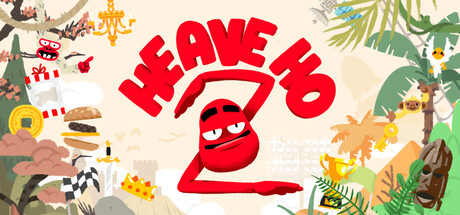
The couch game that finally left the couch
The first Heave Ho worked because everyone was jammed into the same square meter of sofa. Four people, elbows knocking, one of you shrieking because whoever controlled the other hand let go half a second too soon and now you're both a smear at the bottom of the screen. That closeness was the whole joke. So the sequel raises an obvious problem: does any of that survive once you fling the players across the internet?
Heave Ho 2, from Le Cartel Studio and published by Devolver Digital, is betting it does.
Online play, for the first time in the series. That's the change that matters. Everything else, the extra worlds, the extra toys, the fresh ways to drop your friends into the void, is fine, but online co-op for a game built entirely on trust and timing is a real design gamble. That's the part I'm watching.
If you've never touched one: you control a little armless blob with two grippable hands. You grab a ledge, you grab your teammate, they grab something else, and together you become a wobbly human chain flinging itself toward a goal. Release at the wrong instant and gravity handles the rest. It's Getting Over It energy wearing a party-game smile, and when it clicks it produces the specific laughter that only comes from failing together.
The sequel spreads across eight themed worlds. Weightless space, a kitchen, medieval stuff, ninjas, the usual Devolver grab-bag of tonal whiplash. More interesting than the settings is the pile of interactive junk crammed into each one. Pop guns, drones, spaceships, ski lifts, keys, ketchup. And lasers, which the store page mentions with the tired inevitability of a studio that knows what it's doing. Each of these is a new physics verb, and physics verbs are where a game like this lives or dies. Pile on too many gimmicks and the pure swing-and-grip elegance gets buried under stuff nobody asked for.
Then there's versus mode. You turn on the same friends you were just cooperating with. Le Cartel is upfront about it: the challenges are "cunningly designed to start a completely different argument every time." Honest. Party games run on fresh grudges, and shipping a betrayal button next to the co-op means they're covering both halves of the friendship-destruction market.
What the early hands-on is actually testing
The community coverage tells you where the pressure points are. Creators poking at it early aren't fussing over visuals or world themes. They're stress-testing the difficulty, and more than one has flagged that this entry cranks the challenge past the original. Which tracks. The first game was already a controller-throwing exercise. A sequel that leans harder risks tipping from productive frustration into just plain annoying, and in this genre that line is razor thin.
The other thread, over and over, is the online question. Latency is the quiet killer here. Success depends on releasing a grip within a few frames of your partner's move, and that's exactly the sort of thing bad netcode chews up. Nobody's going to care about eight themed worlds if the timing feels rubbery when your co-op partner is three states away. That's what I'd want to see torn apart before launch. Not the trailer choreography.
This is a console-forward release, clearly. The push has been tied hard to Nintendo Switch 2 and the original Switch, with PC riding along rather than headlining. The Steam page lists a demo, which is the right call for a game this dependent on feel. You either get the swing rhythm in your hands or you don't, and no trailer sells that for you. Past the demo and a newsletter signup, though, the official site is thin. No breakdown of netcode architecture, no rollback specifics. Given how much rides on the online experience, that's a gap I'd want closed well before the July 2026 date shows up.
Why a shotgun launch would waste it
Here's where the business reality bites. A physics party game doesn't sell itself through a broad, spray-and-pray marketing blast, however much Devolver goodwill sits behind it. Nobody buys Heave Ho 2 off a banner ad. They buy it after watching four people lose their minds trying to clear one level, because the entire appeal is social and performative. You understand this game by watching other people fail at it, loudly.
So the audience that actually converts is narrow: couch co-op and party-game streamers, the local-multiplayer YouTube crowd, ragegame and "watch us ruin our friendship" clip channels, and the Nintendo creators whose viewers own the hardware it launches on. Reaching those people on purpose, instead of praying the algorithm coughs them up, is the difference between a launch week and a slow fade into the Steam back catalog. CreatorFetch is the sort of infrastructure that lets a studio find and coordinate those hyper-specific creator segments without eating the full cost of the Steam-launch firehose. For a game whose best salespeople are its own players, that's the realistic survival play.
The bones are here. The first game earned its cult following honestly, and the sequel's toy box looks genuinely varied. But the whole thing hangs on one bet you can't verify from a trailer: whether the magic of two people fumbling a grip in the same room survives a network cable. If the netcode holds, this is an easy recommendation for anyone with three friends and a grudge. If it doesn't, it's a great local game in an online costume. Play the demo first. Ideally with someone you can hear screaming.