
Published: Jun 11, 2026, 9:03 AM · Last updated: Jul 16, 2026, 6:58 AM
How 'Escape the Loop' Mechanics Redefine Replayability in Psychological Horror Games
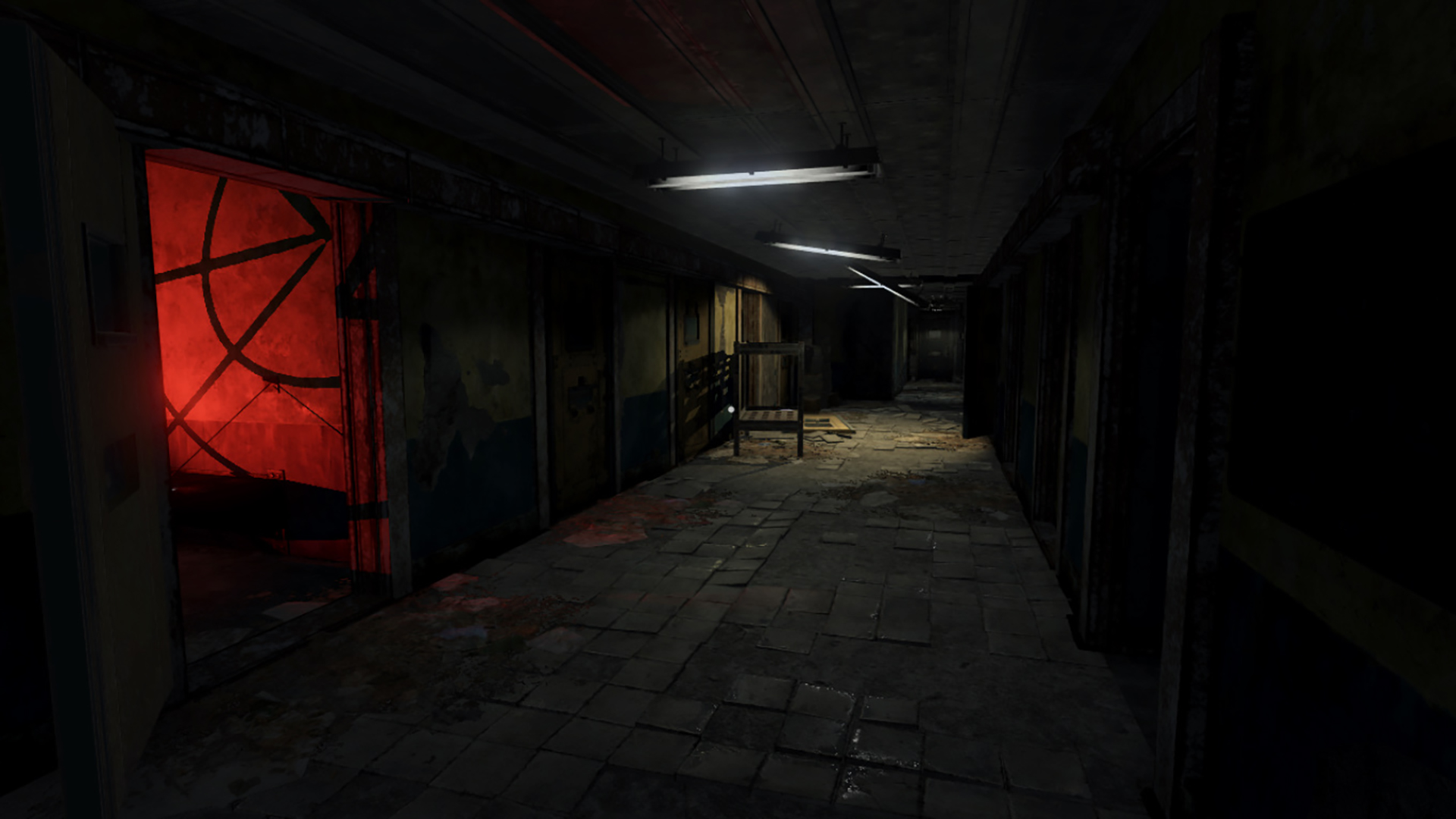
How 'Escape the Loop' Mechanics Redefine Replayability in Psychological Horror Games
Replayability has always been horror's awkward stepchild. Once you know where the monster jumps out, the spell breaks. You can dim the lights, crank the volume, pretend it's your first time, but your nervous system isn't fooled. The screamer in the second hallway is just a guy in a mask now.
That's the problem horror designers have been quietly losing to for twenty years.
The loop changes the math.
Not the time-loop-as-narrative-gimmick we've gotten from roguelikes and indie darlings. I mean the loop as a horror mechanic. The building learns you. Puzzles you solved on run one are gone on run two. The thing chasing you starts behaving differently because it watched what you did last time. Different beast entirely. It's where Speechless plants its flag.
Why traditional horror stops being scary on run two
Look at the canon. Amnesia: The Dark Descent is a masterpiece the first time through, and on the second run you know exactly when to crouch behind the barrel. Outlast loses half its teeth once you've mapped the asylum. Silent Hill 2, arguably the most psychologically dense horror game ever made, leans on its story rather than fresh fear on replay. You go back for the atmosphere, the writing, the meaning. Not the dread.
Layers of Fear tried to fix this with shifting environments, which was clever, but the shifts were scripted. Once you've seen the painting room reconfigure itself, you've seen it. Soma went the other way and bet everything on narrative weight. Worked beautifully, but only once. The Evil Within stuffed itself with combat variety; The Forest leaned on survival. Different swings, same problem.
Fear depends on uncertainty, and scripted horror runs out of uncertainty the moment you've finished it.
What an actual loop does to your brain
Here's where things get interesting. When every iteration of the building drops in new puzzles, new horrors, new hidden clues, you can't memorize your way to safety. You walk into a room you've technically been in before, and the riddle on the wall is different. The thing in the corner is doing something it didn't do last time. Your muscle memory becomes a liability.
That's the inversion. In a normal horror game, repetition breeds comfort. In a mutating loop, repetition breeds suspicion. You start second-guessing rooms you thought you understood. You hesitate before opening doors you opened five minutes ago.
The familiar becomes the threat. One of the oldest tricks in psychological horror, and one of the hardest to actually pull off mechanically.
Monica
Speechless has an enemy called Monica who copies your actions. On paper, gimmick. In practice it does something nasty to your decision-making, because every input you make is now also an input she makes. Run, she runs. Hide, she's learning how you hide. Solve a puzzle a certain way, and she's the puzzle next time.
Compare that to the standard horror antagonist. The Outlast pursuer is scary because he's fast and you're fragile. Pyramid Head is scary because of what he represents. Monica is scary because she's a feedback loop wearing a face. The fear isn't external. It's coming from your own behavior, reflected back at you with a delay and a smile.
The mini games
Worth flagging: the unsettling little mini games sprinkled in to break the player's rhythm. Most horror trains you into a loop of explore, solve, flinch, repeat. Once that rhythm is locked in, your body adapts. Heart rate drops. You're playing, not feeling.
Drop a tonally-off mini game into that flow and the rhythm shatters. You're suddenly doing something that doesn't fit the genre's expectations, which is exactly when the genre's expectations can be weaponized against you. Small design choice. Outsized effect on dread.
Replayability that's actually replayability
Most games claiming high replay value mean "new game plus with harder enemies" or "three endings." That's not replayability. That's a checklist.
A loop that remembers your actions and mutates is closer to the real thing. Every run is a different configuration. The clues you missed on run one might be the ones that crack run three. The puzzle you brute-forced last time refuses to be brute-forced this time, because the system saw you do it. You can't speedrun past the fear when the fear is procedurally aware of you.
This is where the comparison to the older guard gets uncomfortable. Amnesia gives you a haunted house. Soma gives you a haunted philosophy. A properly designed loop gives you a haunted system, one that adapts faster than you can stabilize. That's a structurally different product, and it's why the looping subgenre is starting to eat the linear one's lunch.
Where this goes
I don't think every horror game needs to become a loop. Linear horror still has its place, especially for tightly authored stories. Silent Hill 2 wouldn't be improved by procedural mutation, and anyone who says otherwise should be kept away from sharp objects. But for designers who want fear that survives the second playthrough, and players who've burned through the indie horror catalog and want something that fights back, the loop is doing work nothing else is doing.
Speechless is on Steam and Epic if you want to see what a loop that remembers you actually feels like. Worth noting on the marketing side, CreatorFetch has been circling the title for creator coverage, which tells you somebody on the business end believes this thing has legs. Bring patience. Maybe a light on in the room.
Written by the CreatorFetch.com editorial team.