Published: Jun 17, 2026, 12:06 AM · Last updated: Jul 16, 2026, 6:58 AM
How to Build an Influencer Discovery Dashboard That Actually Drives ROI in 2025
How to Build an Influencer Discovery Dashboard That Actually Drives ROI in 2025
Most influencer dashboards are graveyards.
Pretty charts. Lots of tabs. Zero answers. You open one on Monday, scroll past follower counts, screenshot something for the deck, close the tab. By Friday you've spent $40k on creators and still can't tell me which one moved anything.
The dashboard isn't really the problem. The way it's built is. A discovery dashboard that actually drives ROI in 2025 looks almost nothing like what agencies were pitching back in 2021, and if you're still working off vanity metrics and one-shot searches, you'll lose to teams that figured this out a year ago.
Start with search, not metrics
Almost every team builds the dashboard backwards. They start with "what do we want to measure" and end up with engagement rate columns nobody trusts.
Start with the search layer. If you can't find the right creators in under a minute, nothing downstream matters. Doesn't matter how nice the charts are.
The search layer needs three things, and most platforms only nail one. Keyword search that actually reads creator content, not just bios. Filters that go past country and follower count (niche, language, content style, posting frequency). And the ability to surface creators you didn't know to look for. That last one is where teams leave the most money on the table, by a wide margin.
This is where I'd point at CreatorFetch, which was built around AI-powered discovery across YouTube, TikTok, and Instagram with filters for niche, region, language, and audience size. The reason it matters for a dashboard build is boring but real: you can pull discovery straight into the workflow instead of bouncing between five tabs and a half-broken spreadsheet.
Upfluence and Heepsy give you scale. Traackr and Tagger lean enterprise (with the price tag). Klear and AspireIQ are fine if you're already locked into their campaign ecosystems. The real question isn't "which is best." It's which one fits the dashboard you're actually trying to build. A scrappy DTC brand running 20 creators a quarter does not need the same plumbing as a global agency running 2,000.
Five panels. That's it.
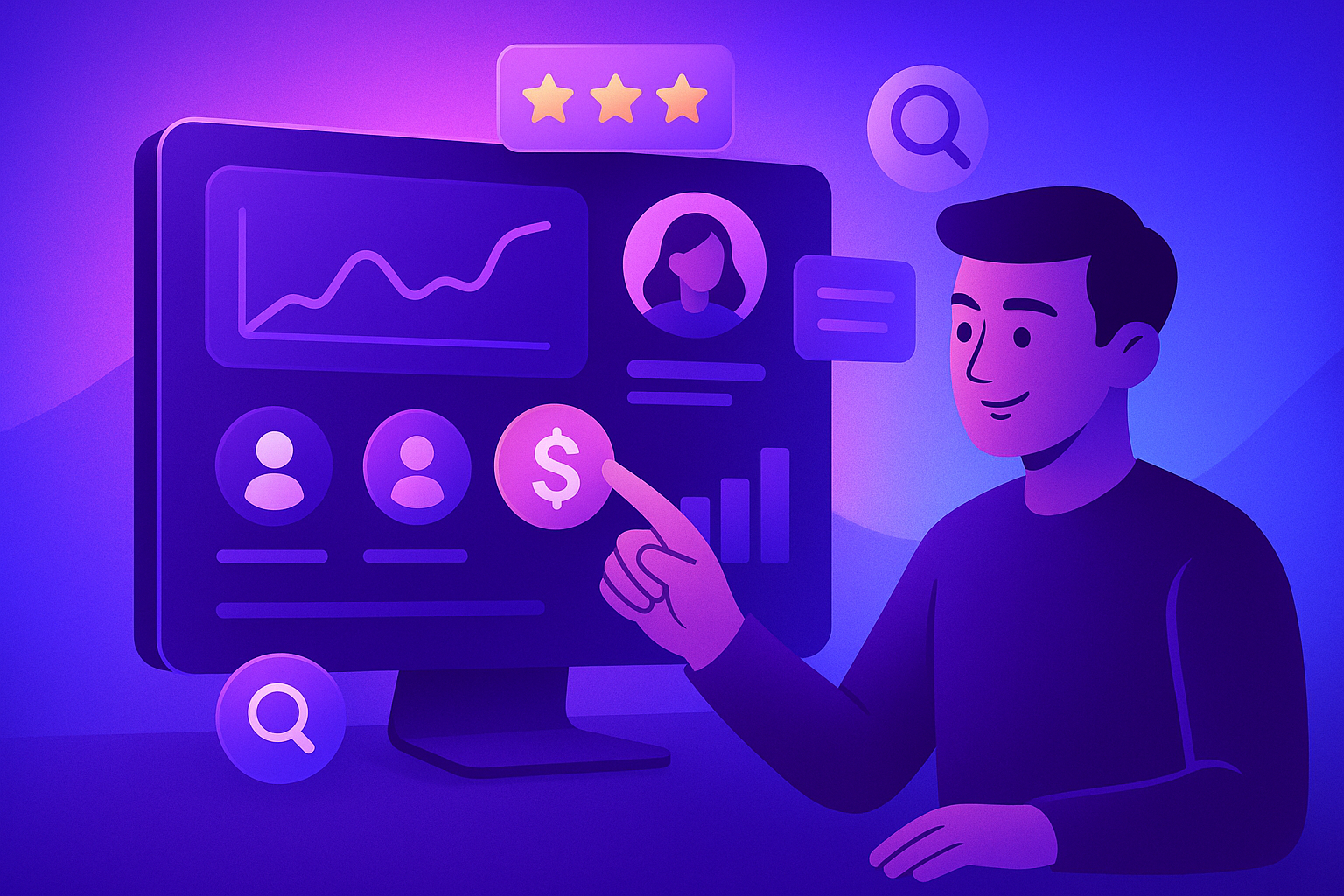
Forget the 30-widget monstrosities. A working discovery dashboard has five panels.
1. The shortlist. Creators currently being evaluated. Name, platform, niche, follower range, link to their content, status field (researching, outreach sent, negotiating, signed). No engagement rate yet. That comes later.
2. Audience fit. Where most dashboards faceplant. Follower count tells you almost nothing on its own. What you want: audience location breakdown, age skew, and overlap with creators you've already worked with. If 60% of someone's audience is in a country you don't ship to, nothing else on the page matters.
3. Content fit. What do they actually post about, and how often? Do their last 10 videos match the brand voice, or did they pivot three months ago? You'd be surprised how often a "fitness creator" hasn't posted a workout in six weeks. Pull the recent content yourself. Don't trust the category tag.
4. Commercial signals. Have they done brand deals? With whom? Any exclusivity floating around? Rough rate range if you can dig one up. This single panel is what separates a real dashboard from a glorified Pinterest board.
5. Performance, after the fact. Views, clicks, conversions, attributed revenue. And this matters: only for creators you've actually worked with. Don't pollute discovery with predictive performance scores. Mostly noise.
Wire it to revenue or don't bother
Here's the thing nobody wants to admit. A discovery dashboard that doesn't connect to revenue is a research project, not a marketing tool. If you can't trace a creator from "we found them" to "they drove $X," you're doing theater.
The connection doesn't have to be fancy. UTM links. Promo codes. A two-line post-purchase survey asking where they heard about you. What matters is that every creator on the shortlist eventually has a number next to their name. Even a rough one. Even a wrong one. Because the moment you have numbers, patterns show up: micro-creators in one niche converting at 4x the rate of macro-creators in another. You can't see that without closing the loop.
Most teams skip this because it's annoying. Don't skip it. The teams who do it are the ones quietly compounding while everyone else is still chasing follower counts.
Ways these things die
A few patterns I've watched sink otherwise solid builds:
- Treating the dashboard as a one-time setup. Audiences shift. A creator who was 70% US in January might be 40% US by July. Refresh quarterly, minimum.
- Tracking every platform equally when 90% of your spend lives on one. If TikTok is where you live, build for TikTok. Other platforms earn their place later.
- Letting the dashboard turn into a vanity report for leadership instead of a working tool for the campaign managers. The minute it goes "exec-friendly," it stops being useful to the people who need it.
- Over-relying on engagement rate. Gameable, inconsistent across platforms, doesn't correlate with conversion the way people pretend. Sanity check, not north star.
What ROI actually looks like right now
The honest answer: ROI in influencer marketing is still messier than paid social, and anyone telling you they've solved attribution is selling you something. But it has gotten better. Between platform-native shopping integrations, code tracking, and post-purchase surveys, you can usually triangulate within 15 to 20% of the truth. That's enough to make decisions.
The bigger shift is this. Stop measuring campaigns. Start measuring creators. Someone who delivers a 2x ROAS on a first campaign and a 4x on the second isn't a "good campaign." They're a relationship worth investing in. The dashboard should make that obvious at a glance. If yours doesn't show creator-level performance across multiple touchpoints over time, you're going to keep paying first-date prices for what should be long-term partnerships.
Build the thing so it answers one question first. Who do we work with again, and who do we drop. Everything else flows from there.
Written by the CreatorFetch.com editorial team.