
Published: Jun 25, 2026, 9:02 PM · Last updated: Jul 16, 2026, 6:58 AM
How to Calculate True CPM for Influencer Campaigns Using Dashboard Analytics
How to Calculate True CPM for Influencer Campaigns Using Dashboard Analytics
Most influencer CPM numbers are fiction.
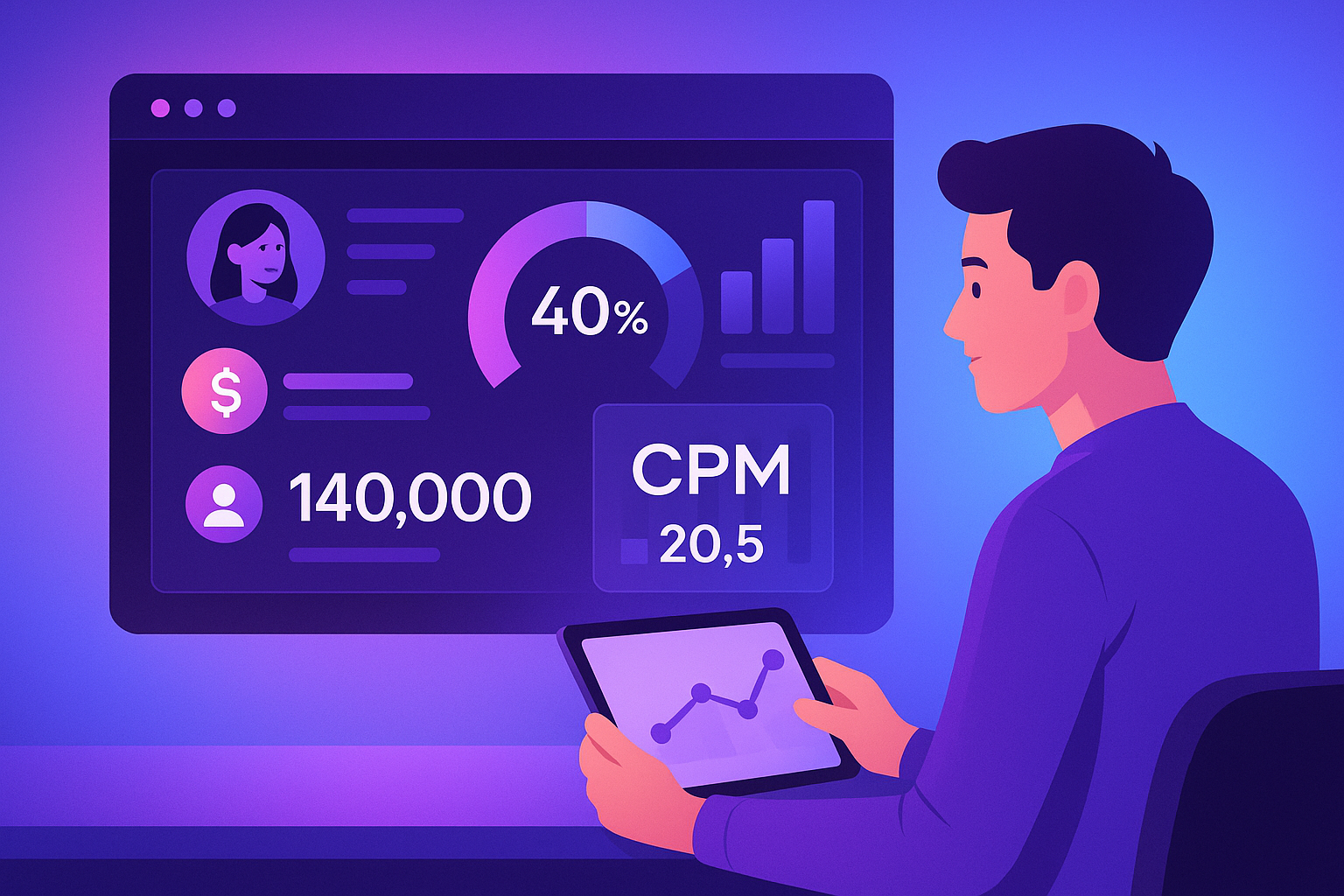
Not because anyone's lying. The math everyone defaults to, post fee divided by follower count times a thousand, has almost nothing to do with what actually happened on the campaign. You paid for a million followers. You reached 140,000 of them. The CPM you reported back to finance was a bedtime story.
True CPM is a different exercise. Post-campaign, not pre-campaign. And it depends on getting clean data out of a dashboard that can tell you who actually saw the content, how many of them were real humans, and what the work really cost once you stop pretending the creator's invoice is the whole bill.
The formula nobody runs correctly
Textbook version: cost divided by impressions, times 1,000. Easy. The reason it goes sideways in influencer is that both inputs get fudged.
On cost, people only count the creator invoice. They leave out usage rights, paid amplification, agency fee, product seeding, shipping, the platform subscription, and the hours their team spent chasing the creator for screenshots. On impressions, they use reach estimates pulled from a media kit the creator built three months ago, when their account was on a hot streak.
So the reported CPM ends up roughly half the real number. Sometimes a third. I've sat through audits where the reported figure was $4 and the true one, after both sides got cleaned up, was closer to $19.
Step 1: Real cost, not invoice cost
Before you open a dashboard, write down every line item attached to the campaign. Creator fee is the obvious one. Then add the rest.
Usage and whitelisting fees. Product cost at COGS, not retail. Shipping and customs if you sent product internationally. Any paid boost behind the post. Agency or platform fees prorated to this campaign. Internal hours at a loaded rate if your finance team rolls that way.
That's your true cost. Almost always 1.4x to 2x the creator's invoice. Skip this and every CPM you calculate is already wrong before you've touched a single analytics number.
Step 2: Pull impressions from the source
This is where a dashboard earns its keep. You want actual impressions per post, per story frame, per Reel, pulled directly from platform analytics. Not typed into a spreadsheet by a coordinator at 11pm.
Tools have been around for a while. CreatorFetch, Upfluence, Traackr, Tagger, others. They all promise some version of the same thing. What you actually want from any influencer discovery dashboard, regardless of which logo is on it: verify a creator's audience before you sign them, pull post-level analytics after the content goes live, and flag inflated reach so you're not paying premium rates for bots.
The "verify before you sign" piece is the one teams underweight. If 22% of a creator's audience is fake or inactive, your true CPM is already 22% worse than the quoted version, and you haven't even posted yet. A creator search that surfaces audience quality up front saves you that fight after the fact.
Step 3: Discount for audience quality
Now apply a quality discount to the raw impressions. This is the step most teams skip, and it's the single biggest reason reported CPMs look prettier than they are.
Dashboard says 14% suspicious followers? Knock 14% off impressions before you do the math. If engagement on sponsored posts runs 40% below organic (super common pattern), factor that in too. You're not punishing the creator. You're counting humans who actually had a shot at absorbing the message.
Some marketers go further and apply a viewability discount on top, similar to programmatic display. Fair on Stories and Reels, where a "view" can be a half-second swipe. Pick a discount, apply it consistently across campaigns. Consistency matters more than precision.
Step 4: Math by content type, not by campaign
A creator might post one Reel, three Stories, and a feed post for the same flat fee. Lumping all that into a single CPM hides which format is doing the work.
Split the cost across formats however makes sense to you. Weight by internal value rankings, or split evenly if you don't have a better signal. Calculate CPM per format. Aggregate up to the campaign level only if you need one number for reporting.
You'll find pretty quickly that one format is carrying the campaign and another is dead weight. That's the insight you actually wanted.
Step 5: Benchmark against paid social
This bit is more opinion than method, but it matters. The whole reason you bother with true CPM is to know whether influencer spend is competitive with your other paid channels. Comparing one creator to another creator is a popularity contest. Comparing your true influencer CPM to your Meta or TikTok paid CPM is a budget decision.
Run it this way and a lot of "successful" influencer campaigns suddenly look mediocre. And a few that everyone wrote off turn out to be the best media buy of the quarter. That's the point.
What to actually look for in the dashboard
If you're shopping tools, the marketing pages all blur together. Influencer discovery dashboard, creator discovery, audience analytics, campaign tracking, fraud detection. Everyone says they do everything.
The questions are narrower than that. Can you pull post-level impressions without asking the creator for screenshots? Does the platform surface audience quality before you sign, not after? Can you export the data cleanly enough to run your own CPM math, or are you stuck with whatever metric the vendor felt like showing you? Does the influencer search actually filter on the stuff that matters (audience location, real engagement, content category), or does it just sort by follower count with a nicer UI?
Answer yes to those and the logo on the login page barely matters.
Try the calculation on one campaign you've already run. If the true CPM comes out close to your reported number, your process is solid. If it comes out 2x worse, congratulations. You've just found the most valuable number in your marketing dashboard.
Written by the CreatorFetch.com editorial team.