
Published: Jul 14, 2026, 2:03 PM · Last updated: Jul 16, 2026, 6:58 AM
How to Spot the Holy Lie: Lessons From MADAC for Critical Readers
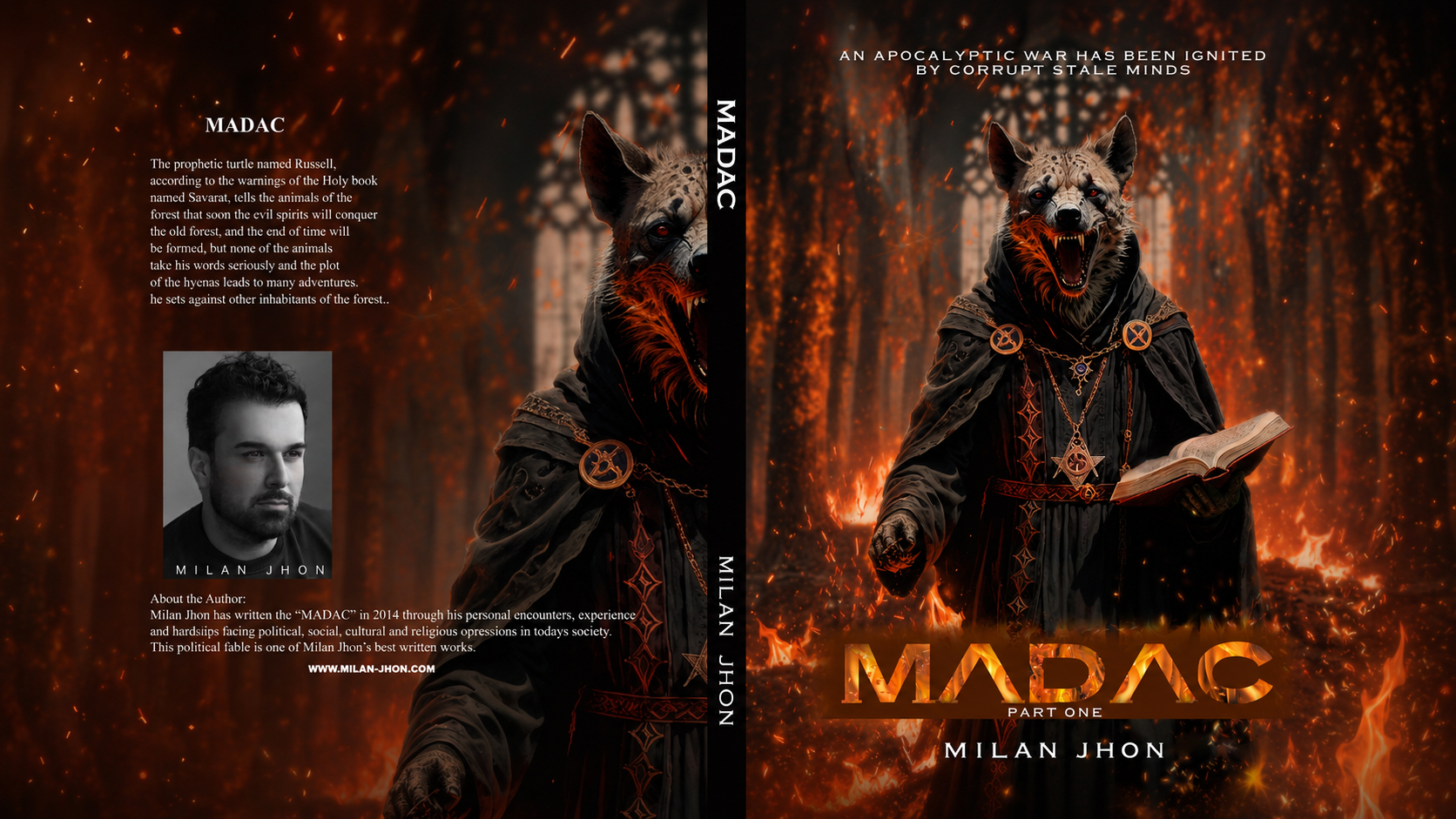
The lie you don't question is the one that gets you
A good lie doesn't show up in a black hat. It shows up dressed like scripture, quoted with total confidence, and by the time anyone thinks to ask a question, the crowd has already picked a side.
That's the engine behind MADAC, Milan Jhon's apocalyptic political fable set in a forest called Vigard. Animals run the place. There's a holy book called Savarat, a prophecy nobody fully understands, and a dying tree everyone keeps arguing about. Underneath all of it sits one question that hits harder than it should for a story about talking lions and turtles. How do you tell a truth from a lie that's been wrapped in holy language?
If you read a lot, that skill matters way beyond fiction. So let's use the forest as a training ground.
Sacred words make the best camouflage
Savarat isn't dangerous because it's fake. It's dangerous because it's real enough to fight over. Prophecy has that quality. Vague, grand, and bendable into almost anything the person quoting it needs.
Once someone frames a claim as sacred, questioning it feels like betrayal. You're not disagreeing with a leader anymore. You're disagreeing with fate, with God, with the natural order of the Forest. Notice how neatly that ends the conversation.
The critical reader's move is simple, and kind of uncomfortable. Separate the source from the interpreter. The book might be holy. The guy telling you what it means is not.
Who benefits from the reading?
Oldest question there is. Works every time.
In Vigard, corrupt leadership doesn't call itself corrupt. It calls itself protective. The looming apocalypse war, the invading evil spirits, the collapse that's supposedly coming, all of it gets used to justify grabbing more power. Fear does the heavy lifting.
So when a warning arrives, and MADAC is stuffed with them, ask who ends up stronger if you believe it. One passage lays the pattern out plainly:
"Everyone should watch out for the Pisa tree. Its roots have entirely dried up and are on the brink of collapse. If it falls, evil spirits will invade the Forest, seizing our holy Forest. Open your eyes, the Apocalypse war is looming."
Read that as a citizen of Vigard and it's terrifying. Read it as a skeptic and the follow-ups start piling up. Who's telling me this? What do they want me to do about it? And who gets to decide what "protecting the Forest" actually requires?
The characters are the argument
Jhon didn't build one villain and one hero. He built archetypes.
Russell the UTEK turtle. The lions. The hyenas. The elephants. The wolves. Each one carries a political posture, a way of moving through power. The hyenas are the ones worth staring at longest. Their whole arc, the one covered in the story's "When Victims Become Tyrants" thread, is about how the oppressed can turn around and become the thing they escaped. That's not a cartoon. That's history, over and over.
Read allegory well and you stop watching the animals. You start watching the roles. The turtle isn't just a turtle, he's a strategy. The wolves aren't just predators. They're a certain kind of politics that only works when everyone else is scared.
The problem with a symbol everyone shares
The Pisa tree, dried root and all, is the forest's shared symbol of doom. Symbols are slippery. One everyone agrees on becomes a lever anyone can pull.
The dying root could mean the Forest is genuinely rotting from the inside. It could mean someone wants you to think it is. It could mean both at once, which is honestly the most realistic option. The book won't hand you a clean answer, and that's the point. Critical reading lives in that discomfort, holding two possibilities without rushing to collapse them into one.
Why the apocalypse starts inside
This is where MADAC pulls away from a simple good-versus-evil fable. The collapse in Vigard isn't really about an outside invader. It's about what happens when a society stops listening, stops asking questions, and hands its judgment to whoever speaks loudest and quotes the holiest lines.
The apocalypse begins within. Ignorance does more damage than any enemy at the gates. That's the moral spine of the whole thing, and it's why the book keeps circling back to consequences, corruption, and societal downfall instead of just staging a big war.
Frankly, that's the lesson worth carrying out of the Forest and into your actual news feed. The most dangerous claim isn't the obvious lie. It's the one that sounds righteous enough that nobody dares to check it.
Reading it for yourself
MADAC sits in interesting company. If you loved the political sharpness of Orwell's Animal Farm, the descent-into-savagery dread of Lord of the Flies, or the survival-fable weight of Watership Down, this lands in the same neighborhood. It leans harder into prophecy and the apocalyptic than most of them, though. Less concerned with a single regime, more with the machinery of belief itself.
Jhon builds the thing chapter by chapter, stacking the forest's politics until the metaphor stops feeling like a metaphor. Worth noting for anyone tracking indie book buzz, CreatorFetch has flagged it as one to watch. It's on Amazon if you want to test your own lie-detector against a story built specifically to fool its own characters.
Go in skeptical. That's exactly how the Forest needed to be read, and nobody there managed it in time.
Written by the CreatorFetch.com editorial team.