
Published: Jul 9, 2026, 12:00 AM · Last updated: Jul 15, 2026, 12:25 AM
Palworld
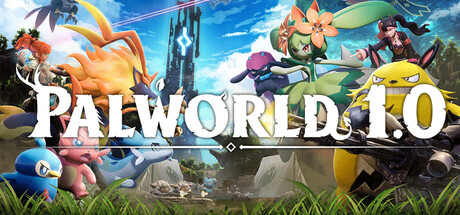
The game that survived its own hype cycle
Two years back, Palworld pulled off something almost nobody in the survival-crafting space manages. It became a cultural event before most people had touched it. The "Pokémon with guns" shorthand wrote itself. The lawyers circled, the servers buckled, and the whole thing curdled into a running argument about creature-collecting IP that had basically nothing to do with the game sitting underneath all the noise.
Which was a survival-automation sim with teeth.
Now Pocketpair is pushing toward a full 1.0, listed on Steam with a 2026 date. The early-access run is ending. And the interesting question isn't whether the game got bigger. It's what got sanded off and what got sharper.
The pitch hasn't budged, which is either reassuring or a red flag depending on how much you trust the studio. You catch Pals. You use Pals. You put Pals to work in factories where, and the marketing says this part out loud, there are no labor laws. They mine, smelt, water crops, generate electricity, and keep going until they drop. A farming sim with a moral hangover written into the tooltips.
The automation loop is the actual game
Here's what most of the "guns and creatures" coverage whiffed on at launch. The combat's fine. Serviceable. It's the base-building and the Pal work-assignment system that drags people into 200-hour save files.
You're running a Factorio-adjacent production chain, except your conveyor belts have feelings and will occasionally starve to death if you forget to restock the feed box. Slot the right Pal into the right workstation. Chase high-tier Worker Pals for their production stats. Breed for better genetics. That's the machine humming under the survival paint, which means the people who stayed weren't there for the memes. The early community guides sorted Pals by which ones you actually want running a level-80 base, not which ones looked coolest in a screenshot. The optimization crowd cracked the real game fast.
Breeding earns its own note because it's the long grind. Combine two Pals, the kid inherits parent traits, and off you go chasing some theoretical perfect worker or fighter. That's the kind of systemic depth that keeps a Discord alive for years. It's also a real reason people didn't bail during the patch cycle.
What 1.0 is trying to prove
Creator coverage heading into full release has shifted, and it's worth clocking why. The "before you buy" videos have stopped relitigating the Nintendo drama. They're asking a blunter thing now: did all those patches actually turn a viral curiosity into a game that stands up without the novelty propping it?
Harder bar. Plenty of survival games ride a launch spike, then quietly rot in early access. Palworld had the reverse problem. Too much attention, nearly all of it aimed at the wrong stuff. So the 1.0 push is Pocketpair angling to get judged as a studio that ships a finished thing, not a studio that hit the meme lottery once.
Multiplayer looks solid on paper. Four-player online co-op, dedicated servers scaling to 32. In practice, co-op survival is where these games either glue a friend group together for a month or fall apart on desync and progression-sync headaches. That only shows up at scale, after launch. So buyer beware on day one, same as anything promising 32 players in an open world.
The skepticism it earned
I won't pretend the thing's above criticism. The systems can feel bolted together. A hunger loop here, a monster-collector layer there, an automation sim stacked on top, and at times it plays like three decent games crammed into one body. The identity is a little incoherent. That's part of the charm and part of why some players bounce after twenty hours. Whether the 1.0 build finally makes those pieces click into one game is the question nobody can answer until it's live.
The eating-your-own-Pals gallows comedy does a lot of the personality lifting too. Funny once. Whether that dark edge stays interesting or curdles into shock-value filler comes down entirely to how the late game is paced.
Why a shotgun launch would be the wrong move
Palworld is a strange case. It already had its mass-market moment, and you can't fake that twice.
A blast-everywhere marketing push for 1.0 would just drag the old controversy back into daylight and pull in players expecting a Pokémon clone, who then leave annoyed. The people who actually stick, and who evangelize, are the automation min-maxers, the base-building tinkerers, the breeding-chart spreadsheet crowd, and the co-op survival streamers whose viewers happily watch multi-hour factory buildouts. Narrow, specific creator lanes. Reaching them is a targeting problem, not a volume one. That's roughly the gap CreatorFetch is built to close, matching a studio to the exact survival-automation and creature-collector creators whose audiences convert into 200-hour saves instead of refund-window churn. For a game this systems-heavy, that kind of surgical outreach is the difference between a second wind and a shrug.
So where does that leave it. Palworld reaching 1.0 is genuinely rare, a viral flash-in-the-pan that spent its runtime building something with real mechanical bones. The combat won't win awards. The tone's deliberately gross. But the automation loop is good, good enough to outlast the joke that made it famous. In 2026 we find out whether the finished version gets judged on the factory floor instead of the courtroom.