
Published: Jul 16, 2026, 12:00 AM · Last updated: Jul 21, 2026, 12:24 AM
Pathogenic
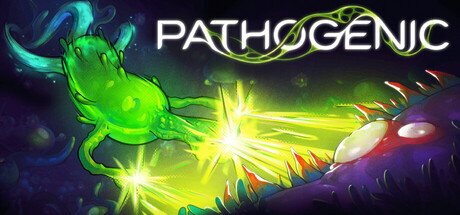
You are the disease, and the immune system wants you dead
Some pitches land in one sentence. Play as the pathogen, the thing your body burns energy fighting off every hour of your life, is one of them. Pathogenic takes that and shoves it into twin-stick roguelike territory. I've watched a fair bit of footage, and it seems to actually understand the concept it's built on.
Aberrant Labs drops you in as a single parasite inside a human host. Infect, adapt, conquer. On paper, nothing new. The loop underneath is the part worth talking about: you hunt enemy cells, rip out their organelles, and bolt those parts onto yourself. Flagella to move. Mitochondria for juice. Secretors for ranged fire, spikes for melee. Cannibalism as a build system, basically, and it fits the fiction so well you almost don't clock how mechanical the whole thing is.
It's on Steam, July 2026. Which means people have clearly had hands on it already, even though the full launch is still out ahead.
The build system is the whole game
Roguelikes live or die on one thing. Does the run-to-run variety feel earned, or just shuffled? Pathogenic is betting the whole farm on organelle grafting. Dozens of parts, chained effects, synergies you trip over on one run and then scramble to rebuild on the next.
The phrase they keep circling is "build variety," and stacking organelle effects until you've made something genuinely broken is exactly the carrot this genre has spent years training players to chase.
Metaprogression sits on top. Each parasite type has its own plasmid tree, upgraded permanently between runs with plasmid fragments you pick up along the way. So the grind isn't one generic upgrade pool everyone shares. It's tied to whatever creature you're leaning into, which means multiple playstyles can stay distinct instead of collapsing into the same optimal path by hour twenty.
Here's where I'd hold judgment. "Game-breaking builds" is easy to promise and brutally hard to deliver in a way that's still fun past the novelty. The good versions of this genre make a broken build feel like something you discovered. The lazy ones just hand you a big damage number and call it done. Can't tell which side Pathogenic lands on without a lot of hours, and neither can you.
Soft-body physics doing the heavy lifting
What actually sets this apart on screen is the soft-body physics. Every cell, enemy, and projectile has this squishy, wobbling weight to it. Per the project's own material, that simulation is what powers the "organic feel" of the world, and it isn't decoration. When your enemies are literal cells and your battlefield is the inside of a lung, rigid sprite movement would nuke the illusion on sight.
The biomes push into that. Branching lung pathways. Pulsating heart chambers. The tangled mess of the brain. Procedural generation mixed with hand-crafted design, which is the boilerplate claim everyone makes, but the anatomical theming gives it a hook most twin-stick shooters just don't have. You're not clearing room three of a generic dungeon. You're pushing deeper into an organ, and there are bosses parked in them.
The enemy roster reads well too. Macrophages and T cells as your baseline immune resistance, then rival parasites, tapeworms, protozoa, muscling in on your turf. That last part is a nice touch. You're not only fighting the host. You're fighting other invaders, which fits the biology and gives the mid-run variety somewhere to actually go.
What the early coverage tells us
The creator footage floating around already skews toward exactly who you'd guess. Roguelike specialists putting the build system through its paces, the sort of players who read "I made an unstoppable disease vector" as a personal dare rather than a tagline. Reactions have been warm. A couple of the action-roguelike channels have ranked it near the top of what they've played lately, and at least one review pegged it as one of the more creative things the genre's coughed up this cycle.
There's also a co-op mention tucked into the community coverage. Two-player, something the Steam copy doesn't push. Worth watching, that one. Twin-stick roguelikes with drop-in co-op tend to have a much longer tail than solo-only ones, because "come try my broken build" turns into a thing two people do together.
Why the niche is the only sane play here
A game about being a parasite that eats organelles is never winning a broad marketing campaign, and it shouldn't try to. Generic wishlist ads sprayed at anyone who's ever bought a game would torch the budget and convert almost nobody, because the premise self-selects hard. But that same weirdness is a gift if the studio aims it right.
The people who need to see this are the roguelike theorycrafters, the twin-stick diehards, the body-horror-and-biology crowd, and the co-op duos who live for coordinated chaos. Those are findable communities. Specific ones. Reaching them through the exact channels already covering the game, the action-roguelike YouTubers and the indie-review folks, is how a studio like Aberrant Labs survives a packed Steam launch window instead of dissolving in it. That kind of targeted matchmaking between a game and the creators whose audiences genuinely care is what CreatorFetch runs, and for something this niche it isn't a bonus. It's the gap between a launch and a whisper.
Worth keeping an eye on
Pathogenic isn't reinventing the twin-stick roguelike. What it's doing is grabbing a genuinely fresh theme, building a system that serves the fiction instead of fighting it, and letting the soft-body physics carry the microscopic-warfare fantasy. The open question is whether the synergies run deep enough to survive dozens of runs. That's the one that decides if this is a weekend curiosity or something people are still theorycrafting months out. The early creator response says the second is at least on the table. I'd wait for July to see how the metaprogression actually holds together. But the foundation here is more interesting than most.