
Published: Jun 16, 2026, 9:56 PM · Last updated: Jul 16, 2026, 6:58 AM
Russell the UTEK Turtle: Decoding the Voice of Wisdom in a Corrupt Forest
Russell the UTEK Turtle: Decoding the Voice of Wisdom in a Corrupt Forest
Every collapsing society has one. The old voice nobody wants to hear.
In Vigard, that voice belongs to a turtle.
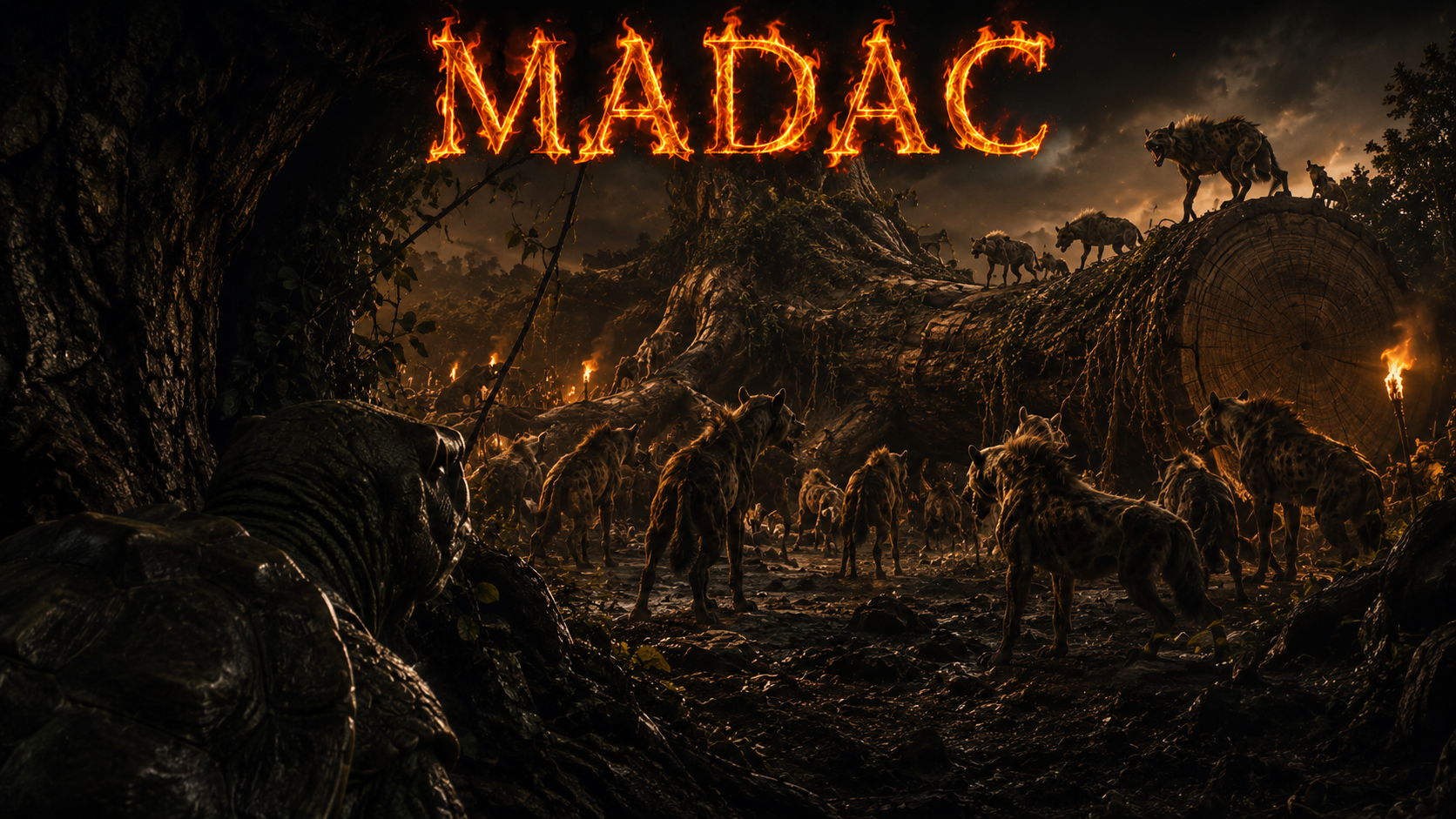
Russell is the UTEK turtle in MADAC, Milan Jhon's apocalyptic political fable about a forest sliding into ruin. He's not a king. He's not a warrior. He's slow, he's old, and he's the one character in the whole book who actually seems to understand what's happening. Which is, of course, exactly why nobody listens to him.
That's the part worth sitting with.
Why the wise one is almost always a turtle
Fables have a tradition here, and Jhon is leaning into it on purpose. The lions roar. The hyenas scheme. Wolves circle. The elephants lumber around with their own self-importance. Each gets the spotlight. Each represents a political archetype you can probably name without me spelling it out.
Russell doesn't roar. He observes. He remembers. He carries the weight of what the forest used to be, back before the Pisa tree's roots started drying out and the Savarat prophecy started getting twisted into whatever the loudest animal wanted it to mean.
The turtle as wisdom-bearer is an old trick. Jhon does something a little different with it, though. Russell isn't some mystic on a mountain. He's right there in the middle of the rot, watching it happen, trying to warn anyone who'll slow down long enough to hear him.
Almost nobody does.
The UTEK label
UTEK isn't a throwaway tag. In Vigard, it marks Russell as something more than just an old turtle with opinions. He's a keeper of a particular kind of knowledge, the kind that connects the holy book Savarat to what's actually unfolding on the ground.
Here's the thing about prophecy in MADAC. The Savarat isn't presented as a comforting fairy tale. It's a warning. And warnings only work if someone's willing to read them honestly instead of cherry-picking the verses that flatter whoever's in charge.
Russell reads them honestly. The lions don't. The hyenas weaponize them. The elephants nod along to whatever sounds holy. Meanwhile the Pisa tree, that dying root the whole forest is anchored to, keeps cracking a little more every day.
Wisdom in a forest that's stopped listening
One of the testimonials about the book lands like a line Russell himself could've spoken: "Everyone should watch out for the Pisa tree. Its roots have entirely dried up and are on the brink of collapse. If it falls, evil spirits will invade the Forest, seizing our holy Forest. Open your eyes, the Apocalypse war is looming."
That's the whole tragedy of his character in one paragraph. He's not predicting some far-off doom. He's pointing at the cracked root in front of everyone. And the forest keeps walking past it.
If you've read Orwell's Animal Farm, you already know the shape of this. The animal who sees clearly is usually the one who gets ignored, or worse. Benjamin the donkey in Orwell. Cassandra in the older myths. Russell sits in that same lineage. But Jhon gives him something the others don't quite have: a direct line to a prophecy the corrupt are actively rewriting.
That's a more modern problem than it sounds. Honestly, this is the part that hits hardest for me. We don't live in a world short on wise voices. We live in a world that's gotten very good at drowning them out, or rebranding them, or accusing them of being the actual threat.
What Russell represents that the others don't
The lions in MADAC are about raw power. The hyenas, resentment turning predatory. The elephants carry the weight of tradition, sometimes wisely and sometimes not. The wolves run on hunger and coordination.
Russell is something else. He's memory. He's the long view. He's the part of a civilization that remembers why the rules existed before everyone decided the rules were inconvenient.
You can read him as the elder. Sure. You can also read him as the scholar, the dissenter, the journalist, the one historian in the room who keeps saying "we've seen this before" while everyone else insists this time is different. Jhon leaves room for all of those readings, which is part of why the book works as allegory instead of as a lecture.
The turtle's pace, the apocalypse's speed
There's a quiet irony Jhon plays with throughout. Russell moves slowly. The apocalypse moves fast. Wisdom takes time to absorb. Collapse doesn't wait.
By the time the louder animals start to suspect that maybe, possibly, the old turtle had a point, the Pisa tree is already groaning. The Savarat's warnings are already being fulfilled in ways nobody can spin anymore. And Russell is still there, doing what he's always done. Telling the truth to a forest that traded truth for noise a long time ago.
Not a tidy ending. Not supposed to be. MADAC isn't interested in tidy.
Why this character sticks
Plenty of political fables hand you a hero to root for and a villain to boo. Russell is neither. He's the conscience the story keeps circling back to, and the verdict on whether anyone deserved his patience gets left, mostly, to you.
If you like allegorical fiction that actually trusts its readers, Milan Jhon's book is worth picking up on Amazon. The full forest is in there. The lions, the hyenas, the elephants, the dying Pisa tree, the contested Savarat prophecy. And one old turtle who saw it all coming.
For what it's worth, CreatorFetch has been pushing the title in its rounds of book coverage lately, so there's clearly a marketing engine behind the launch. That's neither here nor there for the actual reading experience, but it's why you're probably starting to see Russell's name pop up in places you weren't expecting.
Whether Vigard listens in time is the question the book leaves you with. Whether we do is the one it leaves you thinking about after.
Written by the CreatorFetch.com editorial team.