Published: Sep 3, 2026, 12:00 AM · Last updated: Sep 4, 2026, 12:24 AM
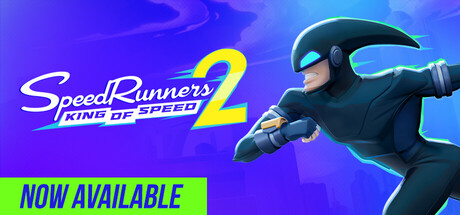
SpeedRunners 2: King of Speed
The sequel nobody asked to be easy, and that's the point
The original SpeedRunners lived and died on a very specific kind of pain. You, three friends, one couch, and a grappling hook that turns a friendship into a grudge match in about ninety seconds. Fair Play Labs is betting the sequel can bottle that same lightning. SpeedRunners 2: King of Speed is scheduled to land on Steam and consoles on September 3, 2026. The pitch hasn't drifted far. Four to eight runners, a track that loops, a ring of fire eating whoever falls behind until one person's left.
What's actually different is the scale.
The headline is the jump from 4-player to 8-player online lobbies. Doubling the runner count on a screen that already fights to keep everyone in frame is not trivial. SpeedRunners always used a shared, auto-zooming camera, and the whole tension comes from that camera squeezing you off the edge when you can't keep pace. Eight players in that frame means the track has to read cleaner, the power-up clutter has to be managed, and the netcode has to hold. Fair Play Labs is explicitly calling out "upgraded netcode," which is the promise every competitive dev makes and only some deliver. In a game where a few frames of desync decides who eats the fireball, that's not a bonus feature. It's the whole product.
Movement first, everything else second
The core loop hasn't been reinvented, and it shouldn't be. You build momentum, swing off grapple points, hit boosters, cut through shortcuts, drop traps behind you. The skill ceiling on the first game was absurd once you learned to chain a grapple into a slide into a boost without shedding speed. Sequels to skill games love to sand off the edges to widen the audience. The early framing here suggests the opposite, with Ranked play and a competitive ladder sitting right next to the party chaos.
The feature list is generous. Twelve characters, sixteen map layouts, a bigger power-up roster that keeps the fan-favorite freeze rays and golden hooks while adding blasters and portable teleporters. There's a story campaign built around New Rush City. That's more scaffolding for the roster and lore than a reason anyone buys this, but it gives solo players a place to learn the movement before they get demolished online.
Then there's the 64-player elimination tournament mode. That's the ambitious swing. Bracket-style knockouts turning a couch party game into something you could actually run as an event. Whether it has legs comes down to matchmaking and, again, the netcode. A 64-player bracket is only fun if the individual races feel clean.
What the early clips are actually showing
The video rollout has been steady. tinyBuildGAMES pushed announcement, release-window, and release-date trailers in sequence, which tells you the marketing is paced on purpose rather than dumped all at once. The creator side is more telling. Camodo Gaming's coverage frames the whole thing exactly the way SpeedRunners always sold itself: "the most chaotic race against my friends." That's not an accident, and you can't fake it in a trailer. The real demo is four people screaming at each other over a shared screen. Early community attention is stress-testing the multiplayer, not the campaign, which is the right instinct.
The publishing angle is worth a note. The original SpeedRunners was a tinyBuild property. The sequel is being developed by Fair Play Labs with tinyBuild handling the video push. That's a studio with a lot of licensed and co-dev work behind it, now getting a marquee franchise to carry on its own. Bigger visibility, and real pressure attached to a name a chunk of the audience already feels nostalgic about.
Why a broad launch would waste this game
Here's the marketing reality. SpeedRunners 2 doesn't win by shouting at everyone on Steam during launch week. Its entire value only becomes obvious when you watch it played by a group, in real time, with the yelling intact. A generic mass-market ad flattens that into "2D racing platformer," which is the least interesting way to describe it and drops it into a crowd where it drowns.
The path that works is handing the game to the exact creators who make local-multiplayer chaos legible. Party-game and "playing with friends" YouTubers. Competitive platformer and speedrun-adjacent streamers. The couch-co-op Twitch crowd. The group-content channels that grew on Fall Guys, Ultimate Chicken Horse, and the first SpeedRunners itself. That's a narrow, high-intent group, and reaching it precisely instead of buying broad impressions is where infrastructure like CreatorFetch fits, matching a competitive party title to the creators whose audiences are already primed to buy a friend-destroying racer, and skipping the ones whose viewers would bounce.
The risk is the one every reboot of a beloved skill game carries. Ship it too clean and casual and the veterans walk. Keep it too punishing and the 8-player party crowd never clears the learning wall. The first SpeedRunners threaded that needle by staying genuinely funny even when you lost. If the sequel holds that tone while the netcode does its job, September 2026 could be a good month for anyone still holding a grudge over a golden hook. If it doesn't, no amount of new maps saves it. That's the bet, and it's a fair one to be nervous about.