
Published: Jul 16, 2026, 12:00 AM · Last updated: Jul 17, 2026, 2:30 AM
The Mermaid Mask
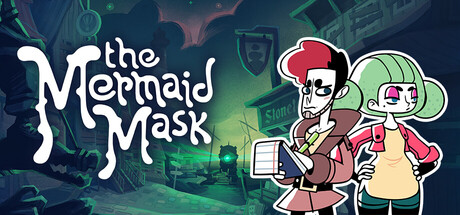
A locked room at the bottom of the sea
Captain Mortuga is dead. Slumped next to an old stone cauldron in a sealed cabin, aboard a submarine that has no business existing, and nobody who found him can say how he ended up that way. That's the hook for The Mermaid Mask, the next Detective Grimoire case from SFB Games. The premise leans on the one thing this studio actually does well: a tight, silly, hand-built whodunit where the answer turns out weirder than you'd guess.
Maybe-a-vampire, maybe-a-time-traveller. That framing tells you the register immediately. Cozy dread, not gore.
SFB earned the benefit of the doubt here. Tangle Tower was one of those point-and-clicks people quietly shoved at their friends, and Crow Country jumped into low-poly survival horror without the studio misplacing its voice along the way. So coming back to Grimoire and Sally isn't a nostalgia grab. It's the team returning to the format they're sharpest at, with more money on the screen this time.
What's actually new under the hood
The big mechanical change, going by how it's being shown, is that clues are now full 3D objects. You pick something up, rotate it, poke around, and the hidden detail sits somewhere on the model instead of hiding behind a flat sprite and a description box. Which means examination slows down and starts to matter. Rotate-to-inspect has been beaten to death in AAA, sure, but drop it into a deliberate, low-object-count deduction game and it changes the pace entirely. You're looking now, not clicking.
The rest reads like a studio that finally had a budget to spend. Fully voiced cast. English audio only, worth flagging if you lean on localised dubs. And an original score from the Budapest Art Orchestra, which is the sort of line most indies can't afford to write. Live orchestral recording for a point-and-click is a flex. It says plenty about where the Crow Country money went.
Putting the whole thing in one hand-painted submarine is the smart structural call. Locked-room mysteries live or die on a contained, legible space, and a sub is claustrophobic by design. Every corridor doubles as somebody's alibi. Every room you can't reach yet is a promise. It keeps the scope honest, and that's precisely what sank a lot of ambitious adventure games that sprawled themselves into mush.
The risk
Handcrafted mystery games hit a ceiling, and everybody knows what it is. They're basically one-and-done. Once you know who did it and why the cauldron matters, replay value falls off a cliff, and word gets around fast that a game is "short." Not a flaw, really. It's just the nature of the form. But it shapes how the thing gets received and sold, all the way down.
The demo's been out long enough for people to form opinions, and the community churn around it is the interesting part. Full no-commentary walkthroughs are already up, which means completionists are pulling apart the deduction logic before the game even ships. And horror-adjacent narrative streamers being the ones playing it early? That tells you the Crow Country audience overlap is real. Those are the players SFB should care about most. People who trust the studio's taste for the uncanny, not the passing adventure-game tourist.
Cross-platform helps, in theory. Day one on PC, Steam Deck, PS5, Switch, and Switch 2 casts a wide net. Trouble is, a wide net at launch is also where narrative indies drown. They land in the July 16, 2026 firehose next to a hundred other wishlisted things and get seen by nobody in particular.
Why the marketing can't be a shotgun
Throwing broad paid ads at The Mermaid Mask would just set money on fire. The people who'll love this are a narrow, identifiable slice, not a demographic you buy impressions against. A story-driven deduction game with a single ending and a specific art style doesn't convert on a generic "wishlist now" blast. It converts when the right voice plays it and their audience goes "oh, that's the Tangle Tower people."
That's the shape of problem a tool like CreatorFetch is built for, letting a studio reach the exact creator pockets that actually move this kind of title. Cozy-mystery and adventure-game YouTubers. The narrative-horror streamers who came out of Crow Country. The puzzle-and-deduction channels whose viewers watch a full playthrough as the whole point, not a spoiler to dodge. For a game that lives or dies on trusted taste-makers instead of ad spend, matching the release to those specific channels is closer to survival than growth hacking.
None of this guarantees the puzzles land, or that the mystery earns its strange ending. Demos flatter good openings and bury pacing problems in the back half. But SFB has cleared this bar before, and a locked-room case on a haunted submarine with a real orchestra behind it is, at minimum, a studio betting on its own strengths rather than chasing somebody else's genre. If you liked Grimoire the first time, you already know where you stand.