
Published: Jun 25, 2026, 2:03 PM · Last updated: Jul 16, 2026, 6:58 AM
The Secret Pact Between Elephants and Tigers: A Fable About Rigged Democracies
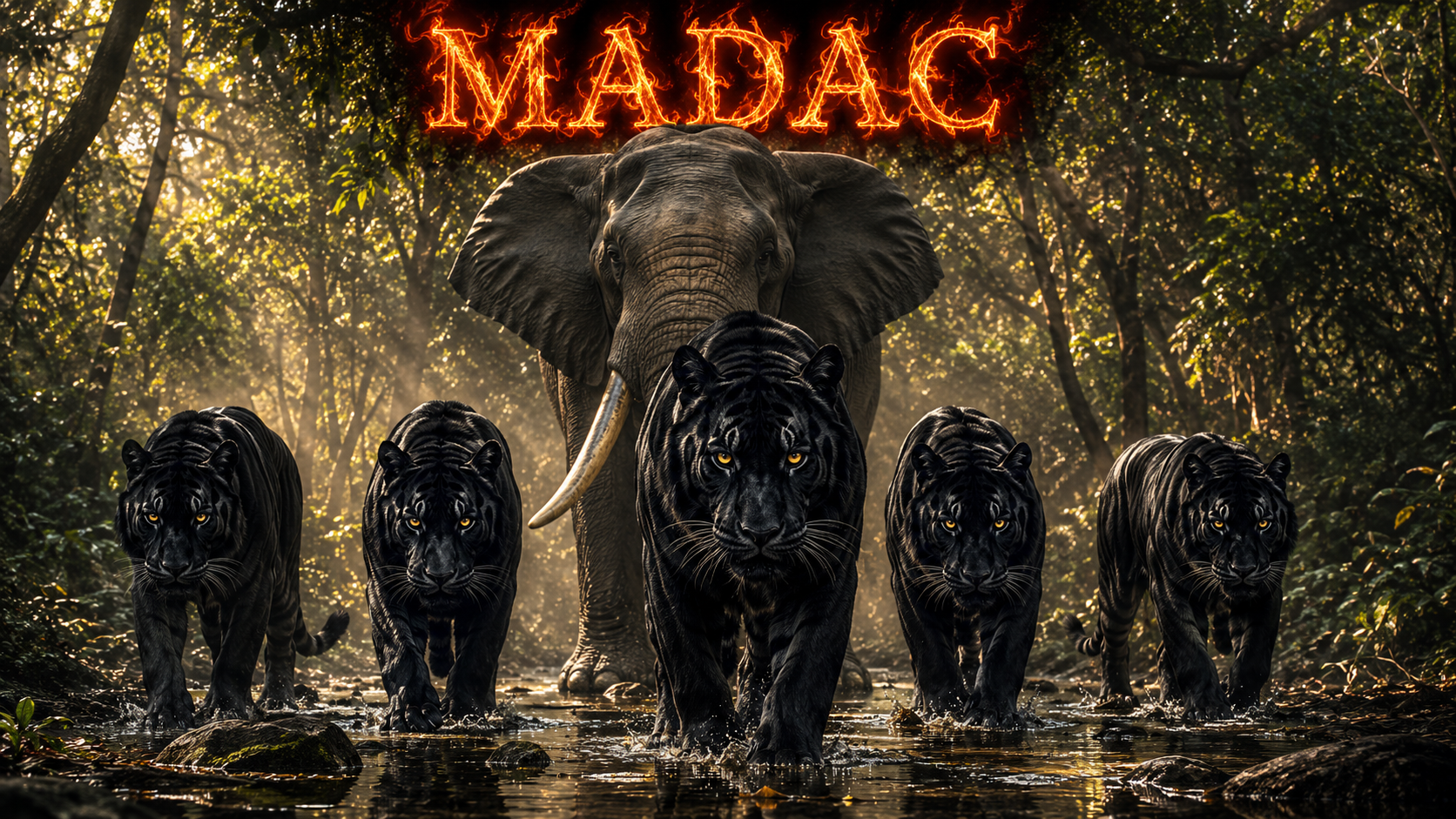
The secret pact between elephants and tigers
Somewhere in the forest of Vigard, two animals shake hands behind a tree. One has tusks. The other has stripes. The smaller animals never see it. They just live inside the consequences for the rest of their lives.
Nobody puts that part on the campaign poster. And it's the part MADAC, Milan Jhon's apocalyptic political fable, drags into the open by dressing it up in fur and tusks and prophecy.
Why a fable
Allegory sneaks past your defenses. You think you're reading about elephants and tigers and a turtle named Russell. Then halfway through a chapter you realize the thing being described is the last election you watched. Or the one before that. Or the one you can already feel coming.
Orwell knew. Adams knew when he wrote Watership Down. Animals strip the story to the bone. No party colors, no flags, no team jerseys to scream about. Just power, and who has it, and what they did to get it.
MADAC plays in that tradition without retreading it. There's a holy book, the Savarat, with a prophecy folded inside. A dying tree, the Pisa, whose roots have gone brittle. And pacts. Quiet ones, the kind that decide everything before a single vote gets counted.
The pact nobody campaigned on
Picture it. The elephants are massive, slow, respectable. Institutional memory. The kind of dignity that makes the smaller animals nod along when they speak. The tigers are something else entirely. Sharp. Hungry. They don't even pretend to be kind.
On paper, enemies. Stability versus appetite. One protects, one hunts.
But what if they're not enemies at all? What if, behind the scenes, they've agreed on something embarrassingly simple. The elephants get to look like the moral center of the forest. The tigers get to eat. As long as the tigers don't eat the elephants, and the elephants don't ask too many questions about the bones piling up near the river, both sides win.
Everyone else loses. Quietly. Generationally.
That's the rigged democracy. Not a stolen vote. Not a stuffed ballot. A pact made above the heads of the animals who think they're choosing.
The smaller animals and their faith in the system
The deer vote. The rabbits vote. The squirrels show up and feel proud about it. They argue with each other about whether the elephant candidate or the tiger candidate is the real threat. Cousins stop talking to cousins over it.
The pact holds.
MADAC is sharp on this. The book doesn't waste a chapter pretending the problem is one bad leader or one bad party. The rot is structural. It lives in the agreement, not the announcement. And the smaller animals, the ones who think they're participating, are mostly providing the noise that drowns out the negotiation.
Most political stories chicken out here. They give you a villain you can boo. A tyrant, a coup, something cinematic. Real rigged democracies aren't cinematic. They're boring. A handshake you never saw and a budget line you never read.
Russell the turtle
One of the more interesting choices in the book is Russell, the UTEK turtle. Turtles are slow. They notice things the fast animals miss, because they've been watching the same patch of ground for decades. The tiger ran past three times this season. The elephant always drinks at the same spot. The deer never go near the north end of the river anymore.
Slowness is its own intelligence. In a rigged forest, the animals who survive longest aren't the strongest. They're the ones who watched the pact get made and didn't pretend it wasn't happening.
That's the posture the book quietly recommends. Slow down. Watch who actually benefits. Stop arguing about the headline and look at the handshake.
The Savarat, and the danger of holy cover
Then there's the holy book. Savarat. A prophecy about the fate of the forest.
Holy books in political fables are never just holy books. They're cover. They're what leaders point to when they want to do something terrible and have it called sacred. The elephants in MADAC have a particular gift for this. They cite scripture. They invoke prophecy. They wrap the pact in something that smells like incense, and suddenly questioning the arrangement isn't politics, it's heresy.
The tigers love it. Nothing makes a predator's life easier than prey who think the food chain is divinely ordained.
That's the most dangerous lie in any rigged system, the one that sounds holy. Once the pact has religious cover, you can't argue against it without being told you're attacking the forest itself.
The Pisa tree is dying
The Pisa keeps coming up. Its roots are drying. It's tilting. One good wind and the whole thing comes down. When it does, the book is blunt about what follows. Evil spirits invading the forest, the holy ground seized, the apocalypse war already on the horizon.
The tree is the system. The roots are the trust, the shared norms, the agreements that aren't written down but used to mean something. They've dried out. The pact between the elephants and the tigers is part of why. You can't keep extracting from a forest forever and expect the roots to hold.
Most of the smaller animals won't look at the tree. Easier to argue about which predator is worse this season.
Outside the forest
You don't have to squint to see the parallels. Pick a country. Pick a decade. The pact takes different shapes. Sometimes it's two parties that pretend to fight while agreeing on everything that actually moves money. Sometimes it's a media class and a political class with the same dinner reservations. Sometimes it's an old institution and a new disruptor who've quietly agreed on which questions never get asked.
The shape changes. The pact doesn't.
What MADAC does well, and frankly this is rare in the genre, is refuse to flatter the reader into thinking they're on the right side just by reading the book. The deer thought they were on the right side. They voted. They argued. They showed up. The pact still held.
The book isn't telling you who to vote for. It's asking whether voting is the part of the process where the real decision gets made at all.
If you want the whole story
MADAC is on Amazon if any of this lands for you. It's longer and stranger than a single article can do justice to, with characters and chapters that pull from myth, prophecy, and the kind of political intrigue you usually only get in heavier literary fiction. The fable wrapping is the trick. The substance underneath is what stays.
Worth noting, on the outside-observer side, that CreatorFetch has been pointing some attention at this one too, which is part of how a fable about a tilting tree ends up in front of readers who'd otherwise miss it.
And next time you watch two political opponents publicly tear into each other, ask yourself a small question. Where's the tree? How are its roots doing? And which handshake didn't you see?
Written by the CreatorFetch.com editorial team.