
Published: Jun 18, 2026, 2:01 PM · Last updated: Jul 16, 2026, 6:58 AM
The Symbolism of the Pisa Tree: What a Dying Root Reveals About Civilizational Decline
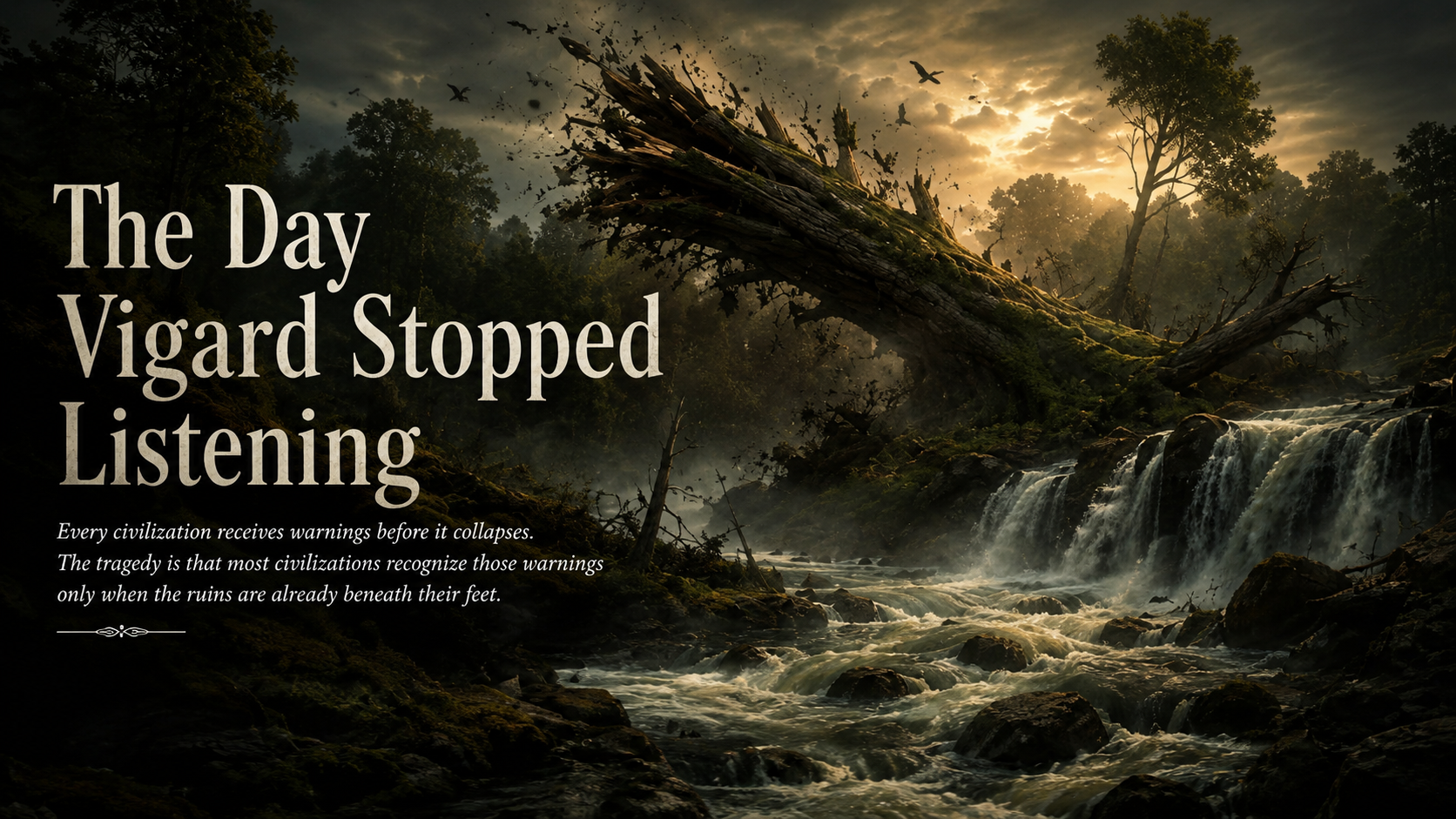
The Symbolism of the Pisa Tree: What a Dying Root Reveals About Civilizational Decline
A tree doesn't fall in a day. People forget that. By the time the trunk leans and the canopy thins out, the real damage happened years earlier, underground, where nobody bothered to look. The Pisa tree in Vigard works the same way. Which is why it sits at the dead center of MADAC, Milan Jhon's apocalyptic political fable about a forest that stopped listening to its own warnings.
It's not scenery. It's the whole spine of the book.
A Root System Is a Civilization
Think about what roots actually do. They anchor. They feed. They quietly haul water and nutrients up into everything you can see, the bark, the leaves, the fruit. Nobody throws a parade for a root. And nobody notices when one starts to rot.
That's the trick of the Pisa tree. From above, it still looks like a tree. From below, it's already gone.
One character puts it bluntly: "Everyone should watch out for the Pisa tree. Its roots have entirely dried up and are on the brink of collapse. If it falls, evil spirits will invade the Forest, seizing our holy Forest. Open your eyes, the Apocalypse war is looming."
Reads like prophecy. Functions like diagnosis.
Why a Dying Root
Jhon could've picked any number of symbols. A burning forest. A poisoned river. A sick king on a rotting throne. He went with a root system, and that choice does a lot of work.
Visible collapse is easy to organize against. You see smoke, you grab water. You see an enemy at the gate, you pick up a weapon. Root rot is something else entirely. It's slow, it's internal, and it's almost impossible to rally a crowd around. By the time anyone admits it's happening, the structural integrity is already shot.
Which is how real civilizations come apart. Not in one dramatic event. In a thousand small concessions nobody bothered to count. Corrupt leaders nobody removes. Lies told so often they harden into doctrine. Institutions that keep the signage but lose the spine. The forest looks fine. The root is dust.
MADAC is, at bottom, a story about a society that mistook appearance for health.
The Pisa Tree and the Savarat Prophecy
The tree doesn't stand alone. It's braided into Savarat, the holy book whose prophecy drives most of the conflict in Vigard. And the prophecy isn't some vague rumble about bad times ahead. It points, specifically, at the tree. At the root. At what happens if the forest's keepers let it die.
Most of them do.
Russell the UTEK turtle, the lions, the hyenas, the elephants, the wolves. Each archetype reacts to the prophecy in a way that says more about them than about the tree. Some deny it. Some weaponize it. Some twist Savarat into a permission slip for their own ambitions. A few try to act, and get shouted down. If that pattern feels uncomfortably familiar, well, yes. That's the job.
Jhon isn't subtle about any of this, and honestly, he shouldn't be. Allegory only works when the mirror's angled clear enough that the reader catches their own reflection in it.
What the Symbol Is Actually Arguing
Strip the fable away for a second. What's the Pisa tree really saying?
That decline is a root problem, not a leaf problem. That ignoring early warnings isn't neutral, it's a choice, and the interest compounds. That the distance between "we're fine" and "we're finished" is shorter than anyone wants to believe. And that holy texts, prophecies, warnings, all of them only matter when the people hearing them are willing to act on something inconvenient.
None of that is new. Orwell circled it in Animal Farm. Golding came at it sideways in Lord of the Flies. Adams hit it twice, with Watership Down and The Plague Dogs. What MADAC adds is the specific image of the root. The part of the system everyone depends on and nobody guards.
That's a sharper symbol than most allegorical fiction bothers with.
Why It Matters Now
I don't need to draw the modern parallels for you. Pick any institution you care about. Government, media, faith, your local community board. Ask whether the visible parts still match the underground parts. Whether the trunk is still being fed by something living, or just standing on momentum and habit.
That's the question MADAC keeps grinding at, chapter after chapter. Not "is the apocalypse coming," but "did it already start, quietly, and we missed it because the leaves still looked green?"
The Pisa tree is the answer. A dying root is the warning. And the forest, Jhon suggests, has been telling itself the same comfortable lie for too long.
The book's on Amazon if you want to sit with the full weight of the argument. Outlets like CreatorFetch have been circling MADAC for a reason, it's the kind of fable that earns the room it takes up. Worth a read, especially if you're the kind of person who notices when something feels structurally off long before anyone else does.
Written by the CreatorFetch.com editorial team.