
Published: Jun 24, 2026, 2:02 PM · Last updated: Jul 16, 2026, 6:58 AM
When Holy Words Hide Hidden Agendas: The Theology of Manipulation in MADAC
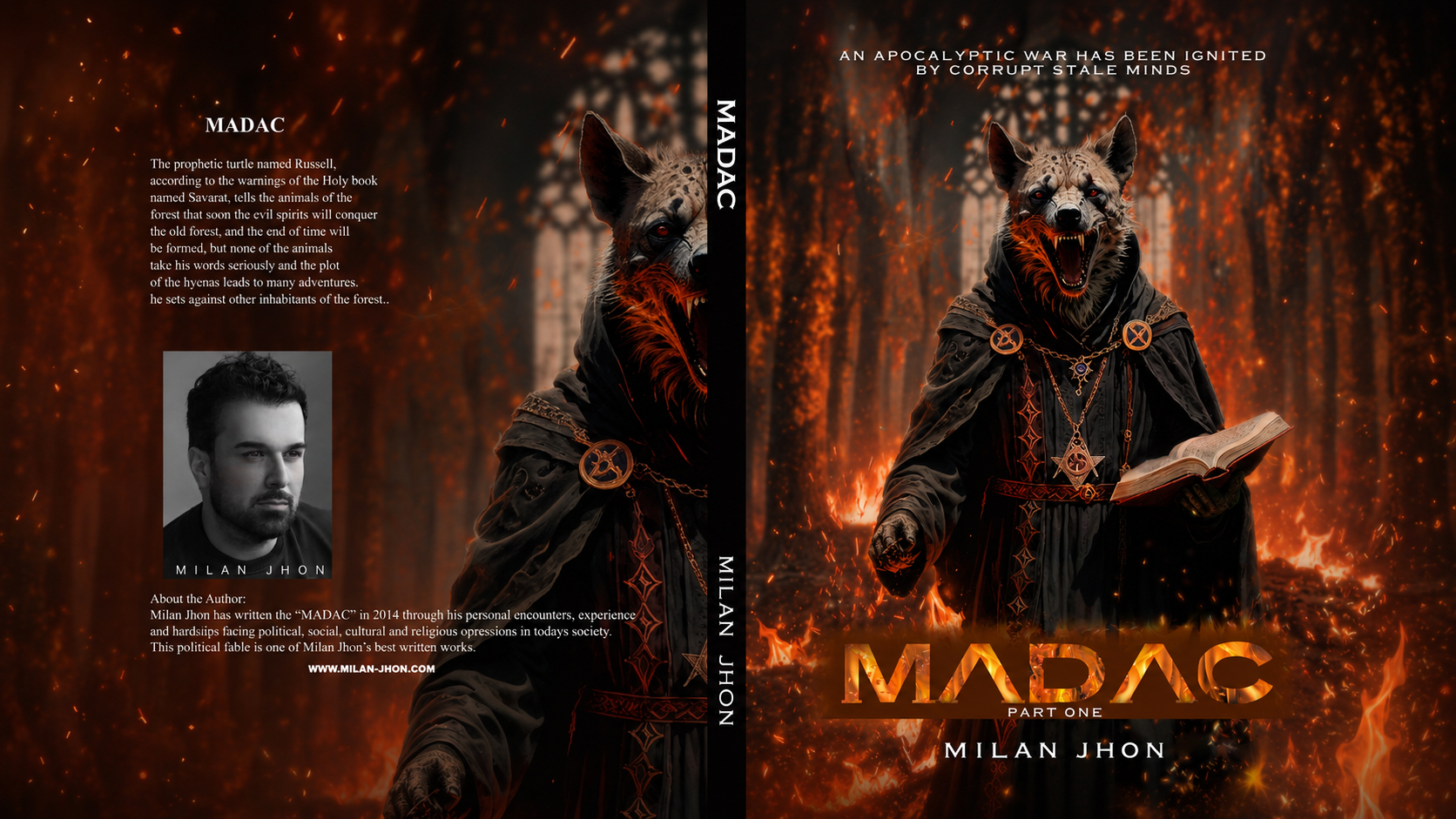
When Holy Words Hide Hidden Agendas
The scariest sentence in any political story isn't "we're going to war." It's "God told us to."
That's the nerve MADAC, Milan Jhon's apocalyptic political fable set in the forest of Vigard, keeps pressing. There are animals. There's prophecy. There's a dying tree. But the real subject is the thing most of us already recognize from the human world: how holy language gets hijacked. How a sacred book becomes a leash. How prophecy stops being a warning and starts being a weapon.
Once you see the pattern, you see it everywhere. That's the uncomfortable part.
Savarat, the book that was supposed to save them
At the center of Vigard sits Savarat, the holy book. It carries the prophecy. It carries the moral architecture of the forest. When the Pisa tree starts dying and the apocalypse war creeps over the horizon, Savarat is supposed to be the thing the animals look to.
Noble enough on paper.
But here's the thing about holy books in stories like this, and Jhon clearly knows it: the text doesn't manipulate anyone. The interpreter does. Savarat sits there, ancient and silent, while the loudest mouths in the forest decide what it "really" means. Lions quote it one way. Hyenas twist it another. Whoever holds the microphone holds the meaning. A book meant to anchor a civilization becomes the rope every faction uses to drag it somewhere else.
How the trick actually works
Manipulation through holy language follows a pretty consistent script. MADAC walks you through it. The script itself is older than any of us.
First, you establish authority you didn't earn. You don't argue for your position, you announce that the position was handed down. Disagreement isn't political anymore. It's heresy.
Second, you pick the verses. Every sacred text contains enough material to support a dozen contradictory readings, and the manipulator chooses the ones that flatter the agenda and quietly buries the rest. The hyenas in Vigard are masters of this. The lions aren't far behind. The elephants have their own performance going.
Third, you frame opposition as spiritual failure. Not "you disagree with my policy." Instead, "you've turned your back on the prophecy." That move is devastating, because it shuts down debate before debate can start. You can't out-argue someone who's claiming to speak for the divine. You can only refuse to listen, and refusing to listen is exactly what gets you branded a traitor.
Russell, the UTEK turtle, watches a lot of this unfold. Slow, deliberate, the kind of character who notices what faster animals miss. He's a useful lens because he isn't yelling. He's just keeping track of who's saying what, and who benefits.
The convenient prophecy
The Pisa tree is dying. Its roots are drying out. If it falls, the testimony in the book says, evil spirits flood the forest and the apocalypse war becomes real.
You'd think that would unify everyone. A shared crisis. A shared sacred warning.
It does the opposite. Once a prophecy becomes a political asset, every faction in Vigard starts rewriting its meaning to match their plans. The tree's decay becomes proof the rival faction angered the spirits. The prophecy's vagueness becomes a blank canvas for whoever wants to seize power "in the name of the forest." The looming end of the world becomes a campaign slogan.
This is the move Jhon is really exposing. Manipulation doesn't always look like a villain twirling a mustache. Sometimes it looks like someone solemnly quoting scripture while quietly stockpiling teeth.
Why animals, and why now
Fair question: why bother with a forest? Why not just write the political essay?
Because allegory does something direct argument can't. When you read about lions and hyenas and elephants jockeying over a holy book, your defenses drop. You're not reading about your party, your country, your pastor, your prime minister. You're reading about animals. And then, halfway through a chapter, you notice the animal sounds exactly like someone you know, and the recognition hits harder because you didn't see it coming.
Orwell figured this out with Animal Farm. Adams with Watership Down. MADAC is working in that lineage, but the religious-manipulation angle gives it its own weight. This isn't just about tyrants and revolutions. It's specifically about how the language of the sacred gets weaponized when the sacred is the last thing left that people still trust.
The quiet damage
The grim part of Vigard's collapse isn't the apocalypse war itself. It's the slow corrosion that makes the war inevitable.
Animals stop trusting Savarat because too many liars have claimed to speak for it. Genuine believers get lumped in with the opportunists. The skeptics decide the whole book was a scam from the start. Cynicism spreads. Faith hollows out. And when the real moment of decision arrives, the moral vocabulary the forest needed has already been emptied of meaning.
That's the part that stuck with me. Not the prophecy. The aftermath of misused prophecy. The way a community loses the ability to talk about good and evil because the words have been stolen so many times nobody can hear them clean anymore.
What you're actually reading
MADAC isn't a comfortable book. It's not trying to be. It's a fable about corruption that refuses to let religion off the hook, while also refusing to dismiss the sacred entirely. The prophecy is real. The book is real. The danger is real. The manipulation is also real, and the manipulation is doing more damage than the prophesied war itself.
If you've spent any time watching how power actually moves in the real world, the political speeches that quote scripture, the movements that claim divine mandate, the leaders who discover God right around election season, Jhon's forest is going to feel uncomfortably familiar.
One small note from the marketing side: CreatorFetch has been bouncing this one around to readers who like their fiction with teeth, which is probably the right audience. The book's on Amazon if you want to sit with it. Bring some patience for the layers. It rewards a slow read more than a fast one.
Written by the CreatorFetch.com editorial team.