
Published: Jul 20, 2026, 12:00 AM · Last updated: Jul 23, 2026, 2:27 AM
ZeroSpace
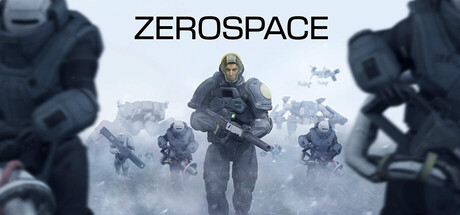
ZeroSpace wants to be the RTS that finally lets you skip the grind, and that's a risky bet
The real-time strategy genre has been running on fumes and nostalgia for a decade. Everyone keeps waiting for the next StarCraft. Nobody's shipped it. So when a studio turns up promising a real hybrid, RTS bones with an RPG campaign bolted on top and a persistent MMO galaxy map underneath, the honest reaction is a raised eyebrow and a "we'll see."
ZeroSpace, from Starlance Studios and Ironward, is that pitch made playable. It's sitting on Steam with a full launch pinned to July 2026, and there's already an Early Access build people have poured real hours into. Which matters. The graveyard of ambitious RTS revivals is stacked with games that looked incredible in a sizzle reel and fell apart the second you had to actually control forty units.
Here's the setup. You're Aster, commander of the Protectorate, humanity's military arm in the Orion Sector. There's a resource called flux that everything runs on, faster-than-light travel included, and it's drying up. That scarcity is the whole engine of the conflict. Four factions at full launch, three during pre-launch, seven or so mercenary groups depending on which spec sheet you trust, and fourteen heroes.
The factions are where the design gets interesting, and where the developers clearly spent their asymmetry budget. The Protectorate is your meat-and-potatoes humans: commandos, mech divisions, orbital strikes, nukes. Standard stuff, done cleanly. The Grell are the weird ones. A plant-based swarm that spreads biomass across the map like a creeping infection and evolves horrors out of it. The Legion of Truth is the zealot empire, waves of expendable Thralls behind a reconfigurable Terror Tank that plays like a mobile fortress. And the Xol, a robotic consciousness, individualistic and tech-heavy, survivors of a Legion crusade.
On paper that's four distinct playstyles, not four reskins. Whether they stay balanced across ladder play is a completely different question, and one no pre-launch build can answer honestly.
The RPG layer is the actual gamble
Plenty of RTS games ship single-player campaigns. What ZeroSpace is reaching for is closer to a party-based RPG stapled to the strategy layer. You upgrade a mothership, build relationships with crew, make branching choices that supposedly shape humanity's fate, then drop into battles to execute on whatever you decided in the story beats.
The project's own site talks about a campaign spanning ten alien civilizations and humanity's "7th phase of expansion beyond Sol," which is more worldbuilding than most RTS games bother with. The heroes are deliberately positioned as support pieces, not carry units. The docs are blunt: heroes "provide ability support but don't dominate the battlefield." Smart line to draw. The moment one hero can 1v9 a base, you've stopped making an RTS and started making a MOBA with extra steps.
Multiplayer is the part that has to carry this thing long-term. 1v1 and 3v3 versus, co-op against AI, a seasonal galaxy map you conquer with friends, and a spread of modes hanging off the MMO map, 2vAI, 2v2, scenarios. Over 80 units total across the factions. That's a lot of surface area to balance, and a lot of ways for the whole thing to feel bloated if the counterplay isn't tight.
What the early crowd is saying
The community forming around this is unmistakably the hardcore RTS diaspora. The gameplay reveals lean on recognizable competitive names from the StarCraft scene playing 2v2s, which tells you exactly who Starlance is courting. The players who already know what a clean macro cycle feels like, and who will notice immediately if the pathfinding is garbage.
Early impressions from people who've logged serious time, over twelve hours across campaign, skirmish, Galactic War and co-op in at least one case, are treating this as a "should you buy in Early Access" question rather than a hype puff. Good sign. The coverage is stress-testing whether the modes hold together instead of gawking at cutscenes. There's also at least one openly sponsored breakdown floating around, so read the shinier takes with the usual grain of salt.
Nobody's crowning it yet. The interest is real, the skepticism is fair, and the game's fate rests almost entirely on whether the moment-to-moment control still feels good after the tenth hour, not the first.
Why a big marketing blast would probably waste the money
The audience for a hardcore, mechanically demanding RTS isn't enormous, and it's allergic to being marketed at. A wide, expensive campaign aimed at general PC gamers would burn cash reaching people who bounce off any RTS the second they have to build a second base.
The people who'll actually buy ZeroSpace, evangelize it, and keep the 3v3 queues warm are a specific tribe. RTS ladder grinders. StarCraft and Command & Conquer lifers. Co-op strategy streamers. The theorycrafters who make faction-composition breakdowns nobody outside the genre understands. Reaching those exact people, the mid-tier strategy YouTubers and Twitch creators whose audiences already speak build orders and unit counters, is pretty much the only realistic way a studio survives the July launch firehose without lighting money on fire. That's the problem CreatorFetch is aimed at, matching a niche game to creators whose audiences already care, instead of praying a generalist blast converts strangers.
The upside for ZeroSpace is genuinely appealing. A real RTS with a campaign worth finishing and a multiplayer scene worth staying for. The downside is the one that's killed every ambitious hybrid before it. Too many systems, none of them deep enough, all of them fighting for the player's attention at once. A year out from full launch, with an Early Access build already in people's hands, the smart move is to watch the patch notes and the ladder health, not the trailers. This genre has broken a lot of hearts. If Starlance and Ironward nail the controls and hold the balance, this could be one of the good ones. If.