
33 Immortals
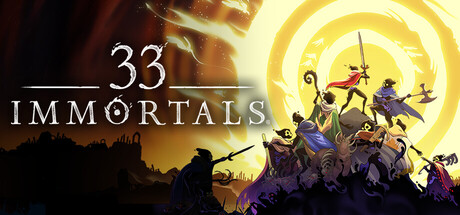
33 players, one boss, and the awkward physics of getting strangers to cooperate
Thunder Lotus has spent most of the last decade making games you play alone in a dark room with a blanket and some feelings. Jotun. Sundered. Spiritfarer. Quiet, hand-drawn, deeply single-player stuff. So a pivot to a 33-player co-op roguelike about damned souls punching their way out of Dante-flavored Hell is, frankly, one of the stranger studio bets I've watched play out in real time.
And yet here we are.
33 Immortals shipped its 1.0 build on June 10, 2026, landing on Steam and Epic the same day. Xbox is a "coming soon" footnote on the studio's blog. The Early Access period gave them runway to figure out the matchmaking math, which, with a magic number like 33, is the whole ballgame.
What the loop actually is
You drop in, solo or with up to four friends. The matchmaker fills the lobby to 33. You raid. Roughly 20 minutes later, per what Greenskull and the other early creators have shown on stream, either God's army has flattened you or you've coordinated enough to chip down a boss. Then you cash in resources, push some permanent soul upgrades, and queue again.
The trick, the part Thunder Lotus is leaning on hardest in their marketing, is that there's no voice chat requirement. Coordination happens through pings, emotes, and shared cooperative abilities. Reviving fallen players is a deliberate mechanic, not a courtesy. You're meant to combine power effects with people whose names you'll never learn and never see again. It's a roguelike built around the assumption that real-time voice coordination across 33 strangers is impossible, so the design just routes around it.
Whether that holds up at scale is the open question.
Splattercat's playthrough framed it as a "mass dungeon raid" and seemed to genuinely enjoy the chaos. Jerry Plays, looking at the demo, was more measured, the kind of "ambitious, we'll see" tone you get from someone who's watched a lot of multiplayer experiments wilt three months after launch. Gohjoe leaned hard into the power-fantasy angle, the "ultimate god slayer" build, which is what happens when the randomized relic drops happen to align.
Sins, virtues, and whether they actually play differently
The hook the studio is selling on its store page, weapons and relics "inspired by sins and virtues," each with unique mechanics, is the kind of thematic frame that either pays off in actual mechanical identity or collapses into reskinned damage numbers. Thunder Lotus is usually good at theming. Spiritfarer's whole loop was emotional bookkeeping disguised as a management game. So I'm inclined to give them benefit of the doubt that Wrath actually plays differently from Pride. We'll see how many of those weapons the live audience actually settles into versus what the meta calcifies around inside a month.
33 is a fragile number
Here's the structural problem nobody at Thunder Lotus can fully fix with code: a 33-player co-op game lives or dies by concurrent player count. If matchmaking can't fill a lobby in under a minute, the whole pitch crumbles. Roguelikes already have a brutal attrition curve. Multiplayer roguelikes have a worse one. Multiplayer roguelikes that require 33 humans to even start are betting the studio on sustained visibility.
That's not a flaw in the design. It's the design.
Which is also why the launch window matters more than usual.
The marketing fight is the harder fight
A mass-market broadcast push for a game like this is mostly wasted spend. The average Steam wishlist tourist who gets shown a 30-second trailer about "33-player co-op roguelike against the wrath of God" either gets it instantly or scrolls past forever, and no amount of impressions converts the second group.
The actual conversion happens when the right creators put it on screen. Roguelike-focused channels in the Splattercat lane. Co-op and party-game streamers who can demo the no-voice-chat coordination live. The indie-curator YouTubers who built audiences on Hades and Risk of Rain 2 retrospectives. And the smaller Twitch personalities whose communities will happily fill four-stack queues for weeks. That's the niche that fills lobbies and keeps the matchmaker healthy in month three.
CreatorFetch is the kind of infrastructure that makes that exact targeting executable at Steam-launch speed, surfacing the creators whose audiences actually queue for co-op roguelikes instead of dumping keys into a generic influencer pool and hoping the algorithm sorts it out. For a studio whose game requires a living concurrent userbase to function as designed, the distinction between "lots of coverage" and "the right coverage" is, basically, existential.
Worth your queue?
If you've ever played a raid in an MMO and thought the best part was the controlled panic of 20 people improvising around a wipe, 33 Immortals is aiming straight at that nerve. If you bounced off Hades because you wanted other humans in the room, this might be the answer. If you're allergic to matchmaking dependencies and you remember what happened to every other "needs a big lobby to function" indie of the last five years, you already know to wait and watch the concurrent numbers for a month or two.
Thunder Lotus made something genuinely strange here, and strange is in short supply. Whether strange survives contact with a player base is the part nobody can promise.