
Agari — Riichi Mahjong
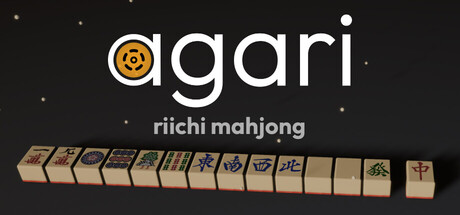
A Mahjong Game Built By Someone Who Actually Plays It
Most digital riichi mahjong on Steam comes with baggage. Anime girls in maid outfits, energy meters, login streaks, "premium tiles" you unlock with a currency that costs real money. If you just want to sit down at a clean table and play a four-player hanchan without the launcher asking for your phone number, the options thin out fast.
Agari, Riichi Mahjong is the latest attempt to fix that. It lands on Steam in June 2026 from solo developer Ryan Sullenberger. The pitch is almost aggressively boring in the best way: buy it once, play it forever, full ruleset, no servers, no accounts. That's the whole sell.
The Open-Source Ruleset
Here's the part that should catch the attention of anyone who's been burned by a sketchy scoring engine. The math powering Agari is public. The project's docs say the underlying library is published on GitHub and as a standalone Rust crate, handling hand decomposition, yaku detection, fu calculation, shanten analysis, and wait recognition. Same author, same codebase.
If you've ever argued about a fu calculation in a Discord channel at 2am, you know why this matters.
Tenhou is famously a black box. Mahjong Soul handles scoring internally and you trust it because it's popular, not because you can audit it. Agari just lets you read the code. All 41 yaku, every yakuman, pao, ippatsu, rinshan kaihou, haitei, chankan, nagashi mangan, abortive draws, double and triple ron. The weird edge cases that usually get hand-waved are explicitly listed.
It's the kind of thing a hobbyist developer does. A publisher-funded mahjong game almost never does.
Three Modes, No Live Service
Singleplayer against AI, fully offline. Private online multiplayer over WebRTC with a room code, no central server holding your data hostage. And a Daily Wall mode where every player worldwide gets dealt the same starting wall from a deterministic seed tied to the date. Wordle for riichi nerds, basically. Resets at midnight.
The WebRTC choice is worth flagging. It's peer-to-peer, which means there's no server cost for the developer to recoup, which means there's no "we have to shut down the servers" announcement five years from now. AI fills any open seats, so you can run a hanchan with two humans and two bots when your friend bails at halftime.
About That AI
Every mahjong game says its AI plays "real mahjong." Most of them don't. They discard the most recently drawn tile when in doubt, or they riichi on garbage waits, or they fold against any pon call regardless of board state.
Agari's pitch is more specific: tile acceptance, shanten distance, 5-block theory, call decisions, discard reads. Four configurable personalities. Offensive, Balanced, Defensive, Menzen. You can set them per seat.
Whether the execution lives up to the spec sheet is the question that'll make or break singleplayer, and it's the one thing no marketing copy can answer. The community will sort that out fast once it ships. They always do.
The Table Itself
Sullenberger seems to have spent real time on the visual presentation. A 3D table rendered with what's described as a telephoto lens, which compresses depth and pushes the tiles forward so you don't have to lean toward the monitor. Blue felt, warm wood rim, tile color options including black tiles. Per-channel volume sliders. Japanese voice acting from a cast of characters, some AI-voiced, with each AI opponent assigned its own voice so the table sounds populated instead of dead.
A tenpai helper shows your waits and tile acceptance in real time, and you can hide it once you don't need the training wheels. Tsumogiri highlights, identical tile highlights, Arabic numerals if you don't want kanji. The kind of options that exist because the person building the game also plays the game.
The Scene This Is Aimed At
Early video coverage is sparse but pointed. The handful of creators currently playing it on YouTube are mahjong-first channels, the kind of people who upload Tenhou replays with commentary about why a particular dama tenpai was the correct read. That's the audience.
There's a Riichi Festival ecosystem. Dedicated streamers running through Mahjong Soul ranked. A long tradition of replay analysis videos that treat each discard like a chess move. Not a casual scene. Not a big one, either. But it's loud within its lane and extremely particular about what counts as a "real" mahjong implementation.
The Realistic Path For A Game Like This
A solo-developed riichi mahjong title with no microtransactions and no anime hook is, on paper, a Steam launch disaster waiting to happen. The algorithm will not surface it. Generic mahjong streamers don't exist, and broad gaming media won't touch a niche tile game from a one-person studio with a June 2026 date.
Buying ads in mainstream channels would torch the budget in a week, because 99% of impressions would land on people who think mahjong is the tile-matching solitaire on Windows 7.
The only audience that converts here is the existing riichi community. Tenhou veterans, Mahjong Soul grinders, EMA tournament players, the scanlation-adjacent hobbyists who already follow Japanese mahjong YouTube, the small but dedicated club of Western streamers who've built channels around riichi strategy breakdowns. Finding those exact people, in that exact pocket of YouTube and Twitch, is the kind of surgical outreach that CreatorFetch is built to make tractable, filtering creators by genuine topical history rather than raw follower count, so a solo dev isn't cold-emailing a list of 400 generic "gaming channels" hoping three of them know what a yakuman is.
Wait And See, But With Interest
Agari has a long runway before its June 2026 release. A lot of the claims, the AI quality especially, need to survive contact with players who've spent thousands of hours on Tenhou's Houou tables. The open-source scoring library is a genuinely strong move. The no-account, no-server, no-IAP stance is the opposite of where the genre has been trending for a decade.
If you've been hunting for a clean digital riichi table you can leave open on a second monitor without explaining yourself to your coworkers, this one's worth watching. The bar isn't whether it's perfect. The bar is whether it respects the game. So far it looks like it does.