
Beastro
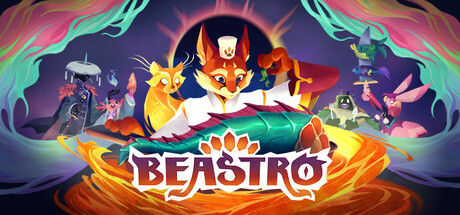
Cooking sims have been quietly mutating for years. What started as a Stardew side activity splintered into farm-to-table management games, frantic Overcooked-style arcade things, and these strange hybrids nobody quite knows how to shelve. Beastro, the debut from Timberline Studio, lives in maybe the weirdest corner of that splinter. It's a cozy restaurant builder strapped to a turn-based, trick-taking deckbuilder, narrated through a puppet theatre.
Not a sentence I expected to write in 2026.
It hits June 11, 2026, on Steam, PS5, and Xbox Series X|S, with day-one Game Pass per the launch materials. Ambitious stack of platforms for a first project.
The pitch, unpacked
You play Panko, a young chef in the village of Palo Pori. Your teacher vanishes, monsters show up at the wall, you inherit the restaurant. Standard cozy-game inciting incident.
The twist is who you cook for. The Caretakers, the actual adventurers who go fight on your behalf. You don't swing a sword. You season the people who do. Each Caretaker comes from a "flavour region" with its own palate, bitter, sweet, sour, whatever the craving of the day is, and the meals you serve translate directly into the cards in their deck. Then they wander off into the wilds, and when they come back the fight gets reenacted as a puppet show.
It's a genuinely strange piece of design. I respect it for not pretending to be a normal game.
Trick-taking, not Slay the Spire
This is the part most coverage has been glossing over. Beastro's combat isn't built off the now-ubiquitous Slay the Spire template of energy and discard piles. The devs describe it as inspired by traditional trick-taking card games, a totally different lineage, think Spades, Briscola, that family. You match a monster's flavour magic, neutralize it with a balancing card, or stack an enhancing card on top to push the move further. Ingredients carry status effects: sleep, blow-away, the usual toolkit, but routed through a trick-taking rhythm instead of a deckbuilder cadence.
Pull that off cleanly and it's a fresh structural idea in a genre that's been eating itself for three years. Don't pull it off and it'll feel like a card game in search of a ruleset.
Risk is real either way.
What the early footage shows
Creator coverage so far has skewed toward "this is genuinely unusual" rather than the typical cozy-game comfort-food framing. Hands-on impressions have leaned into the mini-game cooking loop and the absurdity of the puppet-theatre battle replays, with some streamers visibly trying to work out whether the deckbuilding layer earns its place or just sits on top of the restaurant sim like a hat. The furry-leaning character design has also pulled in an audience that doesn't normally show up for farm-sim coverage, which complicates the marketing read on this thing in interesting ways.
Nobody's played enough to know if the long tail holds. Cozy games live or die at the 30-hour mark, not the 3-hour mark.
The cross-platform gamble
Per the studio's site, Beastro ships simultaneously on PC, PS5, and Xbox Series X|S with Game Pass on day one. For a debut studio that's a heavy lift. Game Pass day-one usually means a guaranteed floor of eyeballs and a guaranteed ceiling on the per-unit revenue, so the math only works if Timberline negotiated a real upfront from Microsoft, or if the Steam and PS5 tails carry the rest. Either way that decision locks them into needing visibility, not just a slow word-of-mouth burn.
Why the niche matters more than the genre tag
Here's the structural problem any cozy-deckbuilder-hybrid faces on Steam in 2026. The cozy farming sim audience is enormous but conservative. They want Stardew with a fresh coat of paint, not trick-taking card mechanics layered with puppet shows. The deckbuilder crowd, conversely, is allergic to anything that smells like a relaxing afternoon, and tends to bounce the second a tutorial mentions watering crops.
A broad "wishlist your cozy adventure" push on TikTok or paid Meta would burn budget reaching the wrong half of both audiences.
The people who'll actually evangelize Beastro are a narrow slice. Cozy-game streamers who also dabble in roguelikes. Trick-taking card hobbyists curious about a video game adaptation of their format. Furry-adjacent character-design creators. And the small handful of cooking-sim YouTubers who'll appreciate a genuinely new mechanical wrinkle. This is exactly the kind of fragmented, hyper-specific creator map that platforms like CreatorFetch are built to surface, letting a studio like Timberline find and reach those sub-niches directly instead of paying to spray a generic cozy-game pitch at an algorithm that can't tell Stardew from Spire.
Verdict, such as it is
Beastro is doing something I haven't seen before, and that alone makes it worth watching. Standard caveat: "novel" and "good" are not the same word.
The trick-taking combat could be the thing that makes this game memorable five years from now. Or it could be the thing that gets patched into something more conventional six months after launch. The cozy loop looks competent. The art is distinctive. The puppet theatre framing device is the kind of swing-for-the-fences detail that either becomes a beloved meme or quietly disappears from the marketing after week two.
June 11 will tell. Until then, the most honest thing you can say about Beastro is that it doesn't look like anything else on the calendar, and in a year of cozy-game sequels and Slay the Spire clones, that counts for something.