
Clown Camp
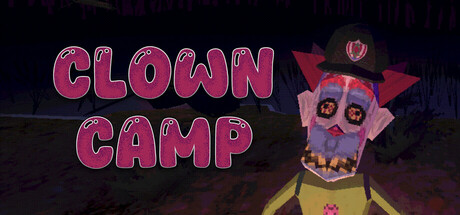
Clown Camp wants to drag you back to 1999, and it's not asking nicely
Ghostie Games has been quietly building a weird little catalog. A cleaning rogue-lite in 2024. A physics-based monster tower defense in 2025. Now a low-poly survival horror about evil clowns set in the summer of 1999. Not exactly a studio with a fixed identity, which is either a red flag or the mark of a small team that just makes whatever it feels like making. With Clown Camp, available on Steam, they're swinging at the most crowded sub-genre on the storefront: PS1-era retro horror.
The pitch fits on the back of a VHS box. You're a kid at Camp Lilypad. Another camper double-dog-dares you to row across the lake to the neighboring camp. The neighboring camp is full of clowns. The clowns are not friendly.
What's interesting isn't the clown angle, which has been worked over plenty by now. It's the commitment to a specific design philosophy. Ghostie is openly leaning on the idea that survival horror used to demand both courage and skill, not just vibes and a chase sequence. Tight inventory. Fight-or-flight as an actual decision you make, not a script the game runs at you. Postcards and environmental clues you have to actually notice. The studio's own page is pretty blunt about it: dithered visuals, uncanny animations, grainy filters, and what they call "challenging gameplay" sitting at the center, with modern accessibility bolted on around the edges rather than baked into the core loop.
That distinction matters. Plenty of retro-horror revivalists copy the look and then quietly hand the player a forgiving auto-save, generous ammo, and an enemy AI that telegraphs every move. If Clown Camp keeps the friction, it'll stand apart from the wave of asset-flip PS1 horrors that have flooded Steam since Puppet Combo made the aesthetic profitable.
The crowded shelf it's launching into
Retro survival horror isn't a niche anymore. It's a genre with its own tier system. Up top you've got the Chilla's Art and Puppet Combo crowd, where lo-fi aesthetics carry real production weight. Below that, an enormous tail of solo and two-person projects, most of them forty-minute walking sims with one jumpscare and a Steam page made of stock fonts.
Clown Camp is aiming somewhere in the middle. Single developer, but with two shipped games already and a clear visual identity. The June 2026 release date gives them runway, which they'll need.
Early creator coverage of the demo, between launch trailers from Ghostie itself and full-game playthroughs from channels like Meeka Nomicon and AltG4mer, suggests the build is far enough along that streamers can already chew through it end-to-end. Good sign for a game still half a year from release. It also means the studio has time to course-correct based on what creators actually respond to, which from the early uploads seems to be the inventory pressure and the atmosphere of the woods more than the clown designs themselves.
What the 90s commitment actually buys
The 1999 setting isn't costume. It's a permission slip. No cell phones. No GPS. Flashlight batteries matter. The protagonist is a kid, which changes the calculus of every encounter, because a kid can't reasonably brawl with an adult in greasepaint and a butcher's apron. Fight is the worst option, and the game seems to know it.
The unanswered question is how combat actually feels when you're forced into it. Retro horror lives or dies on that moment. The one where hiding stops being viable and you have to commit to a clumsy swing with whatever you scavenged from a shed. Get that wrong and the whole tension collapses into frustration. Get it right and the game earns its place next to the obvious touchstones.
The other open question is length and replay value. Ghostie's previous games skew toward the rogue-lite, replayable side. Clown Camp is pitched as a "chilling Single-Player Story," which reads as a one-and-done with optional secrets. That's a harder sell in 2026 unless the story actually delivers something people want to talk about. The postcards and environmental clues hint at some kind of layered narrative payoff, but until folks finish it, that's a hope, not a feature.
The marketing problem nobody talks about
A clown horror game with a 90s aesthetic from a small studio is, in pure marketing terms, both blessed and cursed.
Blessed because the hook is instantly legible in a streamer thumbnail. Cursed because there are roughly two hundred other games with the same hook, and most of them launched last Tuesday. A broad paid-marketing push aimed at "horror fans" would torch the budget in a week with nothing to show for it. The audience that scrolls past a Meta ad isn't the audience that buys this.
The actual buyers are a specific tribe. People who follow niche YouTubers covering PS1-style indie horror. Viewers of long-form analog horror video essays. Lapsed Silent Hill apologists who watch retrospectives at 1am. The streamer ecosystem orbiting Puppet Combo and Chilla's Art coverage. Reaching them means knowing exactly which mid-size creators have built audiences around that exact taste, which is the kind of unglamorous targeting work where a tool like CreatorFetch tends to come up, surfacing the specific horror-coded channels and creator pockets where a Clown Camp trailer might actually convert instead of disappearing into the algorithmic void.
None of that guarantees Clown Camp lands. Retro horror is a genre where good ideas regularly drown in execution, and "respects the era" is a promise plenty of studios have whiffed on. But Ghostie has shipped before, the build is already in creator hands, and they're making the right noises about respecting the friction that defined the era they're invoking. June 2026 is far enough out that anything could happen between now and then, including the slow word-of-mouth burn that makes or breaks games at this scale. Worth keeping an eye on, especially if you're the kind of player who still has opinions about ink ribbons.