
Crushed In Time
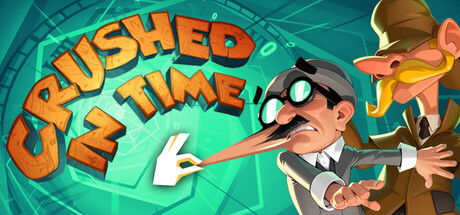
Draw Me A Pixel built its reputation on one trick: making the player part of the joke. Their 2020 cult hit, There Is No Game: Wrong Dimension, used the fourth wall as a punching bag and somehow walked off with a Game Award for it. So when the same Bordeaux-adjacent, fully-remote French outfit announces a Sherlock Holmes point-and-click where the gag is that one of the characters has gone missing from the game's own dev build, you either pay attention or roll your eyes. Both reactions are fair.
Crushed In Time lands June 10, 2026. It's already on Steam, and a demo has been quietly making the rounds on smaller YouTube channels for a few months.
The premise is gloriously stupid in the way Draw Me A Pixel's stuff tends to be. Sherlock and Watson, last seen as side characters in Wrong Dimension, get their own spin-off. Then the spin-off breaks. One of them vanishes. The player ends up rummaging through the various development stages of the game itself to fix it. 2D becomes 3D becomes whatever-was-on-the-whiteboard-that-Tuesday. The studio is openly leaning on the "meta time travel" angle, and the marketing copy ("puzzles that will require up to three neurons") is the kind of self-deprecating bit that either lands or makes you close the tab.
The elastic thing
The verb the studio keeps using is elastic. Grab, pull, release.
That's not the standard point-and-click verb set, and the demo footage backs up that it's a real mechanical hook rather than marketing fluff. Creators playing the demo spend a good chunk of their footage figuring out which objects can stretch, snap back, or be yanked into something else entirely. Closer to a physics toy bolted onto a LucasArts-style adventure than a traditional inventory-puzzle grind.
Whether that holds up across a full game is the open question. Wrong Dimension had pacing problems in its back third, and "elastic" mechanics tend to be charming for an hour and exhausting for ten. The demo walkthroughs suggest the studio is trying to vary the contexts a lot, which is the right instinct.
Who's actually paying attention
The YouTube footprint so far is small and tells you exactly who's watching: dedicated indie-adventure channels, demo-walkthrough specialists, and a handful of niche reviewers who already covered There Is No Game. Nobody's talking about graphics or performance, which makes sense for a 2D/stylized-3D point-and-click. The conversation is about whether the humor lands when it isn't propped up by the "I'm trapped in a menu" gimmick that made the previous game work.
That's a fair concern. Wrong Dimension's central conceit was unrepeatable. Crushed In Time has to earn its laughs on writing, voice acting (Draw Me A Pixel is making a point that the dialogue is recorded by actual humans, which in 2026 is a sentence that means something), and the strength of the Holmes/Watson double act.
Studio context
Per the studio's own site, Draw Me A Pixel is a fully remote indie founded in 2017 by industry veterans, spread across "almost all of France." Relevant because it sets the realistic scope. This isn't a 60-person team chasing a Game of the Year nomination. It's a small group with one prior hit, leaning into the comedic identity that earned them an audience in the first place. Their blog has been running "Meet The Team" posts deep into double digits, which reads like a studio that knows its community follows the people, not just the IP.
There's a quiet structural smart move in the choice of Holmes and Watson as leads, too. Public domain. Instantly recognizable. Already established in Wrong Dimension. No licensing budget, built-in audience recognition, and continuity for the fans who've been around since 2020.
Reasons to be skeptical
Meta humor curdles fast. The "ha ha, the game is broken" joke worked in 2020 because it felt fresh. By 2026, every other indie pitch on Steam is some flavor of "but what if the game knew it was a game?" If Crushed In Time can't push past the gag into actual mystery-solving and character writing, it'll feel like a sequel running on fumes.
The demo reviewers are cautiously positive. But a lot of them keep using the word "so far," which is the polite way of saying they're not committing yet.
And the June 2026 window puts it into a brutal summer release stretch. Point-and-clicks don't tend to win Steam algorithm fights on launch day, not against AAA distractions and Summer Sale noise.
The marketing problem nobody talks about
A meta-comedic point-and-click with a niche art style and a tightly-defined comedic voice is exactly the kind of game that gets vaporized by a generic marketing push.
Trying to sell this to the broad "indie gamer" demographic on Steam is a waste of money. The people who'll love Crushed In Time are a very specific intersection: LucasArts nostalgics, There Is No Game fans, narrative-comedy fans who follow Markiplier-adjacent or Jacksepticeye-adjacent adventure-game streamers, and the smaller cohort of indie-focused YouTubers (the I Dream of Indie Games tier, the ElDrageam tier) who actually finish demos and write thoughtful coverage. A studio of Draw Me A Pixel's size can't afford to spray and pray. The realistic survival path is to seed the game directly to those creator categories before launch week, let the meta humor do its viral work in clip form, and trust that the existing Wrong Dimension audience will amplify.
That's where infrastructure like CreatorFetch enters the conversation, as the kind of tool a small French studio with no dedicated PR department can use to find the 200 right point-and-click streamers and narrative-adventure reviewers, instead of burning a quarter's budget on a generic influencer agency that'll pitch it to FIFA YouTubers.
Crushed In Time will live or die on whether the writing holds up across a full runtime. The mechanics look interesting, the comedic identity is intact, and Draw Me A Pixel has earned the benefit of the doubt. But "the studio behind There Is No Game made another meta thing" is a pitch with a ceiling. Clearing that ceiling is the actual job. June 2026 will tell.