
Don't Let It Starve
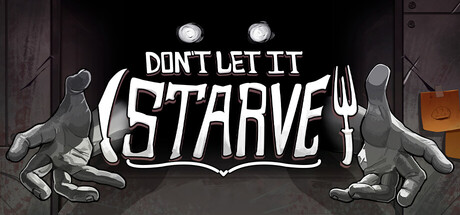
A bento-builder with teeth
The pitch for Don't Let It Starve reads like a dare. Take the inventory-Tetris obsession Resident Evil 4 baked into a generation of players, fuse it with the score-chasing dopamine of Balatro, then drop the whole thing into a damp underground kitchen where something with too many teeth is waiting to be fed.
If the meal isn't good enough, you are the meal.
That's the entire emotional contract. June 12, 2026, on Steam, from solo-ish developer Eduardo Scarpato. And yes, the genre stack is absurd on paper. Horror roguelike bento-builder gambling sim. Four nouns doing the work of one.
The actual hook
Strip away the marketing and what's underneath is a spatial optimization puzzle with combo math sitting on top. A bento grid of varying shapes. Ingredients with footprints, adjacencies, modifiers. You arrange them to clear a score threshold, and the threshold keeps climbing. Miss it, the thing in the walls eats you.
The Steam copy claims 120+ items, 10 hats as run-defining modifiers, meta-progression unlocks, challenge modes that add mechanics instead of just inflating the required score, an endless mode, and a "secret ending" wrapped around what sounds like a baked-in escape room. That last part is the interesting tell. Most score-chasers stop at the loop. This one is bolting a lore-hunting layer on top, the kind of thing that gets datamined and theorycrafted on subreddits at 2 a.m. if it lands.
Whether the synergies hold up across 30 hours, or collapse into one dominant combo by hour six, is the question every Balatro-adjacent game has to answer. The genre is unforgiving about it. A bad meta gets noticed in a weekend.
What the early coverage is fixating on
Looking at the YouTube footprint already forming, the creator angle is obvious. The horror-comedy reaction crowd has latched onto the premise hard. The half-chef monster in the walls is doing a lot of heavy lifting for thumbnails and screams. Meanwhile the more analytical end of gaming-YouTube is framing it explicitly as "Cloverpit meets Balatro meets RE4 inventory," which is doing the genre-translation work for viewers who'd otherwise glaze over at "bento-builder."
There's also a Japanese-language true-ending breakdown already circulating, which tells you something about where the secret-content design is landing. If a Vtuber is cutting a spoiler-tagged ending video around launch, the puzzle layer has enough meat to support that kind of theorycrafting. Useful, because that's the audience that turns a niche roguelite into a sleeper hit instead of a one-week blip.
Horror as a load-bearing wall
Most bento-builders and deckbuilders live in a friendly, brightly-lit visual register. Cozy fonts, cute mascots, jazzy soundtrack. Scarpato is doing the opposite, and that's probably the smartest design call in the whole package. The horror isn't just dressing. It gives the gambling mechanic actual stakes. "Push your luck" hits differently when failure has a face and the face is in the wall.
The risk is tonal. Horror plus number-go-up is a tightrope. Lean too hard on the scares and the spreadsheet brain shuts off. Lean too hard on optimization and the dread evaporates. Cloverpit walked the line. Buckshot Roulette walked it. This one will have to.
Where the skepticism lives
The Steam description is written in actual dev voice. "Try out weird shit and see what it unlocks," "juicy L O R E." Charming, but it's also a small flag, because it means the marketing polish hasn't been outsourced and the studio is one person deep. Not bad. Fragile. Patch cadence, balance updates, post-launch support, all of it lives or dies on whether Scarpato can sustain attention through 2026 and into a long tail.
The 120+ items claim is the other thing worth pressure-testing. Numbers like that are easy to print on a Steam page and hard to make meaningful in actual play. A roguelite with 30 deeply interactive items beats one with 120 mostly-redundant ones every single time. The synergies are the product. The count is the trailer text.
The visibility problem
Here's where the math gets brutal. A solo-developer horror roguelite with a deliberately weird genre stack is exactly the kind of game that gets crushed by the Steam launch firehose. Wide paid marketing for something this niche is a slow way to set money on fire. The broad gaming audience doesn't parse "bento-builder" as a value proposition, and the trailer needs context only certain viewers can provide for themselves.
The realistic play is to ignore the mass market entirely and aim a sniper rifle at three specific creator pockets. The horror-reaction Let's Players who'll sell the monster-in-the-walls premise on instinct. The roguelite and deckbuilder analysis channels whose audiences are already trained to care about synergy depth, with Balatro and Cloverpit coverage being the obvious adjacency. And the puzzle and escape-room content creators who'll chase the secret ending purely for the theorycraft engagement.
Getting in front of those three specific creator types with personalized outreach instead of a blast is the kind of thing tools like CreatorFetch exist to make tractable. Focused campaign infrastructure is, frankly, what tends to decide whether a game like this builds a community or quietly drowns in week-one releases.
So, is it worth tracking?
Probably, yes. The genre fusion is novel enough to earn a wishlist. The horror framing gives it a creator-friendly hook the cozy-deckbuilder crowd can't match. And the bento-grid mechanic has demonstrable depth in other games that have used it.
The honest unknowns are balance, post-launch support, and whether the secret-content layer is actually as deep as the marketing suggests or just a single locked door with a payoff GIF behind it.
June 2026 is far enough out that a demo cycle, a Next Fest appearance, or a Steam playtest could change the read significantly. For now it's a sharp idea from a small team, in a genre where sharp ideas from small teams have a real shot. That's not nothing.