
Goblin Company
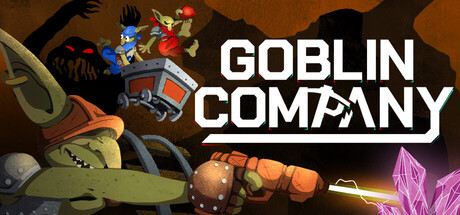
Goblin Company: The Co-op Mining Game That Wants You to Fear the Dark
There's a specific subgenre quietly eating Steam's co-op corner: four players, headlamps, voice chat, and something nasty waiting in the unlit parts of the map. Lethal Company set the template. Deep Rock Galactic had been refining the dwarf-and-drill loop for years before that. Now an Italian indie outfit called BitBorne Studio is throwing its hat in with Goblin Company, which hits Steam in June 2026.
The pitch is dense for a debut. Goblins. Laser drills. WHAAG MINING INC. Fully destructible biomes. A torch-based light meter that nibbles at your sanity if you wander off into the black. Player-built rail networks for ore carts. Up to four online. Solo if you hate yourself.
What's actually new
The interesting wrinkle, and the thing that separates this from the seventy other "dig with friends" projects rotting in wishlists, is the rail system. You're not just carving tunnels for the joy of it. You're laying track. Optimizing routes. Deciding whether to push deeper now or burn twenty minutes on infrastructure so the next descent is faster. That's a strategy-game decision wedged into a panic-driven co-op horror loop, and on paper it's genuinely weird. In a good way.
The torch mechanic is the other half of the bet. Carry them, throw them, plant them. Share light with a teammate who's getting jittery. If BitBorne actually nails the tension between "we need to push deeper for ore" and "we're running out of torches to mark our way back," that's a real gameplay knot. Not just a vibes layer.
Destructible terrain, the perennial nightmare
Full voxel destruction in a multiplayer game is a known nightmare. Anyone who's shipped one will tell you so. Netcode for terrain deformation gets ugly fast once you stack laser drills, four concurrent players, mining carts on rails, and AI creatures pathing through holes the players carved thirty seconds ago. BitBorne hasn't published anything technical about how they're handling sync, chunk streaming, or what the host's upload bandwidth looks like in practice. The early-access build is going to have to answer that pretty quickly, because the marketing leans hard on "dig everywhere" and players will stress-test that within ten minutes of booting up.
The studio's About page is honest about where they are. "A bunch of friends making games because we got tired of saying someone should make this." First project. Italian indie. No big publisher visible. That framing matters for expectations, both for buyers and for how the launch is going to play out.
What early coverage keeps fixating on
The handful of YouTube creators who've gotten preview footage are mostly circling the same two things: the goblin aesthetic (which lands somewhere between charming and chaotic, depending on who's filming), and the comparison to Lethal Company. That comparison is going to follow this game like a shadow whether BitBorne wants it or not.
German-language gameplay channels have already started episodic let's-plays, which tells you the format the game is naturally suited to. A streamer's playground. Four people, comms open, things going wrong on camera.
What nobody in the early coverage has actually stress-tested is the depth of the upgrade tree, how the three biomes differ mechanically (not just visually), or whether the "fear of the dark" sanity system has real teeth or just produces a screen-shake. Those are the questions that decide whether the game has 8 hours of content or 80.
Giant Crystal, or Nugget, or whatever
Small detail worth flagging. The Steam page calls the endgame MacGuffin the "Giant Crystal." The studio's own website calls it the "Giant Nugget." Tiny inconsistency. But it's the kind of thing that suggests the game's identity is still being shaken into its final shape. Not damning. Just something to note if you're tracking how locked-in the design is six months out from release.
Who this is for
If you've put 200 hours into Deep Rock Galactic and you're waiting for something with that same group-of-four-idiots energy but a darker tonal palette, this is on your radar. If you bounced off Lethal Company because the loop felt thin, the rail-building hook might be what gives the genre the strategic spine it needed. If you play solo and the co-op shine is the whole appeal, you'll probably feel the air go out of the room. The studio says single-player exists. Whether it's tuned for solo play or just technically possible is a different question.
The marketing math
A first-time Italian indie launching a co-op survival game into the post-Lethal Company landscape has roughly zero chance of breaking out by buying a banner ad or pitching mainstream gaming press. Mass-market campaigns burn cash on audiences who will never install a goblin mining game in their lives.
The realistic path is narrow and specific. Co-op horror streamers in the 10K-500K range. Four-stack content creators who already do Lethal Company and Content Warning runs with their friends on camera. The German and Brazilian let's-play scenes that historically over-index on physics-heavy co-op titles. The smaller voxel and sandbox channels who care about destructible terrain as a feature in itself. Get the game in front of those exact people, with playable builds rather than just trailers, and the wishlist graph starts doing the work for you.
That's the lane where something like CreatorFetch starts looking less like a tool and more like the actual infrastructure, a way to identify and reach the precise creator categories that historically convert wishlist-to-purchase for this genre, instead of spraying keys into a void and hoping a big channel picks it up by accident.
Six months out
Goblin Company is making the right bets on paper. Rail-building is a smart twist. The light and sanity mechanic has a clear hook. Four-player co-op with destructible terrain is the format that printed money in 2024 and 2025, and probably will in 2026 too. The risks are the usual ones for an ambitious first project. Technical scope. Content depth. Whether a small team in Italy can survive the six months of patching that always follows a launch in this genre. Worth watching. Not yet worth canonizing.