
Haru : Ritual of Sacrifice
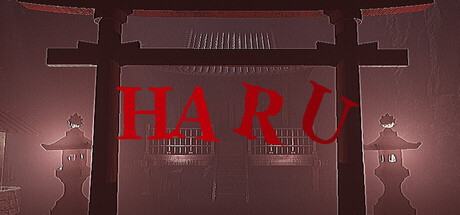
Five Days, One Shrine, and a Promise You'll Never Make It
Korean indie horror has been quietly building its own grammar — village curses, ritual rules, the slow erosion of a protagonist who knows too much and walks anyway. Haru : Ritual of Sacrifice, scheduled for June 2026 from Gomul and relativity_orca, parks itself right in that lane. Walking sim. 20 to 45 minutes. And it tells you, before you even buy it, that you will not reach the end.
That last bit is the most interesting thing on the Steam page.
The Pitch, Stripped Down
You play a man haunted by recurring nightmares of his dead younger sister, Haru. He travels to a remote village to find what's left of her — letters, photos, neighbors who knew her, the dirt she used to walk on. The village agrees to host him on one condition: perform the Ritual of Sacrifice for five days.
The rules, lifted straight from the listing, do most of the mood work:
Come alone. Every morning, draw a slip of paper from the box in front of the shrine and bring back the sacrifice written on it. Do not go outside after sunset; if you absolutely must, cover your eyes. Do not answer any voices you hear inside the shrine.
Reads more like an oral folklore transcript than a marketing blurb. Which is the point. The structure is borrowed from a very specific lineage of J-horror and K-horror village rituals — the SIREN school, basically, where the rules themselves are the gameplay, and breaking one isn't a fail-state so much as a slow reveal of what the village actually is.
A Game That Won't Let You Finish
"You will never make it to the final day. Because as a human, you cannot go any further."
That's the developers telling you the ceiling in advance. Honest design choice. It also raises a real question — is the loop the point, or is the loop the cage? A 20-to-45-minute runtime leans toward the cage. Short, dense, scripted, built around a single rug-pull. Not a multi-ending sandbox.
Fine. The walking-sim horror space has room for tightly authored shorts. But it also means the whole thing lives or dies on atmosphere, sound design, and whether the player is willing to obey rules they were told would not save them.
What's Missing
No dedicated site. No devlog. No public engine confirmation. No localization specifics past the obvious Korean origin. Gomul and relativity_orca aren't household names outside niche Korean indie circles, and the absence of a press kit at this stage isn't unusual for a small two-name credit — but it does mean buyers are going in on vibes and rules alone.
Community signal is thin too. Searches pull up unrelated stuff — Touhou Danmakufu scripts by a creator named Haru, Persona 6 OST mashups, SIREN lore breakdowns, even a Satanic Temple explainer. Cultural noise loud, actual coverage zero. For a horror release seven months out, that's the baseline reality of being a small Korean indie on Steam in 2026.
Where It Sits
Comparisons will write themselves. The five-day structure echoes The Closing Shift's shift-based dread and Chilla's Art's whole template of mundane-task-as-horror-vehicle. The rule list sits closer to SIREN's village taboos, or, more recently, the Korean indie scene's ongoing love affair with shrine and shamanism iconography — The Coma, White Day, the smaller itch.io stuff that never quite makes it to Steam's front page.
The real differentiator, if there is one, is whether the writing around Haru herself — the sister, not the title — gives the ritual emotional weight. A walking sim with great rules and a flat grief story is a tech demo. A walking sim with mediocre rules and a devastating sibling memory is a cult favorite. The Steam description gestures at both and commits to neither.
The Marketing Problem Nobody Talks About
A 30-minute Korean folk-horror walking sim. Two-person team. Releasing on a Tuesday in June 2026 into a Steam library that adds roughly 40 horror games a week.
A mass-market push here would set money on fire. Broad influencer blasts, generic horror-fan targeting, Facebook ads aimed at "people who like horror" — none of that converts on a game like this. The audience is a much narrower slice. The SIREN obsessives still writing essay-length YouTube breakdowns a decade later. The Chilla's Art completionists. The scanlation-and-subtitle crowd who actively seek out untranslated Korean indie work. And the short-form horror streamers — the Manlybadasscage tier, the Insym tier, the niche VTubers doing one-sit playthroughs in Japanese and Korean — whose entire content model is built on 30-to-60-minute atmospheric shorts.
Those are the people who buy this. They're also the people who sell it to everyone else.
Threading a campaign through those specific creator pockets, rather than spraying keys at general gaming channels who'll bail at minute four, is the difference between 200 wishlists and 20,000. CreatorFetch is the kind of infrastructure built for exactly that triage — finding shrine-horror and Asian-indie-curator channels whose audiences will actually convert, instead of paying for impressions from viewers who bounce the second they see subtitles.
The Honest Read
Haru is doing something quietly confident. Telling you the ending on the store page, then asking you to play anyway. That's either a confident grief story dressed as folk horror, or a clever cover for a 30-minute experience that couldn't sustain a longer one. No way to know yet. Anyone telling you otherwise is guessing.
What's worth watching is whether Gomul and relativity_orca can land the tone. Korean indie horror at its best is patient, specific, and unwilling to explain itself. At its worst, it's a checklist of shrine props and jump cuts. The five-day structure and the rule set point toward the former. June 2026 will sort it out.