
Insomnia: Chapter One
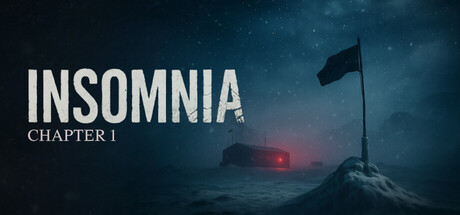
A Solo Dev, the Kara Sea, and Whatever's Behind the Door at Persei
Arctic horror has quietly turned into its own little Steam micro-genre. Frostbite as a stand-in for losing your grip. A research station that's gone quiet. One guy with a flashlight and questionable judgment. You've seen the silhouette of it before. The only real question is whether the execution earns the clichés or gets buried under them.
Insomnia: Chapter One, from solo developer Melon Polygons, is the newest entry aiming straight at that niche. It's not coy about what it is. Set in 2012, you play Ethan Miller, a junior technician sent to "Persei," an Arctic station in the Kara Sea, after the place stops answering the radio. No combat. No weapons. Corridors, logs, bad lights, and whatever's been quietly festering between the walls. The Steam page lists it for June 8, 2026, with the whole thing framed as an episodic series — standalone psychological horror stories rather than one long arc.
The references are the pitch
Watch the trailers and the influences aren't subtle. They're announced. IGN's demo-trailer coverage out of Steam Next Fest 2025 name-drops Still Wakes the Deep, The Thing, and Amnesia in the same breath. Useful triangulation, honestly. Still Wakes the Deep for the grimy industrial setting and a protagonist who has no business being there. Carpenter for the Arctic paranoia and the question of who's still themselves. Amnesia for the no-weapons, puzzle-and-dread loop.
Solo devs leaning on familiar reference points isn't a crime. Usually it's the only way to communicate scope and tone inside a 90-second trailer when you don't have a publisher behind you. The catch is obvious though — those games had teams, budgets, years. One person promising "hauntingly realistic visuals" and "immersive sound design" on a station the size of Persei is making a load-bearing claim, and the bolts have to hold.
Early community coverage from channels like LightsOut Horror and Ultimate Gamerz has poked at the demo with a fairly generous eye, mostly chewing on the atmosphere and the log-based storytelling rather than picking apart fidelity or pacing. Which makes sense. That's the audience this is built for, and they're already in. The harder test is later, when a full chapter has to hold together across a single-session run instead of a 15-minute slice.
What "Chapter One" actually means
The episodic framing is doing a lot of quiet work. Steam's description spells it out — each chapter is a self-contained story about isolation, memory, guilt. No cliffhanger serialization. That's a smart move for a solo dev. Ship a one-sitting experience, see how it lands, iterate. Don't sign yourself up for a sprawling 12-hour campaign that would almost certainly buckle under one person's bandwidth.
It also means buyers need to calibrate. This isn't a thirty-dollar epic. It's a horror short story you play. Explore, read logs, solve environmental puzzles, reconstruct what happened to whoever was here first. The pitch is doing exactly what it says it's doing. If you want a power fantasy or an open world, wrong storefront.
The solo horror problem
Here's where it gets interesting. Steam shipped somewhere north of 18,000 games last year, by most counts. The first-person psychological horror corner alone is crowded enough that a new release can vanish inside 48 hours. Solo devs in this niche basically live or die on whether the right 200 horror YouTubers and Twitch streamers happen to grab the demo.
Melon Polygons clearly knows this. The demo trailer ran during Next Fest, IGN picked it up, and a handful of mid-tier horror channels have already filmed the demo. That's not accidental. Someone did the legwork.
A mass-market campaign for something like Insomnia: Chapter One would be cash thrown into a furnace. There's no broad demographic to chase. People either watch atmospheric horror playthroughs religiously or they don't, and the conversion runs almost entirely through Let's Players, atmospheric-horror curators, and the sub-50k subscriber channels that built their identity around SOMA, Observation, Anatomy. The right twenty creators are worth more than a hundred mainstream impressions, easily. This is exactly the kind of surgical, taste-driven outreach that platforms like CreatorFetch are built for — locating the horror, walking-sim, weird-indie YouTubers and streamers whose audiences are already pre-sold on Arctic dread and unreliable narrators, and getting the demo into their hands before launch week rather than two months after. For a solo dev going up against a daily Steam release queue, that kind of targeting isn't a luxury. It's pretty much the only realistic bridge between shipping a game and anyone noticing it shipped.
Pre-release verdict
On paper? Competent, clearly scoped, structurally smart, made by someone who knows his references. Whether it actually lands depends on the stuff no trailer can show you — pacing, the writing in the logs, whether the puzzles are puzzles or just key hunts dressed up, whether the sound design earns the dread the visuals keep promising.
Working in its favor: a tight premise, a manageable scope, an honest pitch about what it is, and a dev who's already feeding the right slice of YouTube. What could sink it: the chasm between "inspired by Still Wakes the Deep" and "actually plays like Still Wakes the Deep" is huge, and solo horror games fall into it constantly. June 2026 is a long runway. Long enough to get it right. Long enough to drift, too.