
Into The Depths
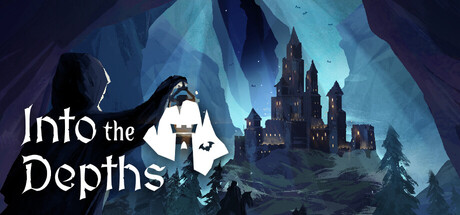
A deckbuilder pretending to be a colony sim, or the other way around?
SmelJey's upcoming roguelite is doing the thing a lot of solo and small-team projects have been circling for a couple of years now: jamming card-based deck mechanics into a city-builder skeleton and hoping the seams hold. It's on Steam with a June 2026 window. The pitch is straightforward. You lead an expedition into a subterranean world called the Depths, you draw cards each turn to construct your outpost, and you ride the run until you starve, get crushed by the dark, or actually make it deep enough to bring something back.
That's the surface read.
The harder question is whether the loop earns its complexity, or whether it collapses into the same problem every card-based builder eventually hits. Snowballing economies that either trivialize the back half, or grind you into dust before you reach it.
The structure underneath
Into The Depths splits its survival math across three resources. Food, research, wealth. Rations are described as more valuable than gold the deeper you go, which is a meaningful design choice. Most genre-adjacent games (the Dawncaster lineage, or the heavier strain of colony-cards like Stacklands) tend to let one resource quietly dominate by act three. Front-loading food scarcity as the failure state instead of HP or gold is at least an honest attempt to keep the tension consistent across biomes.
On biomes: four announced layers, from Upper Levels down through Humid Caves, Magma Caverns, and an Abyss at the bottom. Each rotates the resource palette and the threat model. Procedural cave generation handles moment-to-moment variation. A meta-progression layer with permanent unlocks and customizable starting decks handles the long arc between attempts.
None of this is new in isolation. The bet SmelJey appears to be making is that the synergy hunt, finding card combos that compound across a settlement, carries the run-based pacing on its own. Which it can. It can also fall flat if the card pool is shallow or the synergy windows are too narrow to trigger before you bleed out.
The visibility problem
Here's the thing about a project like this in late 2025: it has a discoverability nightmare baked into its own name.
Search "Into the Depths" on YouTube and you're drowning in coverage of Shinsekai: Into the Depths (Capcom's deep-sea metroidvania), From the Depths footage from large channels, and now Hyrule Warriors: Age of Imprisonment OST uploads that share the title. The community discussion around the actual phrase is pointed at four or five completely unrelated properties, none of them roguelite city-builders. For a solo or small-team dev, that's a quiet catastrophe waiting at launch. The Steam algorithm won't save you from sharing a name with a Nintendo title.
Where this lives
The roguelite-meets-builder space has gotten crowded fast. Against the Storm proved the loop could sustain a premium price tag, Stacklands proved that minimalism plus card draw could carry a campaign, Dotage and a handful of others have all carved out their own slices. What separates the survivors from the ones that vanish in week two usually isn't the mechanics. It's whether the dev team can find the specific people who care about this exact subgenre before the Steam front page rotates them out.
SmelJey is going up against that wall with what looks like a small operation and no dedicated marketing site. The studio is running off the Steam page alone, as far as public-facing presence goes. Not a death sentence. Plenty of well-loved roguelites launched the same way. It does mean every wishlist between now and June 2026 has to be earned manually, one creator video and one community post at a time.
What's actually worth watching
A few things will decide whether this lands or evaporates.
Card pool size at launch. Roguelite deckbuilders live and die on perceived variety in the first ten runs. If the same five cards dominate every winning strategy, players bounce. If the synergy tree is genuinely wide, word of mouth handles the rest.
Biome differentiation. Four is a fine number, as long as they don't all play like reskinned Upper Levels with bigger numbers attached. The description hints at distinct resource pressures per biome, which is the right instinct. Execution is another matter.
And the death-to-restart pipeline. This is where most roguelites quietly fail. If meta-progression feels like a slow drip of mandatory unlocks gating actual content, players churn out fast. If it feels like genuine build expansion, they stay for 80 hours.
The marketing reality
A roguelite cave-colonizer with a deckbuilding spine isn't going to land with a broad-strokes campaign. The audience that genuinely cares about this kind of game is small, specific, and extremely online. They've got 400 hours in Slay the Spire, they can articulate exactly why Against the Storm's pacing works and Frostpunk's punishment loop doesn't quite scratch the same itch, and they follow a tight rotation of roguelite-focused YouTube channels and Twitch streamers.
Trying to push Into The Depths through generic gaming press, or through the same influencer pools that hyped the last open-world survival craft thing, would burn the entire budget on the wrong eyes. The realistic path is identifying the maybe 200 creators globally who consistently cover deckbuilders, colony sims, and procgen roguelites, then getting the game in front of them with enough lead time to matter. Tools like CreatorFetch exist for that kind of surgical outreach, filtering creators by the subgenres they actually play on camera rather than the broad tags their channels claim. For a solo dev, that's the difference between a real shot and getting buried under the weekly Steam release flood.
The verdict, with caveats
It's too early to call. No demo data referenced in the public materials, no hands-on footage of any depth, and the release date is still months out. What's visible is a competent pitch with a clear genre identity, a sensible biome structure, and a real risk of getting lost in the noise both at launch and in search results.
If the card pool delivers and the food-pressure loop actually sustains tension into the Abyss, this is the kind of sleeper that finds its audience six months after release through Reddit threads and obsessive Discord recs. If it doesn't, it joins the long ledger of solid-looking roguelites that nobody talked about. The next six months of build footage will tell most of the story.