Nova Swarm
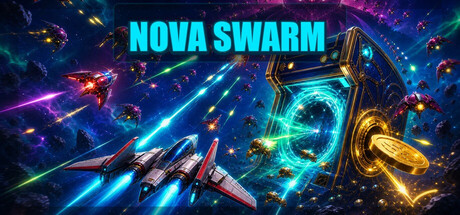
Nova Swarm wants you to lose, learn, and try again
Arcade shoot 'em ups refuse to die quietly. A few new ones land on Steam every year, most swallowed by the algorithm inside a week. Nova Swarm, from a small outfit called Tiny Foundry, is shooting for a June 2026 launch with a pitch that's almost stubbornly modest: ten sectors, a hangar full of ships, an Overrun mode after you clear the main route, and a leaderboard that's going to humble you.
No metroidvania structure stapled on. No roguelite skill tree pretending to be progression.
Just runs.
The readability problem
Anyone who's spent real time with bullet hell knows the genre's central tension. You want a screen busy enough to feel dangerous, but every projectile, hazard, and tractor pull has to telegraph itself clearly enough that death feels earned. Botch that and you've got either a sleepy shooter or a chaotic mess where players blame the game instead of themselves.
Tiny Foundry's pitch leans hard on this. Their own framing is blunt — danger should have a shape you can read. Bosses have tells. Hazards are meant to be learned. Whether the execution actually clears that bar is the open question, and it's the one that decides whether the game gets a second week of attention or quietly vanishes. Cave veterans, Touhou refugees, and the people still playing Ikaruga on emulators have ruthlessly calibrated standards for this stuff. They'll know inside an hour.
Ships, ranks, and a Codex that remembers your bad decisions
The hangar starts small and opens up as your pilot career grows. Speed, spread, fire rhythm, damage, bullet speed, hitbox size — the usual levers. But the developer's own copy admits something I don't see often: a few of the ships are "probably bad ideas until they suddenly make sense." That's an actual arcade design philosophy. You're not supposed to like every ship on day one. You're supposed to grow into them.
Around that sits the meta-layer: boss kills, clean waves, no-hit moments, new enemies, Codex discoveries, pilot rank, unlocks, career stats, run records. The Threat Codex fills in as you encounter new trouble. The Cabinet apparently logs your highlights and your stupidest moments alike — the kind of small, self-aware detail that suggests someone on the team plays arcade games rather than just having watched a postmortem about them.
Bonus cores tempt you into trouble. Powerups can save a run or wreck one. Elites, mines, tractor hazards, split shots, lane-cutters. Standard vocabulary, executed with a clear point of view.
The naming collision
One thing worth flagging if you're digging through search results: there's a pile of older content floating around YouTube under the "Nova Swarm" name with nothing to do with this game. A 2018 local-multiplayer VR project from a different developer. A VTuber channel using the name. Trailers from unrelated efforts. The kind of search-result pollution that makes a small studio's marketing job harder before the press cycle even starts.
Tiny Foundry's Nova Swarm is its own thing — single-player arcade shoot 'em up, not VR, not 1v4 multiplayer. Useful to know if you're trying to dig up footage.
Who actually buys this in 2026?
Here's where the math gets harsh. A compact, single-player arcade shooter with no roguelite hook, no narrative wrapper, and no co-op is fighting for an audience that's both small and extremely opinionated. The shmup crowd already has Cave's catalog, ZUN's entire library, Crimzon Clover, Blue Revolver, the endless Eschatos-tier reference points. They don't need a new shooter. They need a reason to care about one.
Trying to sell Nova Swarm to "everyone who likes action games" is how you end up with 47 reviews and a refund rate that breaks your heart. The realistic path is much narrower — hand it to the people who already livestream DoDonPachi credit-feed runs, the score-chase Discord regulars, the small-but-loud shmup YouTubers who actually care about hitbox visualization and rank curves, the arcade-preservation Twitter crowd. Maybe a few thousand committed buyers globally. But they're the ones who'll grind the global leaderboard for a year and write the words other players end up reading. This kind of surgical targeting is the problem CreatorFetch positions itself around — infrastructure for finding shmup creators, retro-arcade reviewers, and score-attack streamers, instead of burning a tiny launch budget on broad-spectrum outreach that drowns in irrelevant impressions. Whether any tool actually delivers on that promise is its own question, but the problem itself is real.
The verdict-shaped thing
Too early to know if Nova Swarm earns a place next to the genre's established names. The pitch is honest, the scope is appropriately humble, and the design vocabulary suggests the developer understands what makes a shmup tick. Ten sectors plus Overrun is a reasonable container. Steam Cloud, controller support, global leaderboards — all the boxes arcade die-hards expect, ticked without fanfare.
What's missing from public info is the texture. Frame data. Hitbox visibility. Scoring depth. Whether the powerup loop pushes you toward greed in a way that creates real decisions instead of obvious ones. Those answers don't come from a store page.
For now, it's a small game from a small studio making promises that arcade veterans will absolutely hold them to. June 2026 sorts it out.