
Once Upon A Card
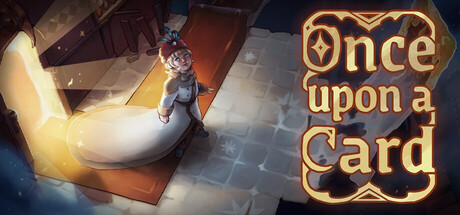
A Slavic deckbuilder built by students, aiming at a crowded 2026 shelf
Roguelike deckbuilders are the cockroaches of the indie scene. You can't kill them. There's a new one every Tuesday.
So when a student-team project from ISART DIGITAL turns up on Steam with a June 2026 release window and a pitch involving Slavic fairy tales, dreaming children, and a grid you assemble room by room, the honest reaction sits somewhere between curiosity and a raised eyebrow.
Once Upon A Card is reaching for something a little weirder than the standard Spire clone. The hook isn't just the deck. You're also placing the rooms of the dungeon itself as you go, which turns each run into a spatial puzzle stacked on top of the card combat. Less "pick a node on a map," more "you are the map."
The actual mechanic, as far as anyone can tell
Here's what the store page spells out, and what it carefully doesn't. You arrange rooms on a grid to chart your path. Fighting enemies in those rooms pays out in currency or cards. You spend the currency to expand and upgrade what you're holding, then run into the boss check at the end. Replay, rebuild, repeat.
What's actually interesting is the "real-time puzzles and deckbuilding" line, which is doing a lot of work for one sentence. Real-time deckbuilders aren't unheard of, but they're rare enough that it's not obvious yet whether the cards play out in real time during combat, or whether "real-time" just refers to the room-placement layer. The copy is coy about it. And the official site is currently a near-empty Framer page with a "Free on Steam!" banner and team links. No devlog. No FAQ. No mechanical breakdown anywhere. That's a gap.
About the developer
ISART DIGITAL is a French game and animation school with campuses in Paris and Montreal. Their student productions tend to have a recognizable shape: small scope, strong art direction, one mechanical pitch they ride hard. Some end up genuinely excellent. Others ship rough and get absorbed into portfolio purgatory. Calibrate accordingly. This isn't a veteran studio gambling a publisher's money, it's a graduating cohort with a release date and something to prove.
That "Free on Steam" tag matters. Pricing at zero is a portfolio decision, not a commercial one, and it reframes what success even looks like for this thing.
The Slavic angle
The card-game space drowns in Norse, vaguely Eastern, and generic dark-fantasy art. Genuinely Slavic-inflected stuff (Leshy, Domovoi, Baba Yaga territory, treated with some care rather than as Witcher 3 cosplay) is still niche enough that it can carry a project on its own. The screenshots lean into a children's-storybook framing, which is a smarter pivot than yet another grimdark roguelike. A royal child wandering through nightmares has been done before in indie (Child of Light comes to mind), but pairing that frame with cards feels fresher than most pitches landing in 2026.
The open question is whether the writing supports the aesthetic. Slavic folklore done badly is just generic fairy tale with funny names. Done well, it's specific, weird, and unsettling in ways Western fairy tales rarely pull off. No public writing sample yet, so this is a wait-and-see.
Community signal, or the lack of one
Worth flagging. Searching for actual coverage of this specific title surfaces almost nothing. The YouTube results are all about the tabletop storytelling card game also called "Once Upon a Time," which has been around since the 90s and basically owns the search namespace. That's a real branding problem for a 2026 video game release. Any creator-driven discovery is going to fight uphill against decades of board-game SEO baked into Google and YouTube. A name collision like this isn't fatal. But it does mean organic search won't be doing the heavy lifting.
Where this fits in a brutally crowded genre
The 2026 deckbuilder market is going to be a meat grinder. Balatro broke the gates. Every solo dev with a Unity license and a working knowledge of Spire's combat loop is shipping something. The ones that cut through share one trait: a single, instantly explainable twist that separates them in a thirty-second clip. Balatro had jokers. Inscryption had the meta horror. Monster Train had the lanes.
Once Upon A Card's twist, the dungeon-building grid layered onto a deckbuilder, is potentially that kind of hook. It's also the kind of hook that doesn't land in a static screenshot. You have to see it move. Which means everything rides on the trailer, the GIFs, and the creators who choose to pick it up.
The discovery problem
A free student-made roguelike deckbuilder, sharing its name with a 30-year-old tabletop game, dropping into the most saturated indie genre on Steam, is not going to win on a banner placement or a press blast. A mass-market push, paid Steam ads, a generic blanket influencer campaign, would set fire to a budget the team almost certainly doesn't have, and most of that spend would land in front of people who already auto-skip "another deckbuilder" in their feeds.
The realistic survival path is hyper-niche. The deckbuilder optimization streamers who livestream Spire ascensions for hours. The Slavic-folklore-and-mythology YouTube essayists. The small but vocal puzzle-roguelike crowd that championed Loop Hero and Backpack Hero. And the French-speaking indie scene, which tends to rally around ISART student work specifically. Reaching those exact people, in that order, is what the studio needs. CreatorFetch is the kind of infrastructure that lets a tiny team execute that targeting without a publisher's Rolodex.
What to actually watch for between now and June 2026
A few honest checkpoints. Does the team publish a real devlog or mechanical breakdown before launch? Does the trailer make the room-placement loop legible in under fifteen seconds? Does anyone in the deckbuilder creator circuit pick up the demo, assuming a demo ships at all? And does the writing carry the Slavic framing, or does it just borrow the wallpaper?
Free price tag aside, this is the part where most student projects either find their audience or vanish into the Steam back-catalog. The pitch has enough texture to deserve a fair shot. Whether it gets one comes down to whether the right couple thousand people ever hear about it.