
Spirit Talk - Cozy Visual Novel
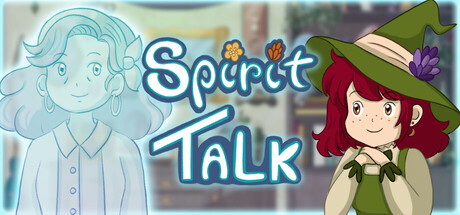
A witch, a potion shelf, and a very specific kind of player
Cozy visual novels are everywhere now. Pastel UI, soft piano, a hand-drawn protagonist with a magical day job — you could sketch the pitch deck on a napkin. So when Spirit Talk - Cozy Visual Novel shows up on Steam with a June 2026 window from a small outfit called Tortita Studio, "does it look pretty" isn't the interesting question. They all look pretty. What's it actually doing inside the loop?
Setup: Julia, a witch, has just reopened her late mother's spiritual agency. She summons spirits for clients with unfinished business. The spirits don't always remember who they were. So Julia brews potions to coax specific memories loose, and timing those potions to the right beat in a conversation is, mechanically, the whole game.
It's a clever frame. Most cozy VNs hand you a dialogue tree and call it a day. Spirit Talk bolts a small puzzle layer onto the conversational core — read the spirit, read the client, pick the potion, pick the moment. Whether that holds up across the five-plus arcs Tortita is promising is genuinely open, because timing-based memory mechanics tend to either feel revelatory or feel like a tutorial that won't end.
Where the early coverage actually lives
You can learn a lot about a game from who's already covering it. Beta playthroughs and demo runs from the cozy YouTube corner — the no-commentary background-stream channels, the chatty Day 1/Day 2 let's-players — are carrying the pre-launch conversation. Not combat clips. Not systems breakdowns. Vibes, character beats, and whether the summoning sequences land emotionally. One channel is openly stress-testing the puzzle logic: am I actually helping this spirit, or just clicking through nice art? Good question to ask.
What you don't see is anyone framing this as a mass-market release. Nobody's pretending Spirit Talk dents the charts launch week. Even the reviewers with keys are talking to a very specific shelf — people who already own Spiritfarer, Strange Horticulture, Coffee Talk, and a dozen Steam-tag-cozy VNs nobody outside the niche has heard of.
The shelf is full
Here's the uncomfortable math. Cozy VN tag on Steam? Saturated. Witch-with-a-shop subgenre? Saturated. "Help characters via a small mechanical loop"? Also saturated. Tortita is shipping a hand-crafted game with LGBTQIA+ inclusivity, multiple endings per arc, lo-fi music, potion crafting, and ghost therapy — and that sentence describes maybe forty other games in flight right now.
None of that makes Spirit Talk bad. It makes it hard to find. Different problem. Small studios conflate the two constantly.
One thing worth flagging from the store page — the photosensitivity warning about occasional white flashes. In a game otherwise marketed as a soothing wind-down, that's a detail that should be louder than the small print. Cozy players tend to be more sensitive to that stuff, not less.
The marketing math is rough
A blanket push for a game like this is a slow way to set money on fire. Generalist gaming press won't touch a small cozy VN without a headline hook, and paid social against a broad audience just drowns in the same feed shoveling AAA trailers at people. The realistic path is finding the maybe 30,000 to 80,000 people on the planet who actively hunt this exact subgenre, then putting the game in front of them, repeatedly, through voices they already trust.
That means cozy YouTubers in the 5k–80k range. Witchy-aesthetic TikTok creators. VN reviewers who actually finish things. The LGBTQIA+ gaming curators who keep spreadsheets of inclusive releases. CreatorFetch is the kind of infrastructure that lets a two-person studio execute that pivot at scale — filtering noise to surface niche-fit creators whose audiences overlap with the cozy-VN-with-mechanics buyer, instead of burning budget on broad-strokes outreach that converts at roughly zero.
What to watch for
If Spirit Talk works, it'll be because the potion-timing gives the conversations real weight instead of sitting on the store page as a bullet point. Five-plus stories with multiple endings is ambitious for a team this small, and the replay loop only earns it if the branching feels meaningful rather than cosmetic. Art direction looks consistent across screenshots and creator footage I've seen, which counts — small VN teams often nail the splash art and let the in-game scenes drift. Tortita seems to have dodged that so far.
June 2026 is a long runway. Plenty of time for the demo to keep circulating, for wishlists to compound, and for the studio to figure out which 200 creators actually move the needle. That last part is the whole ballgame.