
Swap lives
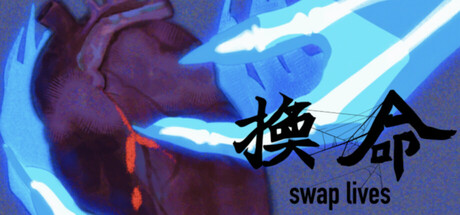
A Ming-to-Qing ghost story trying to find its audience on Steam
Chinese folk horror has quietly carved out one of the more interesting corners of indie gaming over the last few years. The Detention crowd. The Paper Bride series. A trail of solo Chinese devs whose work barely escapes the language barrier before getting buried by Steam's algorithm.
Swap Lives, slated for June 2026 on Steam, plants itself squarely in that lineage. Solo developer WANG LU QIAN is building a dual-protagonist puzzle horror piece set in Lingyang County during the Ming-Qing dynastic transition — a period most Western players know nothing about, which is either the dealbreaker or the entire selling point depending on who you ask.
The premise has bones. Zhu Erdan, a poor scholar, passes the imperial exam. Comes home. His wife's reflection in the mirror doesn't look like her anymore. Strange things start crawling out of the corners of the mansion. And somewhere in the background, there's a midnight encounter with a fairy that everyone keeps not quite explaining.
That's a setup with real teeth if it lands.
The dual-perspective gimmick
The pitch swaps between Miss Wu and "the Lady" as the plot moves, each perspective unlocking pieces of the puzzle the other can't see. Beautiful when the writing's tight. A disaster when it isn't. Anyone who's played enough mystery-puzzle games knows the trap — one protagonist becomes the "real" one and the other quietly demotes to a glorified hint system. The emotional payoff of the switch, that moment you realize the two characters have been seeing fundamentally different versions of the same event, only fires if the developer commits to making both perspectives genuinely incomplete.
Whether WANG LU QIAN sticks that landing is the whole question. Nothing in the public materials yet proves the puzzles are doing more than gating progression. The description mentions colors being used "to render emotions," which is either an evocative design choice in the vein of Gris filtered through a horror lens, or a vague marketing line nobody bothered to firm up. Store page can't tell you which.
The discoverability problem
Here's the uncomfortable part. A solo-dev Chinese-language horror puzzler with a Ming-Qing setting, dropping into the meat grinder of mid-2026, doesn't have a discovery problem because it's bad. It has a discovery problem because Steam's algorithm doesn't care about cultural specificity, and the global horror audience defaults to streamer-friendly jump-scare bait.
Search YouTube for "Swap Lives" right now. The results are Sidemen videos, Jordan Matter family-channel content, a Nintendo Direct timestamp. The game itself isn't in the conversation. Not even a little.
That's the baseline every solo dev in this niche is fighting.
What it actually needs
For a project like this to break out, two things usually have to happen at the same time. The puzzles have to be legible enough that a streamer can pick the game up cold and not bounce inside fifteen minutes — Chinese folk-horror references are dense, and the localization quality of the in-game prose will matter more than most devs realize. And the atmosphere has to be strong enough in the first twenty minutes that the genre faithful — the people who actually finished Paper Bride 3, the ones who watch playthroughs of niche RPG Maker horror in subtitled Mandarin — start posting about it without being asked.
The mirror hook is the right kind of bait for that crowd. Reflections that don't match are a recurring motif in Chinese ghost lore, and there's a real chance the puzzle design uses it in ways Western horror doesn't typically touch. But "potential" is doing a lot of heavy lifting in that sentence. The Steam page leans on vibes, not on showing how the mechanics actually work.
The marketing math
A mass-market campaign for Swap Lives would be money set on fire. The mainstream horror audience on Steam wants Phasmophobia clones, Lethal Company knockoffs, the next FNAF-adjacent thing. Slow-paced, dialogue-heavy folk horror in a historical Chinese setting isn't going to convert on a generic horror banner.
The audience that will actually buy this game is small, specific, and already self-sorted. The Chinese-folk-horror YouTubers who covered Paper Bride and Firework. The suspense-puzzle streamers built around Detention and The Bridge Curse. The lore-essayists who do hour-long breakdowns on Ming-Qing transitional aesthetics. That small but loyal subtitled-letsplay community that grabs Chinese indie horror before localization is even confirmed.
Reaching those creators individually is the only honest path. That kind of targeted outreach is what CreatorFetch positions itself around — sorting through noise to find channels whose existing audience already wants exactly this game, instead of spraying keys at general horror creators who'll never finish chapter one. Whether any tool actually delivers on that promise is its own argument, but the underlying logic — that the addressable creator pool here is countable on a couple of hands — is hard to dispute.
The verdict, such as it is
There's enough in the concept to be cautiously interested. A dual-POV horror mystery rooted in a specific historical moment, made by a solo dev with apparent commitment to atmosphere — that's the kind of project worth tracking. But June 2026 is a long way out and store-page promises age badly.
Honest read: if the puzzle-plot integration is as tight as the description suggests, and if the localization handles the cultural specifics with care instead of flattening them into something generic, Swap Lives has a real shot at becoming one of those quiet niche hits the right audience won't shut up about. If either of those breaks, it joins the pile of well-meaning indie horror games nobody outside their language region ever hears about.
The space between those two outcomes is where the next eight months of development have to live.