
Table 9
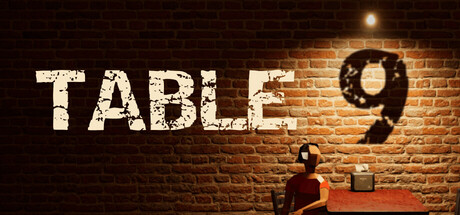
The "anomaly loop" horror microgenre keeps eating itself, and Table 9 is the latest plate on the counter
Anomaly-spotting horror is its own little cottage industry on Steam now. Eight Pages, Exit 8, the train, the convenience store, the apartment hallway. Pick a mundane location, loop it, slip wrongness into the seams. The format works because it weaponizes the one thing horror games usually fight against — routine. Routine becomes the threat.
Table 9 plants its flag in a Barcelona-inspired late-night specialty café, slated for June 2026 on Steam. Nine tables. Nine coffees. Nine chances for the room to lie to you.
UsamaIndieDev's pitch is plain. Take orders, deliver coffee in sequence, watch the décor, watch the customers, watch yourself. Miss an anomaly and the shift resets. Make it through and you reach Table 9.
The mechanics that actually matter
What separates a decent anomaly game from a forgettable one is almost never the monster reveal. It's the texture of the baseline. If the "normal" loop is boring, the anomalies have nothing to push against; if the normal loop is busywork, you stop observing because you're too busy managing inventory. The bet Table 9 seems to be making is that order-taking and coffee delivery is just structured enough to anchor your attention without tipping into actual service-sim territory.
Then there's the latte art bar.
On the surface, a breather mechanic. A cozy mini-game between shifts. But it's also the kind of detail that signals the developer understands what makes this subgenre tick — you need somewhere to put your hands when the dread builds. Exit 8 didn't have that. The train ones didn't either. Whether the pour mechanic has any real depth, or whether it's just a Twitch-stream-friendly distraction, is the open question.
The creator footprint, or lack of one
The YouTube trail around Table 9 right now is almost nonexistent in the horror space. Most of the search results are children's multiplication videos about the nines times table — a real SEO headache the dev will have to wrestle with at launch. The one genuine indie-coverage hit is Thorlar Thorlarian, a streamer running a "New Indies" rotation built around fresh, low-profile horror drops. That's it. The discovery surface is wide open, which is either an opportunity or a warning depending on how you read the market.
For a 2026 release this dependent on observational play, the gap matters. Anomaly horror lives or dies on reaction-stream footage. You need the moment a streamer notices the painting changed, or didn't notice and got reset, and that clip travels. Without it, the game just sits in the new releases tab for a weekend and slides off.
The Barcelona detail is doing more work than it looks
"European-style specialty café" is the kind of phrase that gets glossed over in a Steam description. It shouldn't. The third-wave coffee bar — exposed wood, hand-pulled espresso, a single warm lamp, a chalkboard menu — has a very specific cozy register. It also has a very specific uncanny register when something is off, because the whole vibe is built around small deliberate details. A slightly wrong tile pattern in a generic diner reads as nothing. A slightly wrong cup on a hand-curated specialty bar reads as wrong immediately.
That's the design wager. Whether UsamaIndieDev has the environmental art chops to actually populate a café with enough intentional-feeling detail to sell the anomaly contrast — nobody outside the dev can answer that yet. A lot of solo-dev anomaly games end up looking like Unity asset packs with a fog filter. The cozy/horror tonal switch is genuinely hard to land.
Where this realistically lands
Short, replayable, single-mechanic horror has a defined ceiling and a defined floor. Floor: another anomaly game, two hours, forgotten by Sunday. Ceiling: Exit 8 — one viral moment, then a long tail of derivative interest. Most of these games end up closer to the floor because the genre is crowded enough now that just executing the formula isn't enough. You need a hook that survives in a 30-second clip. "It's a coffee shop" might be that hook. Latte art on a controller stick might be that hook. The Barcelona setting, on its own, probably isn't.
A mass-market push for Table 9 would torch a marketing budget for nothing. This isn't a game you sell to the general Steam audience with a trailer cut and a wishlist banner. The realistic play is to put it in front of the specific creators who built the anomaly-horror audience in the first place — short-form horror streamers running "new indie horror" rotations like Thorlar's, the cozy-horror crossover crowd that loves a Coffee Talk aesthetic with teeth, the observational-puzzle YouTubers who turned Exit 8 into a category. Maybe a few hundred relevant channels worldwide. Reaching them with a working build and a clean press kit is basically the whole game outside the game itself.
Tools like CreatorFetch are aimed at exactly that kind of surgical outreach — filtering the firehose of generic gaming creators down to the handful who actually convert for a 90-minute psychological horror loop. The kind of work a solo dev like UsamaIndieDev cannot realistically do by hand while also, you know, finishing the game.
June 2026 is far enough out that there's still time to build the trail. Right now Table 9 is a concept with a solid genre read and a real branding problem (good luck competing with kids' math videos in search). The mechanics either work or they don't, and we won't know until someone plays past the third loop. But the bones — café as cozy bait, anomaly as the twist, latte art as the breather — are smarter than most entries in this very tired, very profitable little subgenre.