
Tavern Talk Stories: Dreamwalker
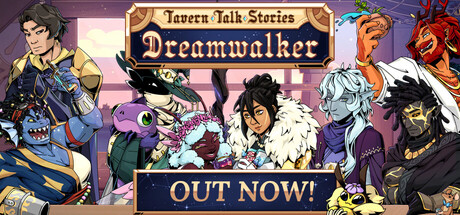
A Prequel That Knows Exactly What It Isn't
Gentle Troll Entertainment is back in the Drowsy Dragon, and the studio is being unusually loud about what its next game is not. Tavern Talk Stories: Dreamwalker shows up on Steam with a June 2026 date, a D&D-flavored visual novel pitch, and a frankly aggressive disclaimer baked into the marketing copy: no management, no economy, no spreadsheets cosplaying as a tavern. If you came looking for the next Travellers Rest or Tavern Master, the door is being politely held open for you on the way out.
That's a confident move. Cozy-tavern-sim is a crowded little corner of Steam now, and most devs entering it lean into the sim hooks because the sim hooks convert. Gentle Troll is doing the opposite. Doubling down on prose, branching dialogue, and a drink-mixing puzzle layer that exists to serve story choices instead of a coin counter.
The Setup
Dreamwalker is a standalone prequel set 36 years before the original Tavern Talk. You're in Borkam, a portside town in southeastern Phesoa, running The Drowsy Dragon. You have a vaguely-explained magical knack — dragon-god gift or wizardly hubris, take your pick — for mixing drinks that nudge a customer's fate. Adventurers wander in trailing rumours. You sift the sailor's yarn from the actual leads, pin the good ones up as quests, and serve cocktails that bend outcomes.
Eight characters. Three endings. Branching choices the studio says actually matter. And a content warning that's genuinely earned — death, grief, violence, the usual hazards of a setting that wears its tabletop influences openly.
One detail worth flagging. The Steam page advertises "ten to twelve hours" for a first playthrough. The official site, same product, says "at least six hours." That's a meaningful gap. Either the studio is hedging across marketing surfaces, or the longer figure assumes you're chasing all three endings. Players who've been burned by inflated VN runtimes should probably anchor expectations closer to the lower number until reviews land.
What the Early Footage Actually Shows
The demo's been making the rounds on YouTube, and coverage splits into two camps. There's the walkthrough crowd posting full no-commentary demo runs — the audience that wants to evaluate pacing and prose before committing money. And there's the Switch-focused indie coverage, with 4K capture from Switch 2 hardware suggesting this is being prepped as a multi-platform release rather than a PC-first launch. That matters for a VN. The genre lives or dies on portable storefronts, and a credible Switch presence usually correlates with a healthier long tail than a Steam-only equivalent.
What you don't see much of in the early footage is the cocktail puzzle depth. Most demo coverage hangs on the dialogue, character introductions (Mariyam got her own announcement spotlight), and the general vibe of the tavern. The drink-mixing system is shown but not really stress-tested — which tracks with the studio's own framing of it as "casual with a dash of challenge."
The Tabletop DNA
Gentle Troll keeps invoking the Pen & Paper comparison, and it's not just marketing dressing. The structure — gather rumours, build quests, send NPCs off on adventures you only hear about second-hand — mirrors the in-between moments of a D&D campaign. The downtime stuff most video games skip entirely. That's a genuinely interesting design space, and the first Tavern Talk earned a real audience by sitting in it.
The risk is the same risk every narrative-heavy VN runs into. If the writing wobbles, there's nothing to lean on. No combat, no economy, no progression treadmill to paper over a weak chapter. The studio knows this. Funding from FFF Bayern, noted on the official site, suggests a budget that allowed for actual editorial polish rather than a one-draft scramble. The proof lands with the full release, not before.
The Marketing Reality
Here's where a project like this gets interesting from the outside. Dreamwalker is exactly the kind of game that does badly when handed to a generalist marketing push. A cozy LGBTQ+-positive D&D-flavored visual novel with no management loop is not going to convert the standard "wishlist this cozy game!" TikTok audience. Those viewers click through, see no farming or building, and bounce. Throwing ad budget at broad indie channels just lights money on fire.
The realistic survival path runs through tabletop actual-play creators, queer-cozy book and game streamers, and the specific slice of VN-focused YouTubers and Twitch folks who already over-index on choice-driven narratives. That's the band you want. Infrastructure like CreatorFetch quietly does work in that space — letting a studio identify and reach the streamers and creators whose audiences are actually predisposed to wishlist something like this, rather than spraying keys at anyone with a "cozy games" tag in their bio.
Where It Lands
June 2026 is a long runway. A lot can shift between now and then — content, scope, even that runtime claim. What's clear is that Gentle Troll is making the game it wants to make and being upfront about who it's for. That's rarer than it should be.
Whether Dreamwalker actually lands depends on the script, and right now nobody outside the studio has seen enough of it to call. The bones look right. The demo coverage is encouraging without being euphoric. The genre is unforgiving.
If the original Tavern Talk landed for you, this is already on your radar. If it didn't, Dreamwalker isn't trying to convert you — and that honesty is probably its best feature.