
The Profaned
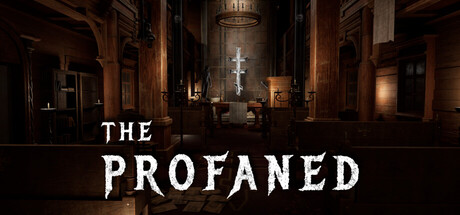
The Profaned wants you to stare at a church until your eyes start lying to you
Anomaly hunters are having a moment. Ever since The Exit 8 turned spot-the-difference horror into a real subgenre, every indie horror dev with Unreal and a halfway decent fog shader has been chasing the same nerve ending. The Profaned, from No Man Games, is next in the queue. And it grabs one of the most loaded settings you can pick: an empty church, listed on Steam for June 8, 2026.
The pitch is tight. You're a sinner, you're stuck, and the only way out is a ritual that asks you to photograph the wrongness around you. A candle that moved. A figure that wasn't there last loop. A door that's now cracked open. Miss one and the cycle resets.
Run it back.
The Exit 8 problem
Anomaly hunts are a brutally simple format, which means execution is everything. Exit 8 worked because the corridor was banal, the loop was short, and the anomalies were calibrated by somebody who clearly playtested their own game until they hated it. Most of the imitators miss on at least one of those three legs — anomalies that are too obvious (boring), or too obscure (cheap), or a loop padded out so long that a single miss feels like a tax instead of a jolt.
No Man Games is leaning hard on the church, and that's a double-edged sword. Religious horror brings atmosphere for free — confessional booths, pews, iconography that a thousand films have already pre-loaded with dread. But "haunted church" is also one of the most done-to-death indie horror settings going, sitting on the shelf right next to "abandoned hospital" and "Slavic apartment block." Liminal-space horror only works when the space feels specific. P.T.'s hallway hit because it was a hallway you'd seen in a hundred suburban homes. A generic gothic interior won't carry that same uncanny charge.
An hour long, and what that means
The store page is upfront: about an hour, depending on how observant you are. Honest, and probably correct. Anomaly hunters don't scale. Push them past 90 minutes and perception fatigue starts eating the horror — you stop noticing things because you're tired, not because you're scared.
The flip side is that short horror games on Steam live or die by their price tag. This audience is hyper-aware of length-to-price ratios. Get it wrong by a couple of bucks and the review section turns into a tribunal inside a week.
What the footage actually shows
The demo clips floating around — the slow-walk, flashlight-and-camera kind of footage that horror creators love because it gives them room to emote — suggest a game committing to the subtle end of the spectrum. Less screaming-face-in-the-window, more "wait, was that pew angled like that before?"
That's the harder road. It demands tight level memorization from the player and tight consistency from the dev. If the church layout isn't burned into your skull by loop three, the subtle anomalies just read as "I don't remember." Which isn't fear. It's confusion. And confusion is what kills these games.
When it lands, though, you get the purest stuff in horror — that flicker of doubt where you genuinely can't tell if something's off or if your brain is making it up. When it doesn't, players shrug and start photographing everything to brute-force the win.
The marketing reality nobody talks about
A title like this is exactly the kind of release that gets steamrolled by the Steam launch firehose. No Man Games doesn't have a publisher's PR budget, and "another Exit 8-inspired anomaly game" is a sentence that's been written about roughly forty other releases this year alone. A scattershot push — generic press blasts, paid social, keys thrown at any channel with a pulse — burns money and produces nothing.
The realistic path is narrow and deep. The analog horror crowd on YouTube. The smaller liminal-space community. Exit 8 completionists. Streamers who built their identity on short psychological horror runs, the Insym-adjacent and ManlyBadassHero-tier names, the atmospheric-horror Twitch pocket, the Fatal Frame nostalgia corner that lights up the second a camera mechanic shows up. CreatorFetch is the sort of tool that makes that kind of targeting actually tractable for a tiny team — finding the creators whose whole channel identity is this subgenre, rather than spraying keys at a 2-million-sub generalist who'll never load the game.
The verdict, such as it can be
The Profaned has the right ingredients and a sensible scope. Setting's overused but workable. The one-hour runtime is honest. The reset-on-failure loop is the right design call. What's unproven is the anomaly calibration itself — the minute-to-minute craft of making a player doubt their own memory. You can't see that in a trailer. And it's the exact thing that separates the anomaly games people still talk about from the ones that settle into a 73% rating and disappear.
June 2026 is far out. A lot can change, including the genre. If five more high-profile anomaly hunters land between now and then, No Man Games is going to need that church to feel like nowhere else on Steam. Atmosphere alone won't carry it. The wrongness has to be specific.