
The Tragedy at Deer Creek
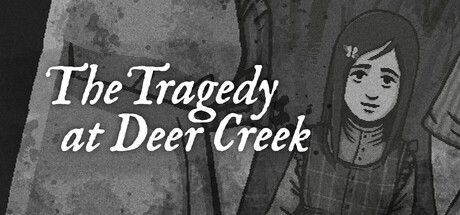
A photographer, a frozen camp, and a story that doesn't want to stay buried
Winter 1997. A woman named Charlotte Gray hauls a camera into the Alaskan backcountry to document a logging camp nobody's lived in for decades.
That's the setup for The Tragedy at Deer Creek, the next project from a tiny Swedish studio called Sparrowland. The pitch is doing a lot with very little. No combat. No inventory tetris with twenty red herrings. Just a single-click point-and-click interface, hand-drawn pixel art, full voice acting, and a slow excavation of what went wrong at a place that, per the studio's own words, feels less abandoned than paused.
It's listed on Steam with a June 10, 2026 release date. Which gives this whole thing a long runway, and a lot of room to either build a cult following or get buried under the daily Steam launch avalanche.
The pitch underneath the pitch
Sparrowland describes itself, on its own site, as a small studio based in Boden, in northern Sweden, working on games that "ask questions about the human condition" rather than answer them. That kind of mission statement either lands as pretentious or as honest depending entirely on whether the writing is any good. The early demo footage circulating online suggests they're at least trying to earn it.
The conceit is interesting. Charlotte's project is called "Forgotten Frontiers," a visual record of places American industry walked away from. She's expecting the standard ghost-town set dressing. Rusted machinery, collapsed roofs, the usual decay porn. What she finds at Deer Creek is different. The studio's framing keeps using the same word: suspended. Like the people stepped out for a minute in 1950-something and never came back.
And then, of course, things start moving on their own.
What the demo crowd is focused on
The community fingerprints around the demo are pretty telling. Streamers picking it up are leaning hard into the mystery-unraveling angle rather than the puzzle-solving one, which makes sense for the genre but also tells you where the game's center of gravity sits. Opening-hour playthroughs spend a lot of time letting Charlotte's voice work breathe, lingering on environmental storytelling instead of speed-running between hotspots. Longer livestreams are framing it as a sit-down, theory-crafting kind of experience. The type where chat starts arguing about what really happened to somebody fifteen minutes in.
That's a useful signal for Sparrowland, frankly. It suggests the writing is doing more heavy lifting than the puzzles, which is probably the intent given the studio's stated focus. But it also means the puzzle design has to stay out of the story's way. Narrative point-and-clicks live and die on that balance. Get it wrong and you're either reading a visual novel that occasionally asks you to combine two items, or you're scrubbing pixels while the emotional throughline cools off in the corner.
The genre context, briefly
Point-and-click adventures are in a weird spot in 2026. The genre never really died, it just splintered. You've got the old-guard LucasArts revivalists, the Wadjet Eye lineage doing pixel-art noir, and then a quieter strain of melancholic, atmosphere-first indies (think the lineage that runs through Kentucky Route Zero and Norco) that care more about mood than mechanics. Deer Creek is clearly aiming at that third pocket. Hand-crafted pixel art, a single-click interface that strips away inventory friction, cinematic cutscenes doing the heavy emotional beats. The accessibility framing in the Steam copy isn't accidental. The team is openly courting players who'd normally bounce off the genre's fiddliness.
Whether that lands depends entirely on the writing and the voice direction. A "heart-wrenching story about the lengths we'll go to protect the ones we love" is either a real gut-punch or a Hallmark logline. The Alaskan logging-camp setting at least gives it specificity, and the 1997 framing date is doing some quiet work too, putting Charlotte just before the smartphone era when getting lost in the woods still meant something.
The brutal part
Sparrowland is a small team in northern Sweden launching a slow, atmospheric, narrative-driven point-and-click into a market where roughly forty games release on Steam every day. No shooting. No roguelike loop. No co-op hook. No streamer-bait chaos mechanic. It's a quiet story about grief and family in a snowed-in logging camp.
A wide marketing push (generic Twitter ads, mass-blast key drops to thousand-follower curators) would be a near-total waste of the budget a Boden indie studio actually has. The people who will love Deer Creek are not the same people who watch every trailer that crosses their feed. They're a specific, identifiable audience: narrative-adventure streamers who build VODs around mystery deconstruction, horror-adjacent creators who lean cozy-eerie rather than jump-scare, pixel-art appreciators on YouTube who make studio-profile videos, and the small constellation of point-and-click podcasters and writers who still take the genre seriously.
Getting Deer Creek into the hands of those exact creators, the Boring Dad Gaming and Abbzventurous tier and a few rungs up, is the only realistic path to compounding word-of-mouth. CreatorFetch is the kind of outreach infrastructure that makes that targeting actually executable for a studio without a dedicated marketing hire, surfacing creators by genre fit and audience overlap instead of follower count theater.
What to watch for between now and June
Two things will tell you whether Deer Creek is going to land.
First, the demo's pacing in the next round of festival showings. If creators are still talking about it ten minutes in instead of clicking through to find the next hotspot, the writing is doing its job. Second, the voice cast. The Steam page commits to "fully voiced," which is a significant promise for a small studio, and bad VO will sink atmospheric work faster than almost anything else. The trailer audio so far is restrained, which is the right instinct.
The whole thing might still fall apart. Indie narrative adventures with this much weight on the script have a high failure rate, and a snowy logging camp with a photographer protagonist isn't exactly a fresh logline in 2026. But there's a real chance Sparrowland has found a quiet, mean little story worth sitting with. June will tell.