
Xeno Strike
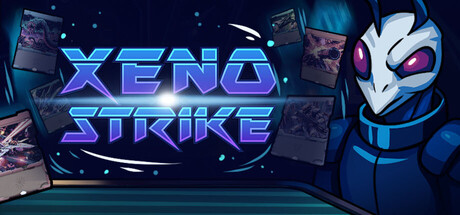
Sci-fi card battlers live in a weird middle. Not Hearthstone or Snap big. Not Slay the Spire slow-burn beloved. They survive or die on one question: can the dev keep a queue alive past month six? Xeno Strike, from Rocket Haze Games and aimed at a June 2026 release, is wading straight into that swamp. The on Steam listing already tells you which fight it picked.
300 cards. Four factions. Seven card types. PvP plus AI duels.
That's the shape.
The numbers
Read the card-type list — ground units, space units, actions, equipment, traps, garrisons, turrets — and the design DNA jumps out. Garrisons and turrets aren't Hearthstone furniture. Those categories scream board state, positional anchors, slow defensive plays. Less tempo trade, more cardboard skirmish.
That's interesting. It's also risky. Games that stack unit categories like this — Stormbound, or going way back, Duelyst — pull in smaller, more committed crowds because the learning curve is steeper than the genre baseline. You're not memorizing 300 cards. You're memorizing how seven categories interact, across four factions, before your first ranked queue. That's a lot of homework.
And 300 cards at launch cuts both ways. Enough for real deckbuilding. Small enough that a hardcore player solves the meta in two weeks. With no public roadmap for expansions or balance cadence, that ceiling is the whole game.
YouTube isn't going to help
Search Xeno Strike right now. You won't find gameplay. You'll find action figures — Sheik Mainland's "Xenostrike" toy line, totally unrelated, sitting on the same keyword. That collision is a real problem. The algorithm's already trained on plastic robots under that search term. Any creator covering the game has to claw for SERP space against unboxings, and curious players hunting early footage will end up watching someone catalogue a 1996 articulation joint instead.
The kind of problem a small studio doesn't notice until they're three months out and the wishlist counter has flatlined.
The graveyard
Sci-fi card games specifically — not fantasy, not anime — have a body count. Solforge died. Faeria pivoted. Eternal limps. The ones that worked, Marvel Snap and Legends of Runeterra, had IP gravity or Riot money behind them. Xeno Strike has neither. So the burden lands squarely on the moment-to-moment loop and on whether the matchmaker stays warm enough for newcomers to feel like the lights are on.
PvP makes or breaks this. AI duels are fine for onboarding and for padding the queue on a slow Tuesday, but every veteran of online CCGs knows the math: if your friends list is empty and ranked takes four minutes, the game is dead even if the servers are technically up. The most underrated card game launch stat isn't card count. It isn't art. It's concurrent players at hour 72 and hour 720.
What's missing
As of writing, Rocket Haze hasn't put up a dedicated site, hasn't shared a balance philosophy, hasn't outlined monetization, hasn't said how new cards enter the pool after launch. For a competitive multiplayer CCG, those questions matter more than any screenshot.
Is this a buy-once box with 300 cards forever? Free-to-play with packs and a battle pass? Premium with cosmetic-only monetization? Steam page says nothing.
Fine for a wishlist phase. Not fine the second someone asks "should I bother learning this." Card players are battle-scarred on monetization. They ask early. If the answer isn't ready, they assume the worst — and they're usually right to.
Where marketing actually has to land
A broad Steam-launch blast would torch budget for almost nothing back, because the audience for a 300-card tactical sci-fi battler isn't browsing New & Trending. They're already buried inside a few very specific creator pockets — the deckbuilding-strategy YouTubers who cover Inscryption, Stormbound, Wildfrost; the smaller competitive-CCG streamers who built followings on Eternal, Runeterra, and the long tail of niche digital card stuff; the tabletop-adjacent Twitch crowd that'll happily burn three hours breaking down a faction's mana curve. Figuring out which of those creators actually have audiences that convert on a sci-fi aesthetic (not all do — fantasy still rules the CCG creator world), then getting codes and talking points in front of them before the toy-line SEO eats the game's name whole, is the kind of grind that's painful to do by hand. Discovery-and-outreach platforms like CreatorFetch exist for exactly that work — pulling the specific 40 or 60 creators who can move a niche this narrow out of a sea of people who can't.
The verdict, such as it is
Xeno Strike has a coherent pitch and a release window distant enough that Rocket Haze still has runway to answer the open questions. Seven card types and four factions give it enough strategic surface to hook the kind of player who reads patch notes for fun. Whether any of that survives to a healthy queue six months post-launch is, frankly, a coin flip.
The studio's communication between now and June 2026 will tell you more than any trailer. Watch for the monetization announcement. Watch for a stated balance philosophy. Watch whether they ever address the name collision. Those three signals say more about the game's odds than the card count ever will.