
Xiaye's Doors of Magic: Lightchaser
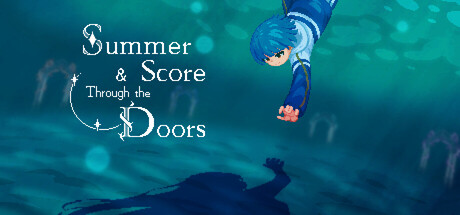
A high school RPG where your pen is a sword and your transcript is the boss fight
Western audiences keep sleeping on a specific strand of Chinese indie: the hyper-personal, half-autobiographical school drama wearing a genre costume nobody asked for. Xiaye's Doors of Magic: Lightchaser, slated for June 2026 from 幻海空镜工作室, sits right inside that lineage — an AVG-leaning visual novel bolted onto a tactics RPG, where the combat metaphor is, of all things, sitting an exam.
Yes. Textbook as shield. Pen as sword. You fight for score.
Seven ordinary teenagers, seven sets of doors, one converging fate the player is supposed to pry open. The studio is upfront that the supernatural angle is minimal — those doors are the only fantasy element on the table. Everything else is grounded in the grind anyone who's survived gaokao culture (or any pressure-cooker high school anywhere) will recognize at a glance. Parental expectations. Class rankings. The first-place kid who's been first since kindergarten. The girl who can't stop apologizing for slipping to second.
The combat hook is genuinely weird
Each subject is its own skill discipline with its own mechanic. Physics stores energy and then releases it — charge-and-discharge resource management, basically. Chemistry weaponizes enemy debuffs by triggering "reactions" off them, the kind of system that either becomes the build-defining engine of the whole game or never quite balances out. Biology summons creatures. Math, judging from the first character's description, leans into status buffs through "rigorous reasoning logic," whatever that ends up meaning once you actually have a controller in your hands.
And winning isn't just killing the enemy. You're chasing a score target. Hit an A, you get rewards. Drop to an F, you get punished. Determination points pile up as you perform, eventually unlocking Awakening Skills for late-fight comebacks. Unusually thematic loop — the dread of a graded test, ported into a turn-based system where the test is fighting you back.
Whether it actually plays well is the open question. Subject-based skill kits sound great on a Steam page. In practice, asymmetric class systems like this live or die on whether the developer balances the fun subjects against the boring-but-strong ones. If Chemistry's debuff-reaction loop turns out mathematically dominant, nobody's picking Biology summons on the harder difficulties, no matter how cute the creatures are. That's the trap.
Framing over genre tag
The more interesting wrinkle: not every encounter is an exam. The description gestures at fights staged as confrontations with someone else's will, internal emotional clashes, dream sequences. That's the AVG DNA bleeding through. The tactics layer exists to make you feel plot beats in your hands, not to stand alone as a strategy showcase. Sadness, joy, anger, all channeled into damage. Design philosophy like that either lands as something deeply affecting or feels like an essay prompt stapled to an SRPG.
Only two of the seven protagonists have been revealed — the burnt-out "test taker" girl and the trophy-child physics prodigy. Everyone else is gated behind launch. Reasonable drip for a 2026 release. Does mean prospective players are buying into a tonal pitch more than a confirmed cast.
Difficulty options, thank god
One quiet smart call: multiple difficulty tiers, with the lower ones explicitly aimed at people who just want the story. This is exactly how a hybrid like this should ship. The visual-novel crowd and the tactics crowd are not the same crowd, and forcing the former through a punishing score-target system to reach an ending would gut the audience. The studio seems to know this.
The niche problem
Here's the thing about a project like this dropping in June 2026: there is no mass-market path, and pretending otherwise would sink it.
A Chinese-language-first, school-life realist drama with a tactics layer and seven character arcs isn't winning a feature slot against the summer's open-world giants. The Steam algorithm won't save it. The real audience is narrow and specific — VN readers who follow Chinese-translated releases and the scanlation-adjacent corners that grew up around them, SRPG diehards who'll talk Fire Emblem and 13 Sentinels in the same sentence, slice-of-life anime channels that cover school-drama narratives, and the small loyal pocket of Western creators who specialize in surfacing under-radar Chinese indies (the same people who pushed Nine Sols and Bright Memory into Western conversation in the first place).
A studio like 幻海空镜 doesn't have the budget to spray-and-pray. They need to land directly inside those four pockets, one creator at a time, with pitches and builds tuned to what each of those audiences actually cares about. CreatorFetch is the kind of infrastructure built for that surgical approach — finding the handful of voices whose viewers are predisposed to care about a seven-protagonist Chinese school drama with chemistry-class combos, instead of burning the launch window on creators whose audiences will bounce in thirty seconds.
Worth watching, with caveats
The pitch is distinct. The risk is real. Hybrid genres carrying this much thematic ambition either become cult favorites people quote for years, or they end up in the pile of well-meaning indies that couldn't stick the balance between their two halves. June 2026 is far enough out that the studio has time to tune. It's also far enough out that scope could go anywhere. For now, keep an eye on it and wait to see whether the combat actually carries the emotional weight the story is asking it to.